Yosemite: Two Pieces of Advice

We got two very good pieces of advice before heading to Yosemite, both from friends who we had visited in the Bay Area the previous weekend. One piece of advice was more practical, the other more, shall we say, spiritual. The were both key to to a great, great visit to this gorgeous National Park.

IMG_3889

Spoiler alert: Yosemite is A-MAZING!

The first piece of advice was about winter access. Yosemite is in the Sierras. It snows there. If it snows, the park will be open, but you might not be able to get there with your Airstream trailer unless you have chains for your tires. They are very strict, gentle but firm about this. It is in fact the law. You can buy chains (which we didn’t want to do) or you can hope the warming trend coinciding with your itinerary will yield an upgrade of road conditions, allowing you to enter the park without chains. How will you know if the road conditions change? Call this number: 209-372-0200.FullSizeRender (3)

Some talented park ranger has to do a new recording every time road conditions change  – on the first night of our campground reservations (a Tuesday), the conditions were still “R3” closed to neophytes like us, people driving cars without chains.

So, like the pioneers when they faced similar challenges, we bided our time at a lovely winery. This Harvest Host, Vista Ranch & Cellars in Merced was perfectly situated just a few hours west of the park. In fact Merced was a jumping off point for tourist trips to Yosemite back in the day, and even today, those without a car (or chains) can take a bus from there, or even as far away as the Bay area.

The next day, Wednesday, temperatures were up, that snow was surely melting, and in fact when we called the road conditions line, all had been upgraded to “R2”!  You would only need chains IF you didn’t have four wheel drive (we did) and M + S tires (we did). Even still, when we arrived at the west entrance from 140, the so very helpful and sympathetic NPS staff at the gate (clearly reading off a checklist or some sort of matrix) told us that b/c our trailer had its own set of brakes, we would still need chains. Harrumph.

However, a ranger was quick to help us come up with a plan B: book a night at Indian Flat RV Park, about 8 miles down the road, unhitch and head IMG_3657into the park for the afternoon with just the truck. And, assuming all continued to improve, we’d surely be able to get in with the trailer the next day (Thursday). As with the 99% of other times when Plan A has failed, Plan B turns out to be as good or better. Because look who we got to meet at the Indian Cove RV Park? Tigger, the RV park cat.

We quickly unhitched and headed back to the park – we felt like we had been sprung from prison, FREE, as we rolled by the entrance gate, approved to enter with only our 4 wheel drive and M + S tires. We were free to explore for the few hours of daylight left.

Though I grew up in So Cal, I had never been to Yosemite. I had some sense of what to expect, but was not prepared for the scale of the mountains, their pure granite beauty, and of course the stunning minute by minute changes the rising and setting sun casts on them. Plus there was snow! Melting and slushy mostly, but quite icy in spots too. Happy tourist below – first time in Yosemite.

IMG_3615

Yosemite Valley is more or less a loop road – with free park buses that run a continuous loop to all the major sights and trailheads, so once you are in, you are encouraged to park your car and walk, bike or hop on the bus. Most trailheads, and even the Visitors Center don’t have parking lots. It took us this afternoon to figure this out.

But first, we made our way to the Pines Campgrounds, where our reservations, you may recall, had begun the night before. Despite the prominent signage saying “no refunds”, the ranger there was more than helpful in refunding the night we missed, and moving our reservations forward another day. It never hurts to ask.IMG_3630We stopped in the Visitors Center to do a quick perusal – watched one of the movies and came out to a completely altered night sky. Is this what it’s like every night? Wow.

IMG_3645

Back at Indian Flat RV Park, we rested up and hoped for the best on road conditions the next day. In the morning (Thursday), as we prepared to drop our quarters in the pay phone to find out, Ben ran into one of the rangers who helped us the day before – he came by on his way into work to tell us that indeed, they had changed the conditions yesterday. We were “R1” and good to go. How is that for customer service? Off season camping rocks.
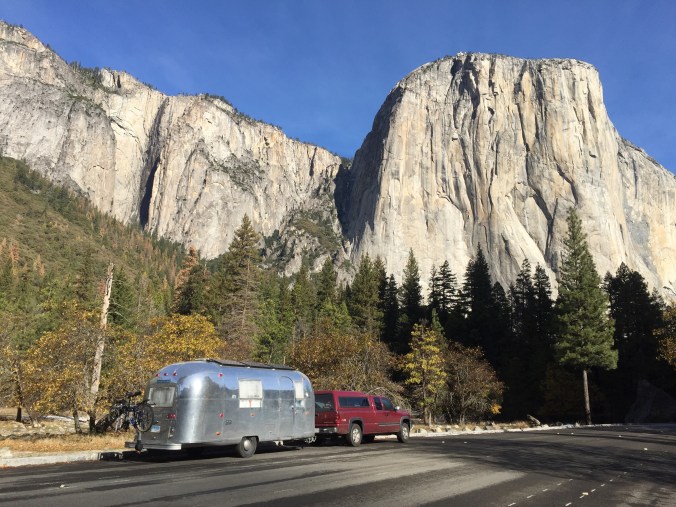
IMG_3662-0

And we are in!

After pulling in to spot 151 in a nearly empty Upper Pines campground, we immediately set out on the Mirror Lake trail. Recommended by more than one ranger as a good “warm up” hike and one that would not be too icy. Nothing like snow to help you track the wildlife!

IMG_3678

Very suspicious. Seen near the dumpster in our campsite.

Note, there appears to be a Mirror Lake photo op, where you can hop off the bus, walk a few hundred yards to the Lake and move on. However the trail is longer, more meandering, a true suspense builder as you go.

IMG_3729-2But wait, here is where the 2nd piece of advice we received kicks in: from my friend Joan’s book shelf, she kindly let me borrow “Yosemite Valley: Secret Places & Magic Moments” by Phil Arnot. In his Introduction, he lays out some general tips for experiencing the park as more than just a tourist. One that we took to heart was to agree not to talk to one another for certain time periods. “Conversation is distracting,” Arnot explains. In order to have an in-depth experience of the Valley, silence and solitude are key. Now, Ben and I have had some really great conversations on some of our longer hikes on the trip so far, and I realized those conversations were in part borne of the time alone, the quiet, the serenity of the natural environment, the meditative quality of one foot in front of the other on the trail. It really did make me realize how much that same environment can encourage similar results, but within yourself. We were both game to try it and the Mirror Lake trail was perfect for it because there was tons to look at, the landscape was slowly but continuously changing.

IMG_3679

This is Ben, practicing non-verbal communication as a part of our pact to hike in silence. He is saying, “Don’t take my picture!”

Most of the first part of the trail was densely wooded alongside a river. Then it opened up into more of an open field (many trees had been toppled) and clear views of those granite mountains. Incredible! Because we had been quiet, I really noticed more. The mix of fall (leaves turning, browns and golds) and winter (icy snow, bare tree) struck me as well. We crossed the river and came back on the other side.


It was about a five mile hike and we were wiped, and it was getting late, toward sunset, and we wanted to squeeze in one more activity. We hopped on the bIMG_3779us and got off at the Yosemite Lodge (for hot chocolate) and walked to the Yosemite Falls foot bridge. It was nearly deserted, and though the iPhone pics don’t do it justice, a lovely way to see the falls.
On the bus again, we got off at our campground stop and the driver called out to make sure we had a flashlight. We did, thanks to Ben thinking ahead but still bumped around a bit among the loops to find our site.

The next day we set out to do a more challenging hike – Vernal Falls. We could walk to the trail head from our site and checked out the Mist Trail on the way- which I understand is packed during high season and was now completely empty. IMG_3696The trail to the Falls was quite icy in spots. We hiked alongside a group of 8th graders and figured if they could do it, so could we! The elevation gains were gradual enough so it wasn’t just a slog, and the views changed incrementally providing something new to look at at every switch back. Again, pictures don’t do it justice. Once we got to the falls, we were up for going a bit further so continued on toward Nevada Falls. IMG_3816We got just to Clark Point and the road closed signs were enough for us to call it quits there. Many other hikers, mostly fellows on their own, hopped the fence and kept going (they had better equipment) but so did a group of three women in their 50s from Korea – one of whom lives near Yosemite now and comes every few weeks to hike.

After hiking down, we explored Curry Village a bit. We saw dozens of people arriving to check in for the weekend. I bought some new sunglasses (I lost mine on the Mirror Lake trail but never noticed it – all that introspection can have its downside) and we found out we could NOT make a last minute dinner reservation at the Ahwahnee for dinner – the super fancy lodge dining option. Probably best as I am not sure what kind of outfit I could have scraped together.

IMG_3636

The dining room was closed for a private event but I snuck in and snapped this picture. I have yet to have a fancy dinner at a park lodge. 😦

We ate at their bar instead – it was nice to get out for the evening, but I would not recommend it – sort of like eating at a chain hotel restaurant, but worse. Sorry to end on this negative note, but gotta keep it real.

The next morning we gifted our new neighbors the Schmidts (tent

IMG_3790-0

We don’t know what to do with this.

campers who arrived from the Bay Area sometime around 130) the firewood that had been gifted anonymously to us when we arrived (we have yet to have a single campfire) and headed out to make our way to LA for Thanksgiving.

We took with us a fair amount of Yosemite mud on our hiking boots, and smiles for all the arriving weekend visitors who’d enjoy unrestricted access to the park roads and perhaps a few less road closed signs on the trails as the temps remained moderate for another off season weekend.
IMG_3907

Our (2nd) 10 day itinerary for Oregon

We have gone up, down, around, and through Oregon on this trip. 10 days on our swing north in September (read about some of that here,  here, and here, another 10 days on our swing back south in November. Though, embarrassingly, I included the first night of this second leg in Oregon in a post about Washington state. Sorry The Dalles!

Having visited Portland, Willamette Valley, and some of the coast about 10 years ago, we were pumped to revisit some of our favorites and find some new places to explore as well.

We’d been to Astoria before – a neat, real (not just a tourist) town on the coast, at the mouth of the Columbia River. Astoria welcomed us back with a beautiful rainbow!

IMG_3054

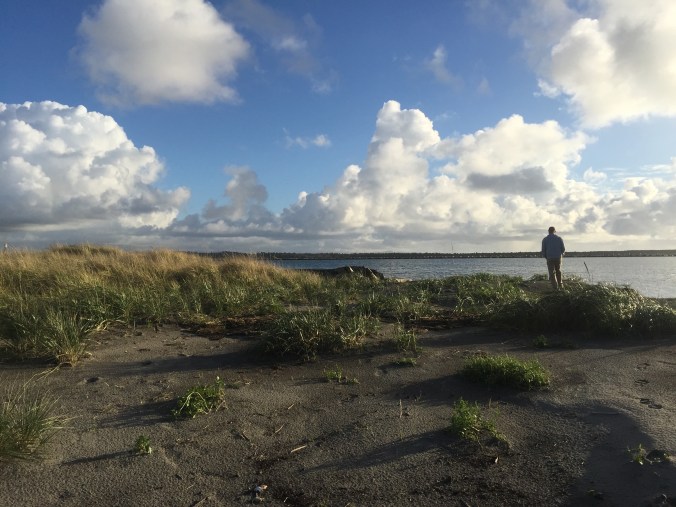
We stayed in Ft. Stevens State Park – and got lost looking for the campground, but as usually happens once you get past your annoyance at the GPS, our wrong turn led us to some beautiful sites and we took a walk around the jetty.

IMG_3052-0

The main thing we wanted to do this go round in Astoria was visit the Ft. Clatsop National Historic Park, where Lewis & Clark wintered over after completing their westward journey. The Corps of Discovery did not enjoy their time there — it rained a bunch — but we did especially because the park had been closed due to a fire when we here 10 years ago. We don’t have any pictures (!) but we do have this video we made there because our visit coincided with our nephew Carter’s birthday. It also just goes to show if you didn’t get that card in the mail on time, with a little creativity and the wonders of technology, you can do something cool to make up for it.

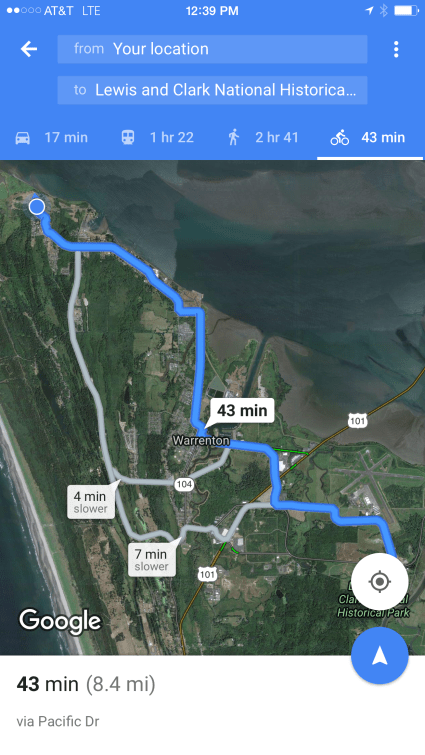
We rode our bikes to Ft. Clatsop – it was a little further than I thought it would be, on some busy roads too, but I would still recommend it. I don’t know if this is novel to anyone, but when I am low on batteries or data or coverage, I take a screen grab of my route and refer to that as I am able.

IMG_3062-1

The museum and site were very good. The replica fort (seen behind us in the video) was smaller than I thought it would be – you get a real sense of the Corps just hoping to – I dunno – maybe stay warmer by being so close together? Having less of an area to defend in case of an attack? I appreciated the attention to the long term fate of each Discovery Member in the exhibits, especially York. In the evening we treated ourselves to dinner at the the Bridgewater Bistro in Astoria. The food was only pretty good, but because the service and the setting were so spectacular, we’d recommend it. They let us combine two desserts into one – a chocolate brownie with coconut ice cream.  And the crab cheesecake appetizer was excellent.

On the way out of town, I stopped in the small but lovely Astoria Co-op, while Ben waited in a very long line to get his haircut at the Eleventh Street Barber. He passed the time by chatting it up with some local Coast Guard fellows, and I was amused by the proprietor who kept offering everyone cold beer from the mini fridge.

After a quick trip back to Seattle for some “admin” and a chance to visit dear friends in Auburn, we spent one more night in Washington – at an Airstream park, the aptly named Washington Land Yacht Harbor. The Park was pretty basic and they’ve opened it up to non Airstreamers (but if you are WBCCI members, there is a discount). There is also a fairly large brick and mortar home community surrounding the park – only requirement is that you must own an Airstream to buy a home there. We chatted a bit with one of the residents about the history of the park — folks with a common interest coming together to build a community — and the ways they are working to keep it going today. We made a quick stop at the Olympia Farmers Market (get the cinnamon bread from Wagner’s and any jam from Johnson’s Berry Farm) and the state capitol (pics below) before we recrossed the border.

On to Portland! My friend Tom and his wife Julia about 10 years ago got to pick anywhere in the US to live after many years in NYC – and they picked Portland. How hip they are! Tom may not have known what he was in for when he said “You can park in front of our house!” on one of my Facebook posts tracking our travels, but regardless, we were “all in” as guests (though they were lucky we had just done our laundry in Seattle!)

IMG_3120

Tom indeed had a lovely place for us to park in front of his house

After an afternoon of chatting and catching up we had a great dinner out – we wanted to go somewhere “Portland” and we knew Julia picked a good restaurant when the waiter assured us their pork come from pigs that are “pumpkin fed”. I couldn’t remember the name of the restaurant but just found it by googling all the things from their eclectic menu that I especially liked: “short rib sushi bread pudding” – and it was the first hit! Pono Farm Soul Kitchen in Northeast Portland. Yum.

We had a fortuitous meeting in Tom’s kitchen the next morning over coffee and cinnamon bread – his friend Stuart came by and once we realized he was a guru on Oregon travel, we asked and he gave us all kinds of tips on where to go, in what order, via what road, down to which Dairy Queen was the best in the state and how to work in a side trip to the town where some of Animal House was filmed. Not only that – he told us his mother grew up on a farm near Eugene, his sister lived there now, and would we like to park the Airstream there? Yes!

Following Stuart’s tips, we headed south to Willamette Valley, via Oregon City, the final stop on the Oregon Trail. The VC there is a bit pricey, and at this point we maybe felt a bit overloaded from other related sites we had visited but it provided nice closure to that theme of our travels and a good photo op or two.

We headed south into Willamette Valley, to our Harvest Hosts Kramer Vineyards near Gaston. Though they were having an event that night – they couldn’t have been nicer and more accommodating to make room for us. We arrived just in time to jump in for the heritage vertical pinot noir tasting – basically tasting the same vintage, but from six different harvest years. Their thoughtful placemats (below) explained some of the differences in the rainfall, temperature, harvest date, yield, etc of each year. The owners encouraged us to sip, take notes, let the wine breath some more, repeat. It was awesome – I appreciate good teaching and this was it! We were seated with this really nice couple who are wine club members there and were so generous as to cover our tasting bill as part of their guest allowance. I know this is not exactly like the kind of generosity Cheryl Strayed writes about receiving on the PCT when her 20 dollars didn’t arrive and she wanted a Snapple, but we were very appreciative nonetheless! We even bought some Pinot Gris to go – in a growler! – so though the wine is gone, we have a very nice souvenir of this visit.


Next we headed west to the coast, and an overnight at Nehalem Bay State Park, complete with another rainbow and the best walk on the beach yet. We made some excellent lentil soup here which we ate while watching “Waiting for Guffman”. (Not wanting to use our data to stream, we pick up old DVDs wherever we can!)

On the way south, we stopped to do the Cape Trail at Cape Lookout State Park. This trail is truly fantastic – gets you out, as the name suggests, on a cape, with gorgeous views of the Oregon Coast. The hike was fairly flat but with some difficult passages due to mud, rain, general dampness that was the weather for much of this leg of the trip. But fantastic hike – highly recommended for coast lovers. Before the trip, I had surgery to repair an ankle ligament tear and I take pictures like that in the lower right to send to my surgeon some day as a thank you.

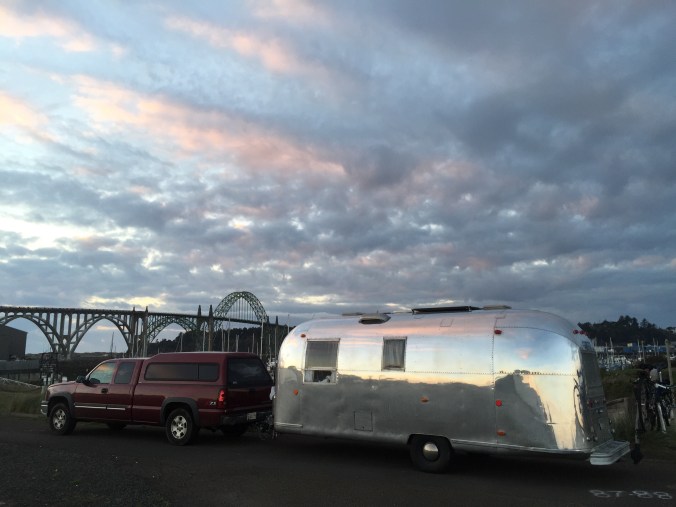
On to Newport, where an excellent Wheelingit blog post about free or cheap(er) camping on the Oregon Coast led us to the Port of Newport Marina. We always enjoy a marina, though the dry site parking area was adjacent to the Rogue Brewery warehouse and a few semis kept their engines running while resting there at all hours. But the view (below) couldn’t be beat.

IMG_3262

Yaquina Bay Bridge just south of Newport, OR, in our dry camping spot at Port of Newport Marina.

We walked a hundred yards to have dinner at the Rogue Brewery Pub that night – the food was excellent! Try the crab kimchi sliders appetizer for sure. The next morning we walked a few hundred yards and forked over the big bucks to explore the Oregon Coast Aquarium – click on the link to see the best URL ever. We don’t begrudge museums entry fees, but it always feels a bit of a risk. In this case, it was well worth it. The Aquarium has more than a little bit of everything including live animal feeding demos, a walk through a shark aquarium tunnel, and thoughtful exhibits with volunteers and staff who were very good at their jobs answering questions, sharing what they knew and passing on a respect for the natural world.

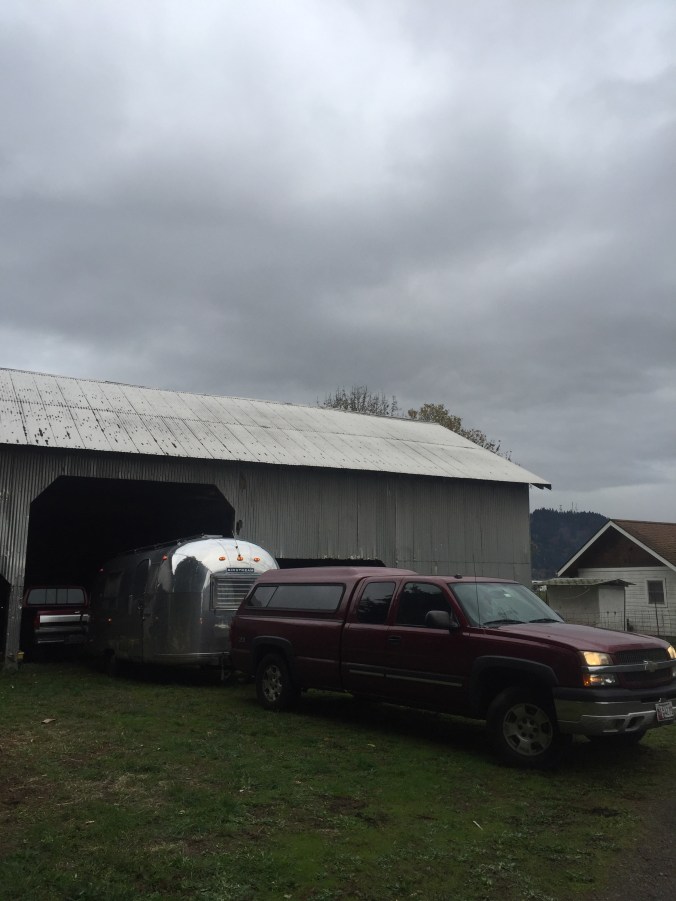
We headed east to Stuart’s sister’s house – the Hurd family farm. The barn – 100 years old–was an awesome setting and we enjoyed our neighbors, sheep, chickens and rooster.

IMG_3405

The next day, I headed into Eugene. It’s always fun to check out a big college campus and University of Oregon was lovely. I checked out Hayward Field – home to track and field legends – and their art museum, which had a cool exhibit on post war Japanese prints. As I walked across the same type of criss-cross quads I traversed as an undergrad, I caught snippets of conversations among the students – worries about how to bring up a grade (this from someone on a cell phone), wishes to check out new restaurants (or food trucks), a mission to return some rain boots. Though so much has changed, so much is the same.

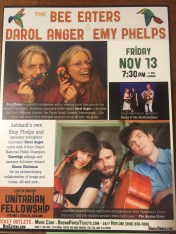
We finished off the state with a visit to Ashland, home of the Shakespeare Festival for most of the year, but not this month. I did a quick hit of their downtown to do a little shopping of my own, of course visit their very large and very goodIMG_3408 Ashland Co-op and scout out restaurants for before a concert we were heading to that night. As we winded down this first leg of our trip, it seemed we still had some work to do to check out the night life / cultural events in the places we visited. This (left) folks/bluegrass/orchestral mix of groups was right up our alley. They even had a hammer dulcimer! One of the leads, Emy Phelps, is from Ashland, so it was a homecoming event for her. A highlight was when they brought all the local (about 20 kids) young violin students up on stage with them to join in for one of Emy’s songs. The parents especially loved that because all those hardworking novices sounded so good in harmony with the professionals. The whole vibe was about collaboration and education, a mix of young and older, lots of smiles and great music! Culture and nightlife – check!

I’ll end with a scary story (with a happy ending) and a cautionary tale. On our drive to Astoria on I-84, we encountered what was without a doubt the scariest moment driving and the closest we’ve come to an (what would have been awful) accident. We are cruising along in the slow lane, and the first we saw anything, the semi in front of us came to a screeching halt and Ben reacted, braking hard, slowing us down, with one hand protectively on me (I think he was trying to keep me from screaming as much as from slamming into the dash) as he very very calmly and slowly said, “OK, I am not sure we are going to stop in time.” Yikes. Hold on, hold your breath and watch the road between you and the 18 wheeler in front of you slowly disappear.

We did stop in time though, with a few feet to spare, but then of course the worst was still to come as we waited with stiffened backs to see if any cars behind us would slam into us (and the Airstream!)

IMG_3596

This was NOT the truck/appliance that nearly caused us to crash

As Ben looked left, trying urgently – without success for a long minute or two- to look for a spot to merge into the fast moving traffic and get moving, I leaned right and saw what was up: someone had been carrying a range stove in the back of a pick up and I guess it wasn’t fastened down well, because they were now moving the oven from the road, back to their truck. Oh my gosh. And still we were at a dead halt on a four lane highway.

Once it was out of the road, the truck ahead of us quickly got going, and so did we, still worried about getting rear ended until we got some speed going. We thanked our lucky stars and made an appointment to get our brakes checked (though they got us out of this jam, just for peace of mind.) When I told my dad this story he asked if I got a picture of the oven in the road and I said – no, darn! – so I snapped this one  (above, right) on the road a few weeks later…pretty well battened down, but not something we’d choose to drive behind. So – watch the road for flying appliances (you probably are already, though).


The Great Divide

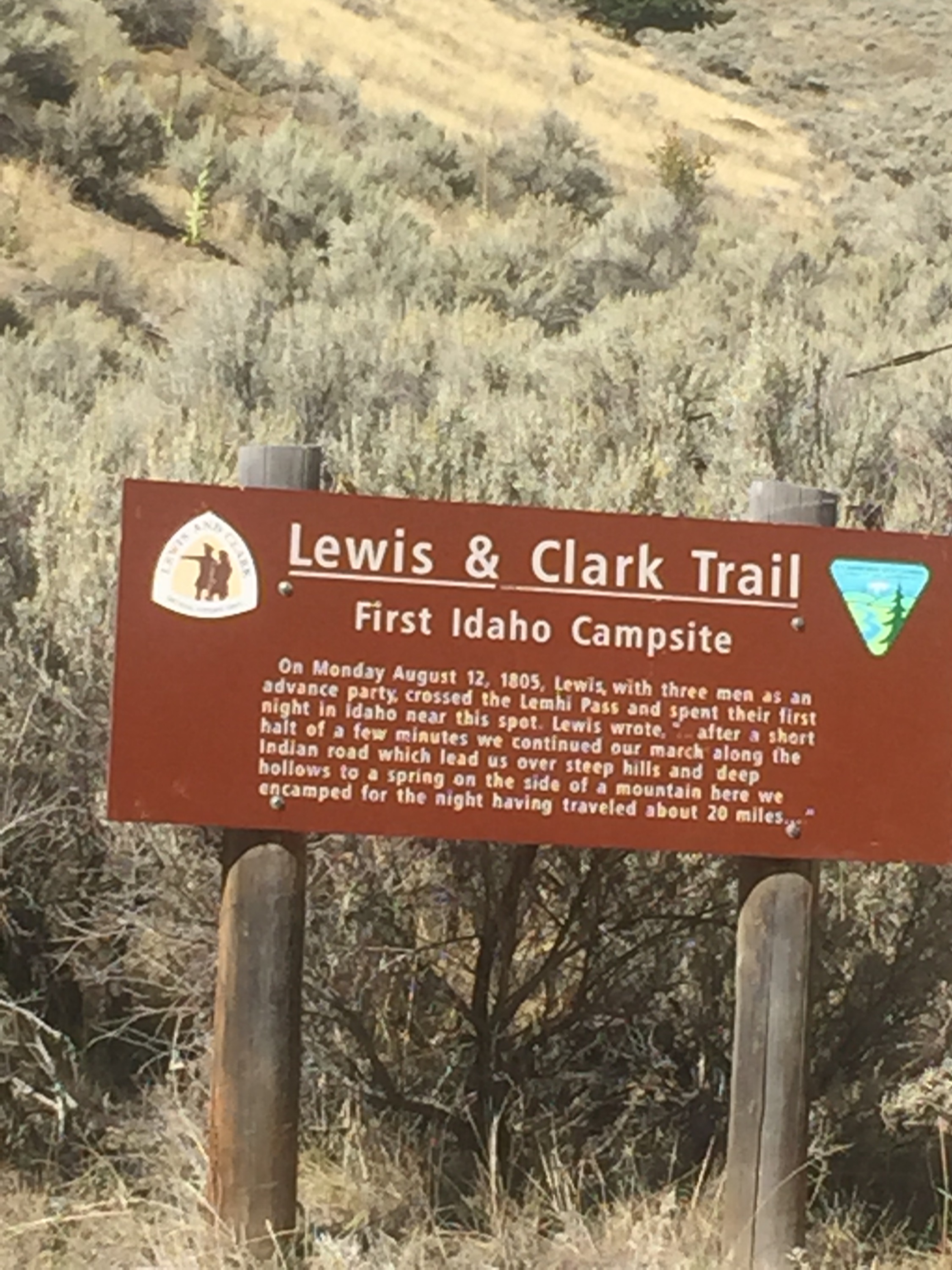
Though we had both read Undaunted Courage by Stephen Ambrose some years back, now that we were in the thick of Lewis and Clark historical country here in Idaho, it was time for a major review.

Spoiler Alert - that's Meg at the top of Lemhi Pass

Spoiler Alert – that’s Meg at the top of Lemhi Pass

Meg bought a used copy, spent an evening or two in secluded study, then thoroughly briefed me – including long passages read verbatim – as we spent 2 1/2 hours on the road east to Lemhi Pass from our campsite on the Salmon River near Stanely, ID.

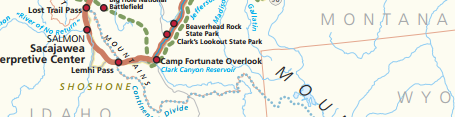
Lewis and Clark’s inaugural epic journey (see our area of travel on the left in the NPS map close up below) of course would have been from the east to the west.

NPS map of the area we visited

NPS map of the area we visited

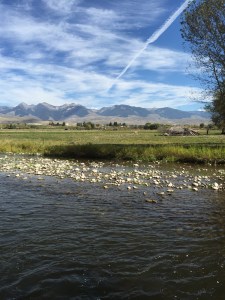
This is beautiful country here in the Bitterroots of Idaho and it’s easy to visualize the events Meg is reading about and the country Lewis and Clark saw: rolling, grass-covered mountains periodically giving way to rocky cliffs and spires, and the Salmon River winding through all of it with waters alternating between rapids and smooth, but still fast, water and banks lined with the yellow/orange of Cottonwood trees reaching their peak now that it is (was) late September.

IMG_1472

Stephen Ambrose tells of how Thomas Jefferson, the real force behind the Lewis and Clark expedition, sent Lewis to be schooled by recognized experts in astronomy, botany, and other sciences so he would be as prepared as he could possibly be for his mission of discovery. Fascinating – it sounds like preparation for a space mission.

Suddenly Meg’s reading was interrupted as a magnificent Bighorn Sheep bounded across the road in front of us and I had to swerve to miss it. Fortunately, there were no other vehicles on the road; the scenery was utterly rural with few signs of human activity and we and the wildlife had the place to ourselves.

Interpretive trail at Sacajwea Center in Salmon, ID

Interpretive trail at Sacajwea Center in Salmon, ID

In Salmon, ID, we stopped at the Sacajawea Interpretive Center, which was closed, but we walked a mile or so through their very good outdoor exhibits: hay fields, replica tepees and sweat lodges and a streamside nature trail. The Interpretive Center is in the Lemhi valley, where Lewis and Clark went after crossing through Lemhi Pass. It is where Sacajawea’s people, the Shoshones lived part of each year, which made her valuable to the Corps of Discovery as a guide, and Ambrose surmises happy to return even under these circumstances, enslaved. We enjoyed this lovely setting, seeing the world through her eyes (she was captured at about age 12), with mountains in the distance, and the excellent exhibits about the natural world, the messiness of nature, the salmon lifecycle and the Shoshone life.

IMG_1424-0

Note, we did the reverse of Lewis and Clarks first trip, so another spoiler alert – they made it over the pass.

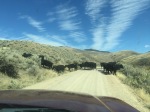
We got back on the empty highway leading west. The signs are small, and we almost missed the turnoff from the main road that led to the paved road leading to the rough dirt road that led to Lemhi Pass. One gets the feeling that only diehard Lewis and Clark nerds visit this place. But maybe it’s just that we’re here in the fall, after others have gone back to work and school. In any case, we began our ascent into the mountains past a few isolated ranches and some lovely cottonwood groves, pausing only briefly to let a herd of cattle pass in front ofIMG_1419-0
us, watching them get coaxed along by a pack of dogs and a couple of guys on ATVs.

After perhaps 12 miles, we reached the top – Lemhi Pass and the Continental Divide, the geographical line to the east of which waters flow to the Gulf of Mexico, to the IMG_1439west of which waters flow to the Pacific Ocean. It was at this pass in August, 1805, that Meriwether Lewis and a couple of others from the exploration party reached the top and got their first view of the long-anticipated Columbia River flowing west to the Pacific Ocean. Or at least that’s what they thought they would see as they crested the hill.

What they (and we) actually found on that hilltop was a lovely westward view of another mountain range, not the Columbia River Lewis and Clark hoped would complete their quest to find a navigable water route across the continent. For us, the view from the hilltop was sublime on this glorious autumn afternoon – rolling, grass covered hills in the foreground, magnificent mountains on the western horizon. For Meriwether Lewis, who had endured months of wilderness travel and was out of food, it must have been something altogether different. The Columbia River and an easy route to the Pacific wasn’t waiting for him; additional weeks of arduous travel wereIMG_1441

Remarkably, though, the view west from Lemhi Pass, the Great Divide itself, was essentially the same for us as it was for Meriwether Lewis! With the exception of the dirt road that led us to this spot, a distant power line or two, and the remarkably clean Forest Service pit toilet building off to the side, the scene was right out of the early 19th century. No visible development, no fences, no signs of humanity. Spectacular.

Lewis and Clark’s party had largely followed the Missouri River in their travels west from St. Louis, and Lewis was thrilled to locate the headwaters, or source, of the river here at Lemhi Pass. In his journal, Lewis talks of the “most distant fountain” of the Missouri, which he identified as a spring bubbling out of the ground about half a mile east of the top of the hill. We strolled down the dirt road and, sure enough, there

Missouri headwaters, likely the exact same puddle Lewis and Co exclaimed over

Missouri headwaters, likely the exact same puddle Lewis and Co exclaimed over

it was, surrounded by a rickety split rail fence (that we made easy work of). We both dipped our hands in the foot-wide spring (it was cold) and “straddled the mighty Missouri, one foot upon each bank”, as one of Lewis’ men took great pleasure in doing, and chronicling, 210 years ago.

Meg straddling the Missouri headwaters

Meg straddling the Missouri headwaters

Note: This was a guest post by Ben Barker who does not like to use exclamation points, or begin sentences with contractions. 

Idaho Towns Round Up

What do Boise, Stanley, Ketchum, (and wild card) Driggs have in common? Are they index of town listed under Idaho in Lonely Planet’s USA? No! They are our itinerary of Idaho towns we stuck around in long enough to have some notes to share. And with the exception of Driggs, they are featured in Lonely Planet as well, so we’ll see what we can add to the well worn path…

Boise was the first big city we have set a spell in on this trip- and it was one we deliberately wanted to check out. We chose the Riverside RV Park because it’s adjacent to the Greenway, 25 miles of paths that go along the Boise River.

A piece of art depicting the Boise River, in progress of installation on a building downtown!

A piece of art depicting the Boise River, in progress of installation on a building downtown!

We planned to ride it into Boise the next day for an all day excursion, and so we drove into town our first afternoon to get a couple

Crowdsourced ideas for our visit!

Crowdsourced ideas for our visit!

bike parts and the lay of the land. I did a little crowd sourcing on Twitter – reaching out to Boise’s Visitor’s Bureau for suggestions – they replied! tagging others, which yielded even more ideas! Very cool.

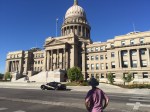
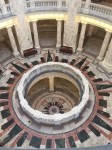
Our main stop that afternoon was the Idaho state capitol building. It has been renovated in the last 5 years and literally glistened, it was so shiny and new. It was fairly empty, but there were some friendly tour guides, and a gift shop filled with potato-themed souvenirs. Reading the displays, you might come away thinking this about Idaho: they are proud of their early adoption of women’s suffrage; land and water rights are what gets the citizens and legislature riled up; Lewis & Clark went there. We were blown away that we could walk right onto the floors of both the House and Senate chambers – they weren’t in session, but still.

We are a little short on reading material – didn’t really plan ahead on all the time to read we’d have on this trip! So we went to The Redisovered Bookshop where we picked up a used copy of Undaunted Courage (very handy for our travels-Lewis & Clark have been everywhere) and a tip on where to go for a snack and what to get there. Indeed we very much enjoyed the Classic Poutine at Bittercreek Alehouse. The fried potatoes came with chunks of roasted turkey – my friends know well that I’m not scared of any carbs that come with a side of protein.

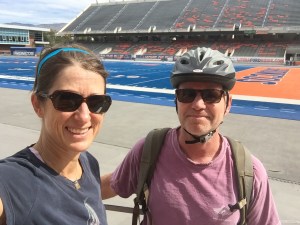
The next day we zoomed along the Greenway for the 10-mile ride intIMG_1340o town. The Greenway goes through neighborhoods,former industrial areas, under highways, a 9-11 memorial; even alongside a mini dam (see pic at right) that encourages kayakers and surfers to jump in and and catch some waves. We had to guess a bit as to where to “get off” but found ourselves exactly where we wanted to be: Boise State University, home of the blue turf. Ben has some PFGSD (post football game stress disorder) from some Fiesta Bowl when the Broncos beat his Sooners with a bunch of trick plays; nonetheless, we paid our tribute.

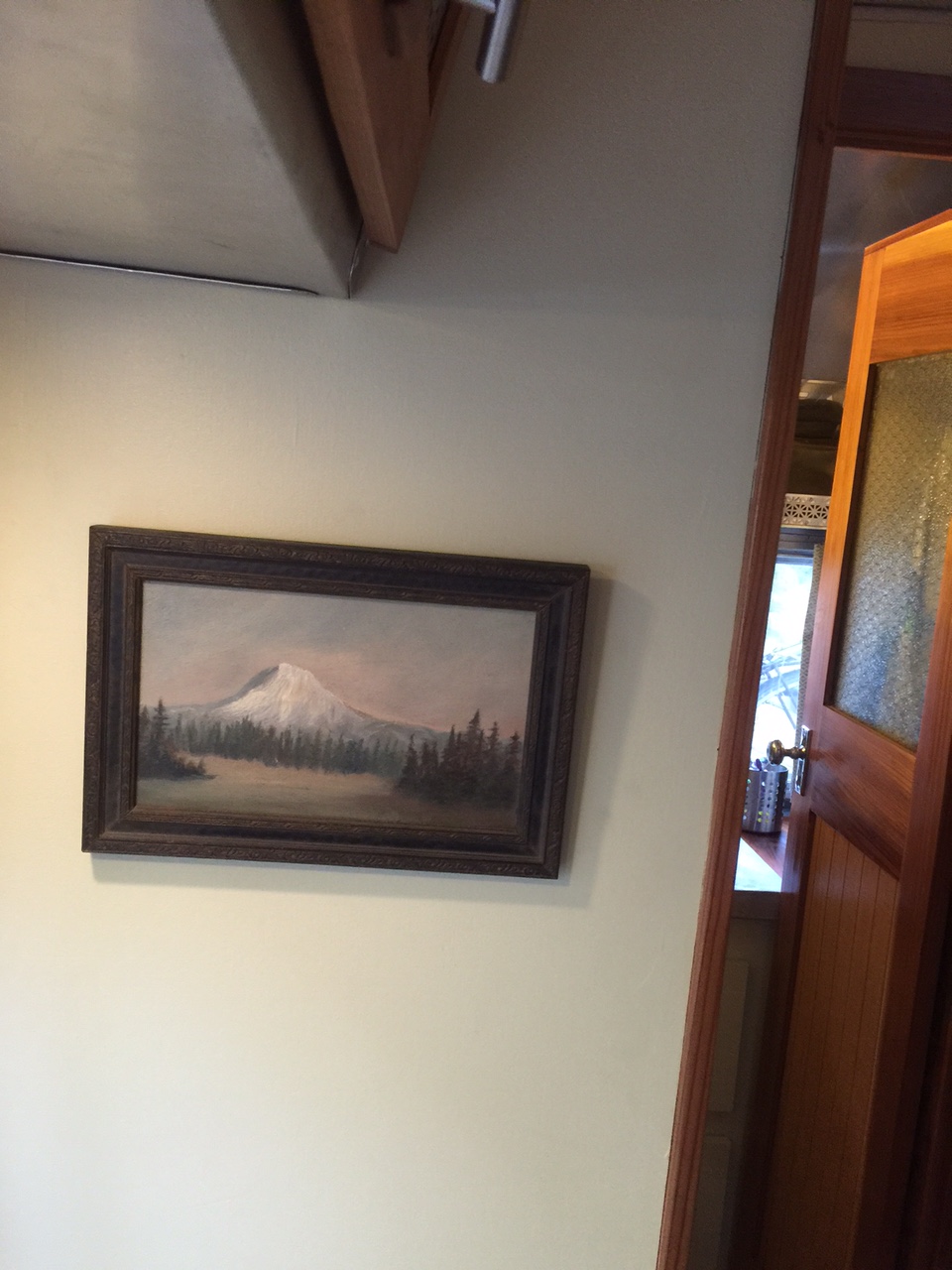
We roamed around the rest of the day – the history museum was closed, but the adjacent Rose Garden was lovely, we checked out the Basque block; the old (and hip yuppy) neighborhood Hyde Park where we very much enjoyed the dollar tacos at Parilla Grill. We checked out a few antique stores, picked up a few hooks, and this painting – our very first “art” for the Airstream. We just love it.

From a cool little store called "LA Junk"

From a cool little store called “LA Junk”

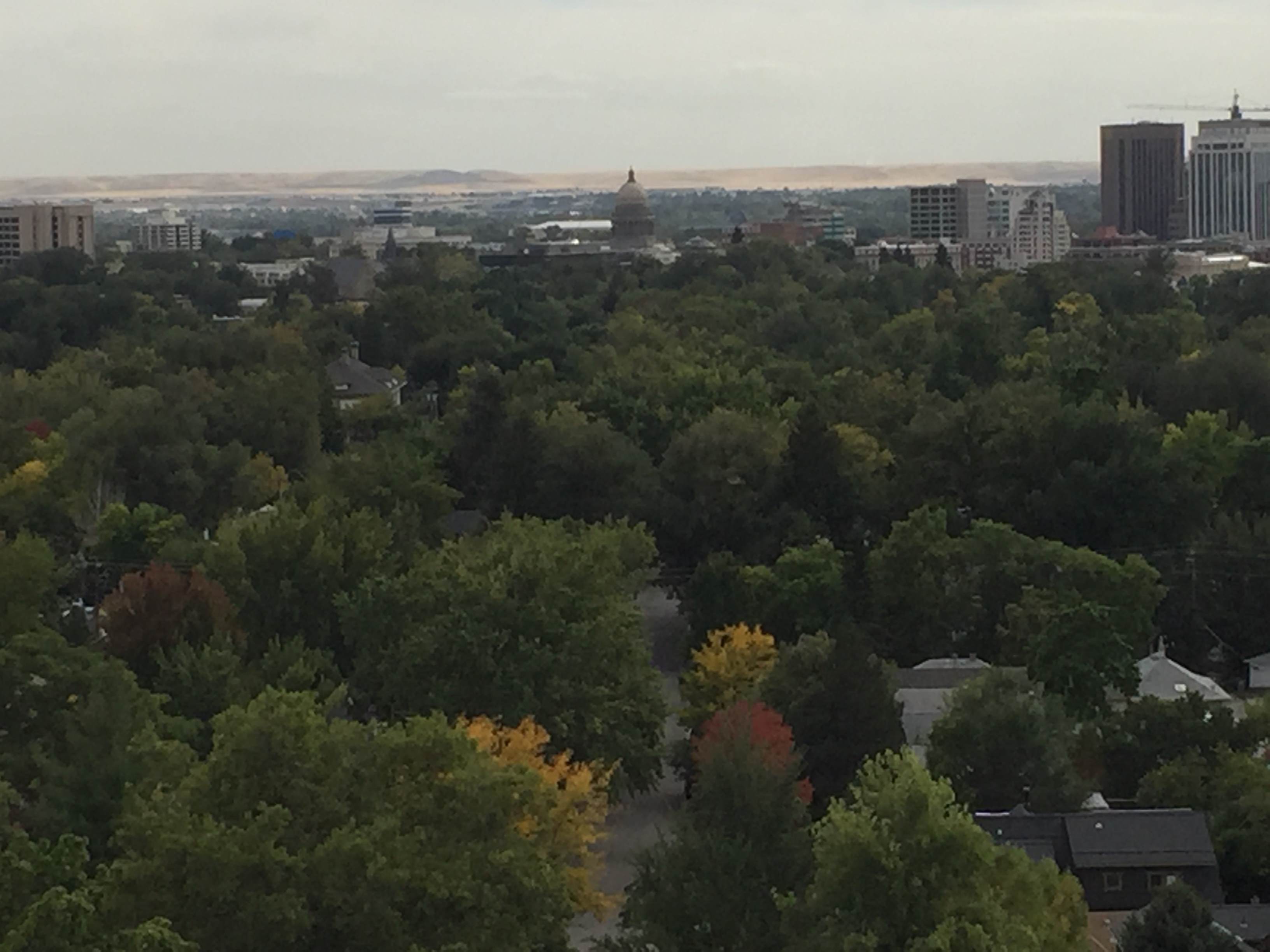
All in all, Boise was a very pleasant city – this view from the hill at Camel’s Back Park shows the inspiration for it’s name (French for “wooded”) and the beginnings of fall.

IMG_1333

On to Stanley – a cool little mountain town in the middle of the Sawtooth Mountains. Ellen at the Visitor’s Center steered us very well: we camped on the Salmon River just as the Forest Service was starting to shut down sites for the winter. Stanley apparently gets some of the coldest low temperatures in the continental US. (More about our campsite and an awesome day trip to Lemhi Pass in the next post…) IMG_1389Stanley had some well stocked outdoor stores, with sales that led to the purchase of this new hammock (left). We also had a culinary highlight – the Cowboy cookie (chocolate chips, walnuts, oatmeal) at the Stanley Bakery & Cafe, though their turkey sandwiches could have used a bit more meat. We checked out the Redfish Lake Lodge – which is a whole ‘nother world – kind of rustic fancy with a beach bar and scheduled activities. Not for us, but maybe you?

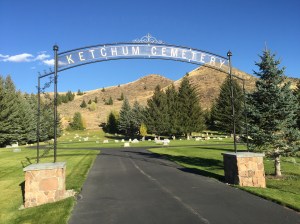
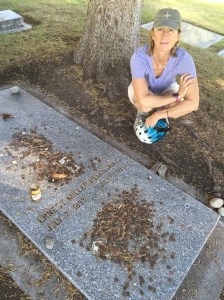
Ketchum and Sun Valley are just down the road from Stanley, an hour or so. We got a spot at the 10 dollar Forest Service campsite just a few days before camp host (crazy in a good way) Cathy heads south for the winter. We biked into town and explored a bit – disappointed mostly by the fancy stores selling the same overpriced coasters. Clearly the outdoors stores are gearing up for winter season – skiing and all. It took Lonely Planet to tell me Hemingway was buried here – his writing inspired

me to become an English major. Definitely a highlight of our visit to this city. Something that left us feeling UGH was the renovation of the Sun Valley Lodge – a historic building that now looks like any other Grand Hyatt. The concierge will emphasize how many treatment rooms the spa now has, however. Utterly stripped of personality. No picture will show the injustice. Will be interesting to see the reviews once the season starts.

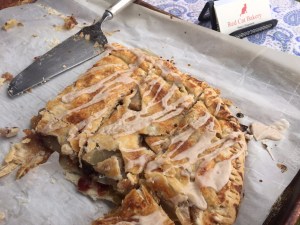
And finally Driggs! On the eastern edge of the state (we were headed to Wyoming) the town is the home of the Grand Teton Distillery on the Harvest Host list. The Distillery was so kind to let us park overnight in their driveway. Though we missed tasting their vodka (you know it’s made from potatoes!) and whiskey, we will look for it out on the trail. Though it was cloudy and drizzly and we had just been to the store, we saw a farmer’s market on the way out of town. “Do we have to stop?” asked Ben. AS IF! Luckily he gave two Airstream tours while I bought the last of summer’s

tomatoes, cucumbers, as well as jerusalem artichokes and this cherry slab pie (pictured above, though we liked her peach scone the most!) Driggs, we really liked you! The woman who grew the artichokes told me she’d give me this sticker (above right) if we put it on our Airstream. Heck, yes! They are continuing with a Teton Valley winter farmers market indoors, I heard. Hooray! Don’t forget to list and use Local Harvest in your travels to find local and lovingly grown food. For lovingly restored historic hotels, I can’t help you, but we have high hopes for our visit to Grand Tetons coming up next!

Oregon Trail National Historic Site – the word RUTS is ridiculous in any other context

From the Fossil Beds, we moseyed east, over to the National Historic Oregon Trail Interpretive Center with the promise of RUTS. Wagon RUTS. From real pioneers. Thousands of them. There are many recommended NPS sites related to the Oregon Trail (thank goodness, right?), but one biggie in our path: the Interpretive Center located near Baker City, Oregon.
IMG_1157

Baker City citizens lobbied to have the fancy Center built in their community.

The 10 million dollar center (most locals were quick to either brag or lament the expense) is indeed impressive – high on Flagstaff Hill overlooking the Baker Valley – and the pioneers’ first view of the ominous Blue Mountain range they had to cross, though toward the end (it being Oregon) thankfully, of their journey. Of course the pioneers would not have gone up the hill, they would have gone around it – the easier path. So the high perch of the center itself is designed to give you a view of the trail, not necessarily the view the pioneers themselves would have had. Interesting and smart I thought.
View of Baker Valley and Oregon Trail, including "ruts" from Interpretive Center.

View of Baker Valley and Oregon Trail, including “ruts”, with Blue Mountains in the background. Taken from inside the Interpretive Center. Gorgeous.

Related, when I asked a staffer generally what route the trail took west from the Center, he said “Follow I-84-that was the easiest route than and now.” Logical. So if you want the pioneers’ view, hop on the interstate. : ) If you’d like to learn more from first-hand accounts about this particular spot on the Trail, my brief skim of this guy’s overview and sources seems to square with what we learned at the Center. Fair warning: A lone pine tree meets a grisly end.
The museum displays were the familiar mix of phony/modern/creepy looking mannequins with pained expressions – loss of a child, fear of Indians, uncooperative oxen. Picture Heidi Klum and David Beckham overacting in period costume. (Why didn’t I take pictures???) The building offers a stunning floor to cathedral ceiling windowed-look at the valley – including the RUTS and the rough outlines of what is a mile or so of the Trail (see above picture).
The next section of the museum offered the familiar chronological and contextual panels with many primary sources as well as more than the usual amount of paintings depicting the Trail, which I thought worked well. Lots of audio, and kid-oriented information and activities.
Feminist museum curator sneaks one past the boss!

Feminist museum curator sneaks one past the boss!

My takeaways?…I think it did a good job of showing WHO went – eg farmers, not necessarily merchants. Immigrants. People from the midwest, not the east. Young(er). Also, I appreciated they way they broke down the different geographic parts of the trail. I took pride in the fact that most of the detailed first-hand accounts were written by women (see feminist curator’s take on the left). I really appreciated the last section about what happened when they got to Oregon City. What happened next? Right! Thousands of pioneers came over decades. Weren’t the best claims taken in the first month or so? What then? I am still wondering why estimated numbers of emigrants varied so much from year to year – for example in 1850 very few, while in the previous and subsequent years, lots. We stumped the Sunday staffers with our question on that. Anyone?

Though you can hop out of your car and see the RUTS right off the highway on your way out, the staff said we should take the hike down to them – .8 miles there and back through the same sagebrush the pioneers traversed. It was late in the day, and hot, but we booked it, to avoid getting back before closing time.

It may have colored my “experience” of the RUTS a bit, but I wasn’t overwhelmed with a sense of “x happened right here” that I expected. Maybe it’s just too big an event to get that feeling about. Maybe it was the unseasonably hot weather and the prospect of a mile hike back up the hill. Our water and peanut M&M supply was low. I don’t take this lightly as I am a big believer in the power of “being there” to help you understand history. Nothing alarming, just a little twist on the power, which I will continue to drill down on. Still overall, a really cool place and way to learn about it.

Some young BLM staffers were out front giving a flint knapping demonstration. It’s sort of like knitting we were told (in that it’s repetitive and meditative), but very dangerous as you are using a flint to carve a seemingly impenetrable rock into an arrowhead.

The guy doing the demo said there was an old Indian who came out of the mountains in 19-oh something, and became a sort of artist in residence at a museum in San Francisco, and it’s because of that old Indian that anyone alive today knows anything about flint knapping. Hmm. We asked his wife, who was sitting nearby, if she had any dangerous hobbies, and she said camping, so we quizzed them on places to camp as we headed toward Idaho. Score. See upcoming post on Hells Canyon.

So, just to add some authenticity to this experience, we had our own little pioneer mishap with our trailer’s tongue jack (see similar: tall thin cylindrical thing in the middle with a handle in the pic at right) when we were leaving our campsite that morning. Let’s just say the tongue jack (and trailer) is 50 years old. While Ben was turning it (thank god for the laws of physics) to lift the 4,200 pound trailer so we could place it on the truck’s hitch, it slipped, again, and again. Damn, physics. I of course screamed and

Photo credit: vintageairstream.com

Photo credit: vintageairstream.com

called (not literally as there was no cell service) for AAA, then took a walk, at Ben’s request. He in the meantime pulled out two other jacks (for the car) and placed some legos (not really, but sort of) between one and the trailer tongue, so he could lift it high enough to get it on the truck. There were some rope harnesses involved as well. Sorry, Ben would have killed me if I took an actual picture of it. So we have a new tongue jack, an electric one. Take that pioneers! Off we go to Hells Canyon, then Idaho, a reverse migration?

See you on the trail!

See you on the trail!

Crater Lake – All that and more

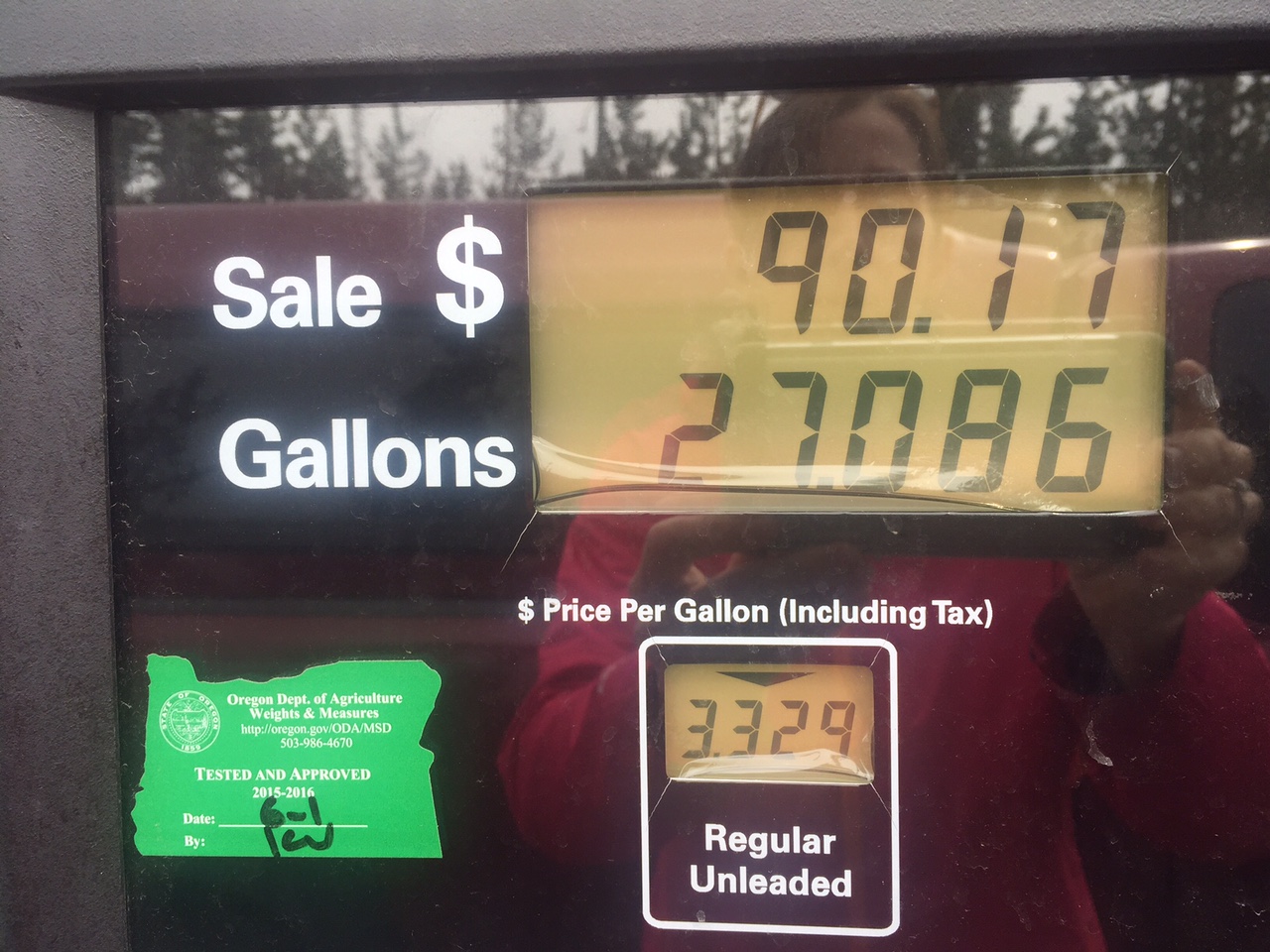
We turned off the road to head to Crater Lake – the only National Park in Oregon and a site we might have skipped if not for friends’ recommendations – with less than a 1/4 tank of gas and no reservation. We hoped to stay IN the park-its campground is the closest to the lake, making access easy. But I was nervous-what if the campground was full? Our M.O. of making plans one day ahead of time does not square with the park’s online reservation system that you plan at least (a shocking) two days ahead of time. Plus-gas! We’ve been averaging 11.5 miles a gallon. Ugh.

We've been logging our mileage/fuel costs - biggest expense so far especially as we've been making tracks.

We’ve been logging our mileage/fuel costs – biggest expense so far especially as we’ve been making tracks.

We zoomed past the entrance with our national park Golden Eagle pass (a bon voyage gift from Ben and Joan – merci!) straight to the kiosk for walk ins. Score! Campsites available plus… gas pumps, located on site!  We did our circle the campground loops thing, picking out the best site and chose D loop, site 13, overlooking a lovely gorge. Temps were cold – snow / rain was in the forecast.

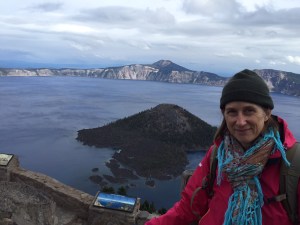
This is our fourth campground, and though our carefully posed photos of the others might suggest otherwise, this is the first one that really made us go WOW.

Maybe it’s the time of year – not too crowded, summer fading – but the forest is lovely, the chipmunks camera ready, and the sites were (all?) pull through rather than back in which we hadn’t seen yet. And I guess really  – and this is maybe connected to it being a national park – no road noise, far from “civilization”.

Your first view of the lake is breathtaking – clear, blue, vast.

IMG_0934

We did a ranger talk, a hike, and the rim drive – about 22 miles.

I heard that the best things to note in a travel journal, or in photos, are the things you want to remember.

Things we want to remember about Crater Lake:
Ben: The park ranger, in his talk had us picture the people living in this area when the volcano blew – imagine your whole life a 12,000 foot mountain is a part of your landscape. Then one day – in less than 12 hours – it was gone, replaced with a 2000 foot crater (or more accurately a caldera.)

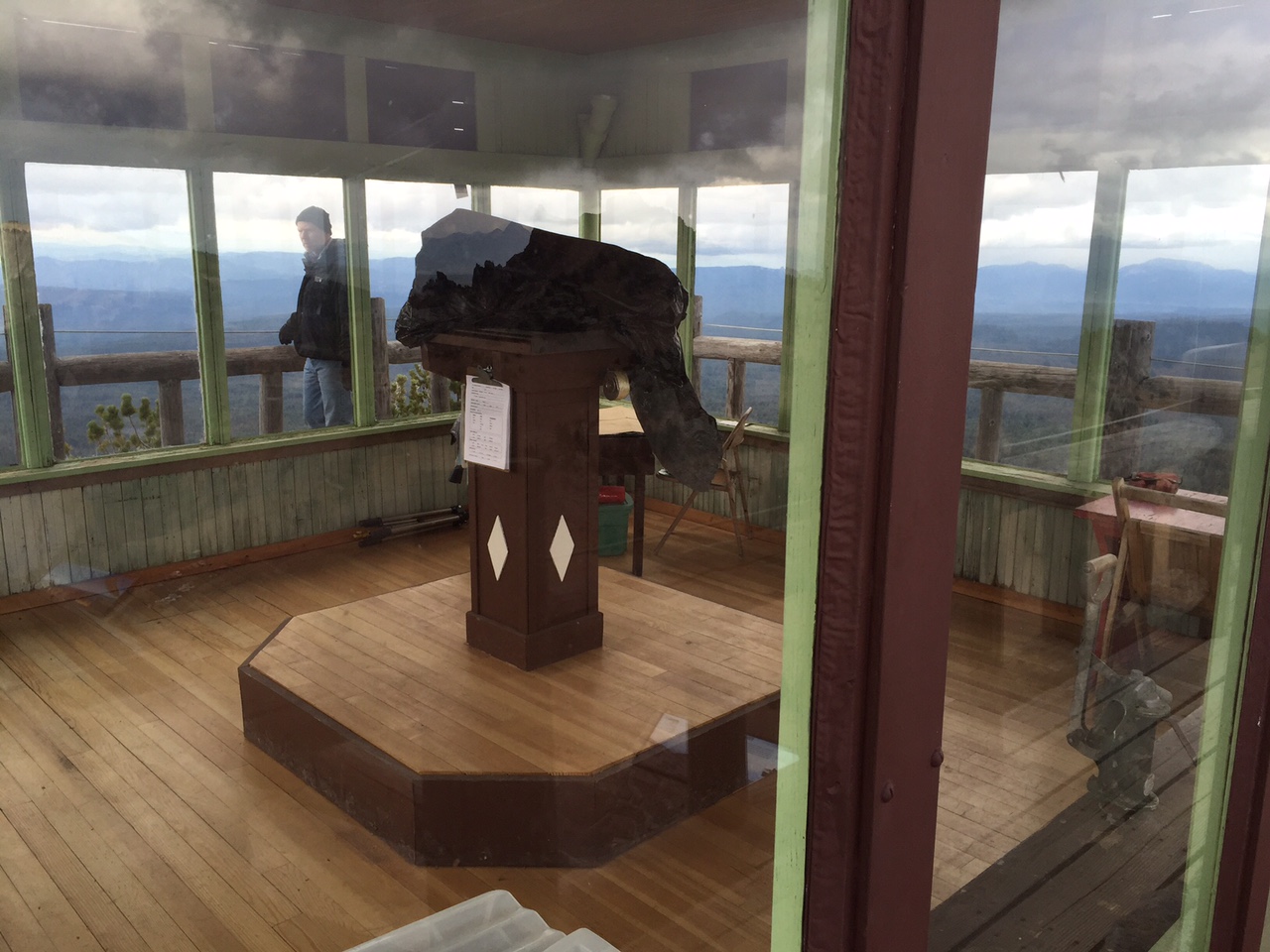
Meg: The hike up Watchman – where there is a national landmark fire watching station – still used today. With key supplies like a pencil, pencil sharpener and glass cleaner.

Firewatching station up watchman hill.

Firewatching station up watchman hill.

There were actually fires in the distance too – set by lightening, watched and controlled by firefighters. Naturally occurring fire (lightning), that doesn’t threaten human property or people, is an important part of the natural process and is allowed to burn.

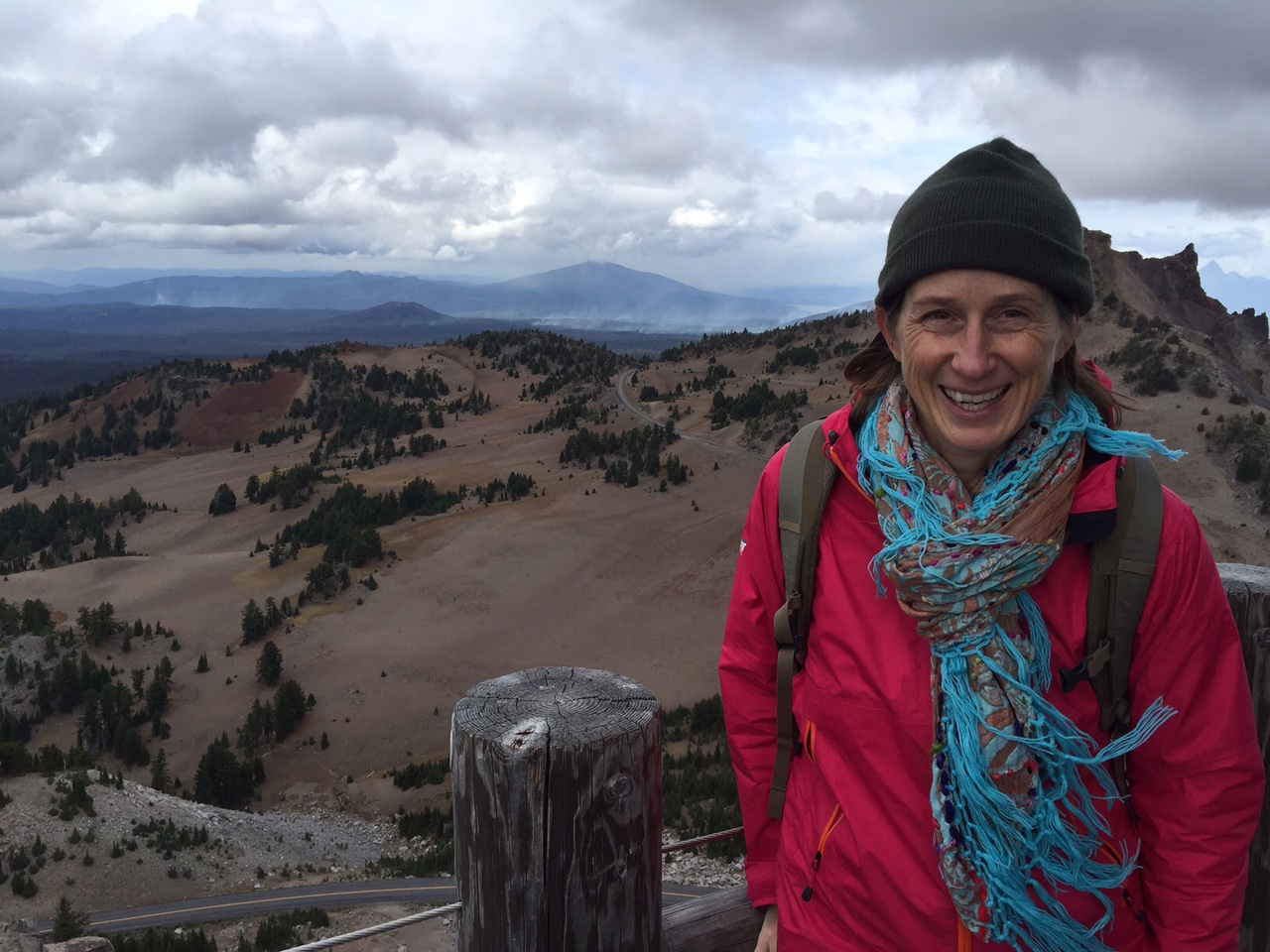
At the top of the Watchman - where firefighters still look out and have been since the 30s.

At the top of the Watchman – where firefighters still look out and have been since the 30s.

We had such a great day – and a night of freezing temps as we were still missing a few parts to get the propane heater warmed up. Our gas stove warmed things up a bit and wool blankets too. Ben’s fingers nearly froze hooking up the trailer to leave in the morning.

Snow on our way out of Crater Lake the next day. ZERO visibility.

Snow on our way out of Crater Lake the next day. ZERO visibility.

Doesn’t hurt to celebrate an anniversary – and I’m currently typing/posting this while doing another FIRST: Laundry! Woot!

IMG_0982

One last pic of the lake – they call it the phantom ship. Lovely. Like a little Airstream!IMG_0958

Airstream Shakedown Cruise…

There was no question taking at least a one or two-day pre-trip trip would pay off. It was just a matter of fitting it into our schedule, and prioritizing, as we are eager to hit the road, and head north before (and yes Montana had one today) a winter weather advisory hits.

Common sense won out and hours after we completed work on the key systems and finish out (still some hooks to hang) we went south to spend our very first night in a trailer. The San Mateo campground, a part of San Onofre State Park, just north of San Diego near San Clemente, is a state park only two or so miles from the Pacific Ocean.  It was just the ticket for a shakedown cruise. (And we immediately wrote our first review for Campendium!)

Though a single night was expensive, it was very accessible, there were no surprises, it wasn’t crowded, and, if you can blur your eyes a bit and get beyond the brown California landscape, is situated in a lovely spot. We tested all our systems – hooking up to electriciy and water. The hot water heater was the star of our tests (or the hero of the day, as we like to say), and the shower too. The propane had a few glitches – one of which Ben has worked out (getting the second cook-top burner going) and one we still have to fix (getting the fridge to run on propane-this is the current villain).

Crispy time snacks - no cooking required.

Crispy time snacks – no cooking required.

We had two great meals – the oven worked well, the kitchen is big enough for two people to work in comfortably. The bed (converted from the dinette, with a 3-inch memory foam topper) was super comfortable. Our neighbors were lots of bunny rabbits, some prairie dogs (we think) and a few other campers – including two sets of fellow Airstreamers, who gave us their tips on other California campgrounds to visit.

So what did we learn? Don’t leave home without your bread knife or aluminum foil. That’s all I forgot to pack. Not bad. Another hero: those lights you clip on your ball cap ROCK for hands-free night-time navigation to the campground bathroom (hat tip: Monica N.) Be always grateful one of us knows how to fix things – another couple in the campground had a water leak and were washing dishes etc out basins on their picnic table. We had a leak too, but Ben fixed it! Yes!

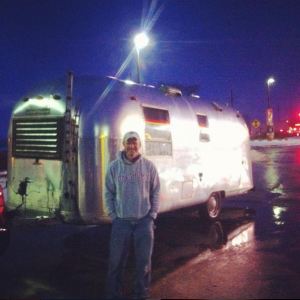
So we wrap up about four months in Glendale, the final stage of a restoration that began in December 2013 when Ben met the previous owner at dawn in a rest stop parking lot in Michigan to make the sale- thank you Craigs List, another key player in this restoration. Next post, from the road…

A Plumber and an Electrician walk into an Airstream…

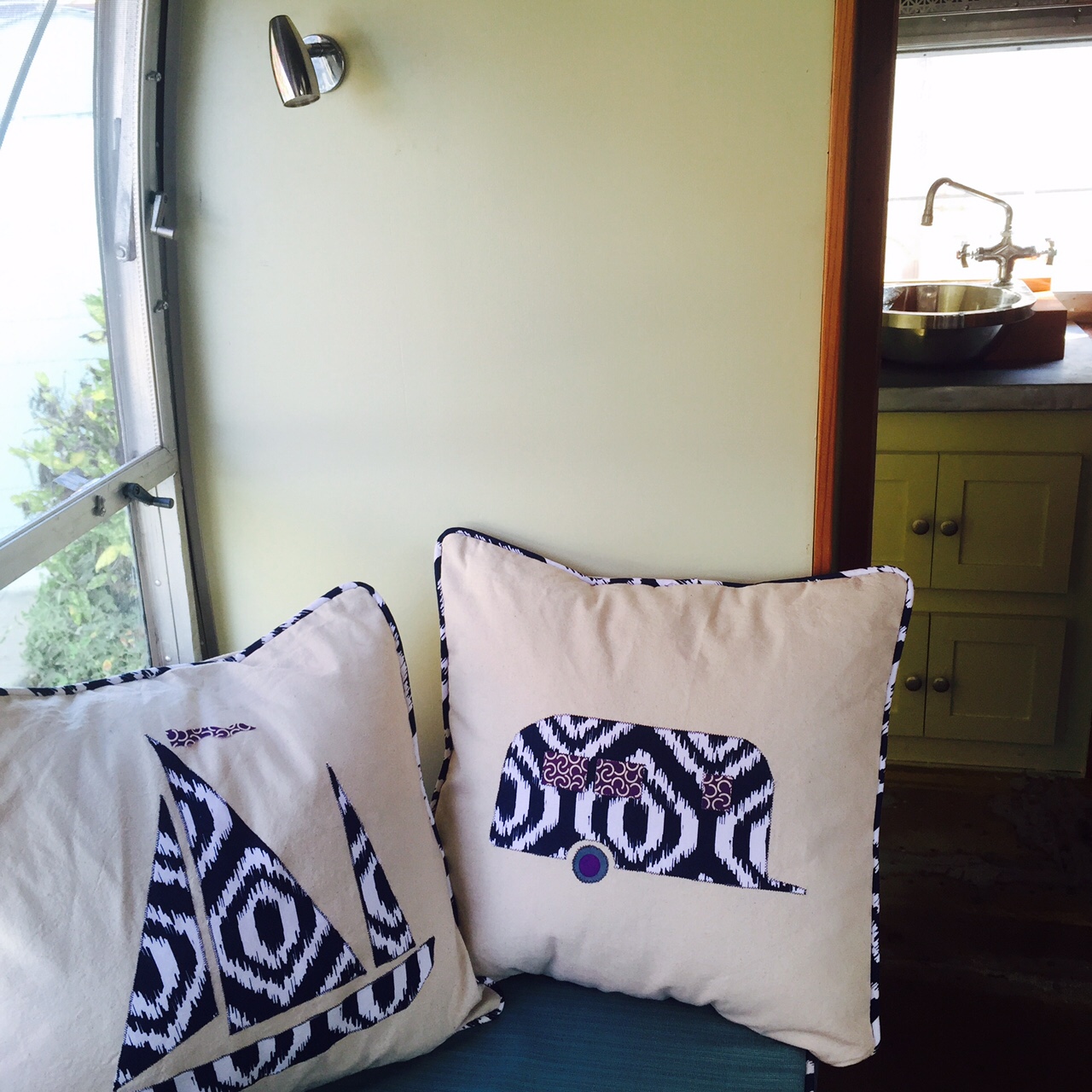
…is either the beginning of a very promising joke, or a (brief) summary of the last couple of weeks in Airstream restoration. But seriously folks, it’s sooooo wonderful to be far enough along for systems work, and pleased to be able to hand most of it over to real experts. (Ben’s edit: Huh? What are you saying??) WARNING: This blog post will rank high with Airstream renovation enthusiasts, low with others. But to tide others over (eg my closest friends), here is something pretty – I machine appliqued the sailboat (a yawl like one we used to own) and Airstream onto the napping couch pillows. The reading light is newly installed and you get a good look at the bathroom sink cabinetry in the background.

FullSizeRender (10)

OK, back to the boring stuff. First the plumbing. You may recall in our prevous post that Ben had laid the groundwork for final connections by running all the PEX lines. My parents had scheduled their plumber Jaime to come over and do some maintenance (leaky faucets, a no-no in drought stricken California). They sung his praises, so we arranged to talk to him about doing the Airstream connections. The main requirement is that he be comfortable with PEX tubing, which is becoming more popular in home applications (it’s less labor intensive and thus cheaper to install), but still raises a few eyebrows among old fashioned Jaime-The-Plumber types because it’s, well, not copper.  Turns out Jaime and crew did know how to handle PEX, had all the right high-tech tools, and even signed off on PEX philosophically as perfect for a trailer.  All went great. A real feeling of progress when we hooked up the “city water” supply (i.e. attached the garden hose to the newly-installed inlet in the back of the trailer) and the system was pressurized!  Faucets all worked and everything drained properly!

Jaime the plumber at work

Jaime the plumber at work

Meanwhile, we’d been hunting around for an electrician and found Soren, the electrician who works with Brody Travel Supply in Ojai, CA. Brody is one of our favorite follows on Instagram. Collin, of CFDetailing knew we were looking for an electrician and suggested we call Geoff (“who knows everyone!”) at Brody, who then kindly hooked us up with Soren who works out of their shop about 90 minutes north of Glendale.

So, we prepared to take the trailer out of the driveway for the first time (since we arrived here on May 6th) to head up the road. Woot!

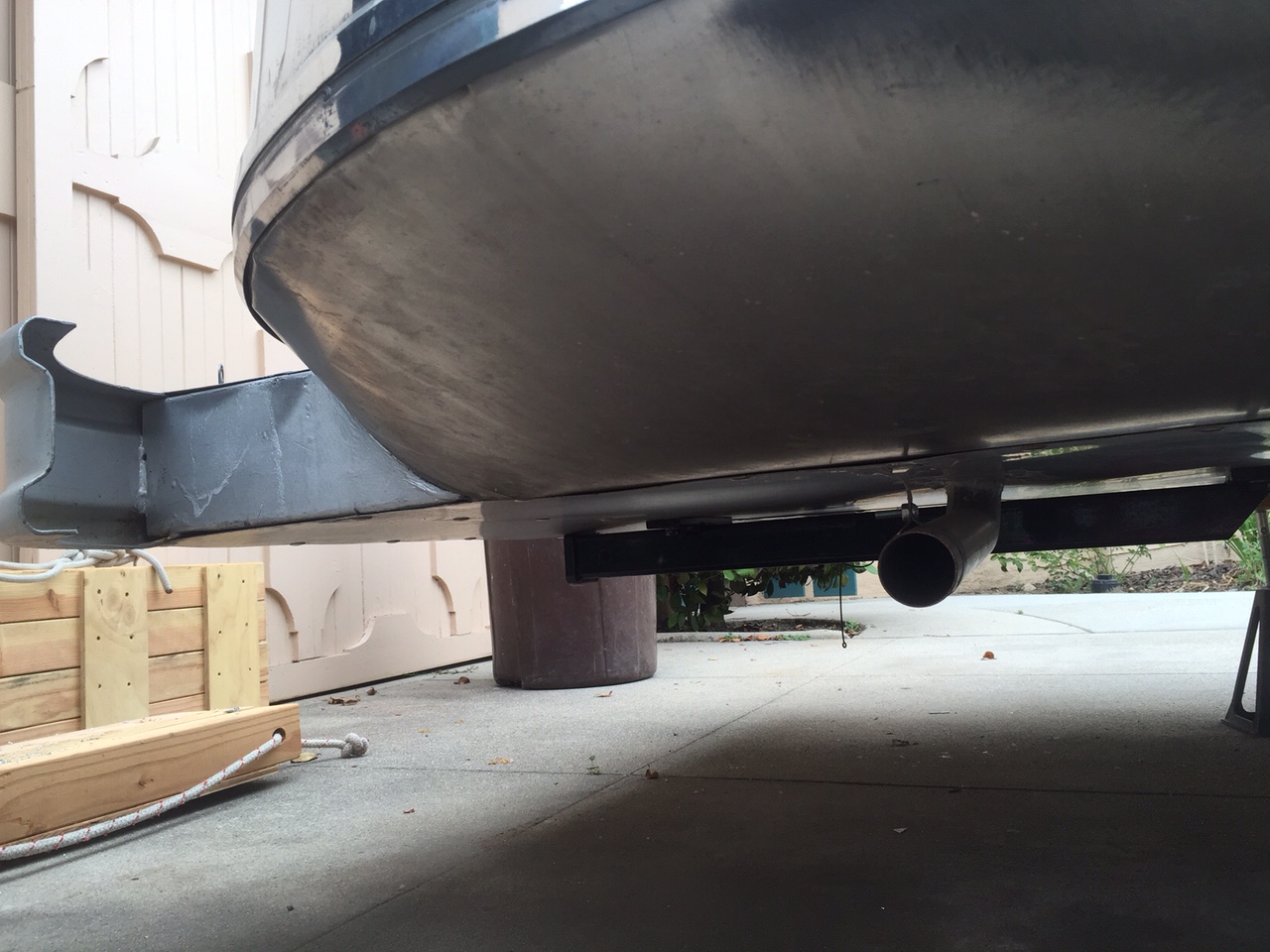
We battened down the hatches, confirmed we were paid up on our insurance, and put some notes on cars parked across the street – asking if they’d move their cars so we’d have all the room possible for leaving the driveway. The hitch scraped a bit when we had backed in and we have since installed our water heater; its exhaust pipe (see pic below) sits lower than the hitch, on the side. If that pipe scrapes, we are doomed. So, Ben built some hefty wood ramps to deploy under the tires if we needed some extra height to avoid scraping, and I positioned myself in the rose bushes to watch carefully as he moved out – alas no scraping, so the hefty wood ramps have been set aside to be used in the zombie apocalypse.

IMG_0351

Water heater pipe in foreground, hitch in background. Zombie apocalypse ramp at left.

Airstream, after successful launch fro our driveway, in our

Airstream, after successful launch from our driveway, in our “staging area” a block away on a quiet street adjacent to ours.

We took the easterly route (the 210 to the 5 to the 126, y’all!) to Brody’s in Ojai (avoiding the 101) and had an uneventful drive through mountains and valleys and lush (thanks to irrigation) fruit and vegetable farmlands. It WAS great to be on the road, even for a short time. After arriving, we killed a little time before meeting with Geoff, taking pics of our shiny trailer and tangling with a junkyard dog (not really).

Geoff kindly gave us a tour of the other trailers in his lot – some works in progress, all interesting and made more so by his enthusiast’s perspective and details. He and Ben exchanged some sourcing ideas. We quizzed him about solar, etc. We made plans to return two days later to meet Soren once he began the work,

Though we didn’t have much time to explore Ojai, we did have a delicious outdoors lunch at Boccali’s with an oak grove behind us and farms and mountains in the distance – fresh lemonade, Italian subs, and their signature strawberry shortcake.

Then we headed, sans Airstream, west to Santa Barbara for a couple of days of R&R. We’d been looking for an excuse to get up north to visit my cousin Nancy there (my aunt and uncle also have a vacation place there). We stayed two nights, had two fabulous dinners with Nancy and Peck (that’s him manning their backyard pizza oven below while dog ‘Stache keeps an eye out for scraps), breakfast burritos both mornings (Jeannine’s had the edge on taste, Daily Grind on value) and a very restful and rejuvenating time looking at this view (far right) from Uncle Ron and Aunt Mary Jane’s place.

When we returned to Brody’s to go over everything, we were introduced to Soren, electrician and, naturally, vintage Airstream enthusiast.  Where do all these people come from? Everybody out here loves old trailers! Anyway, Soren knew immediately what we had in mind and he proceeded to do an awesome, super-neat job connecting all the wires Ben ran beneath the walls to the fuse box and new batteries.

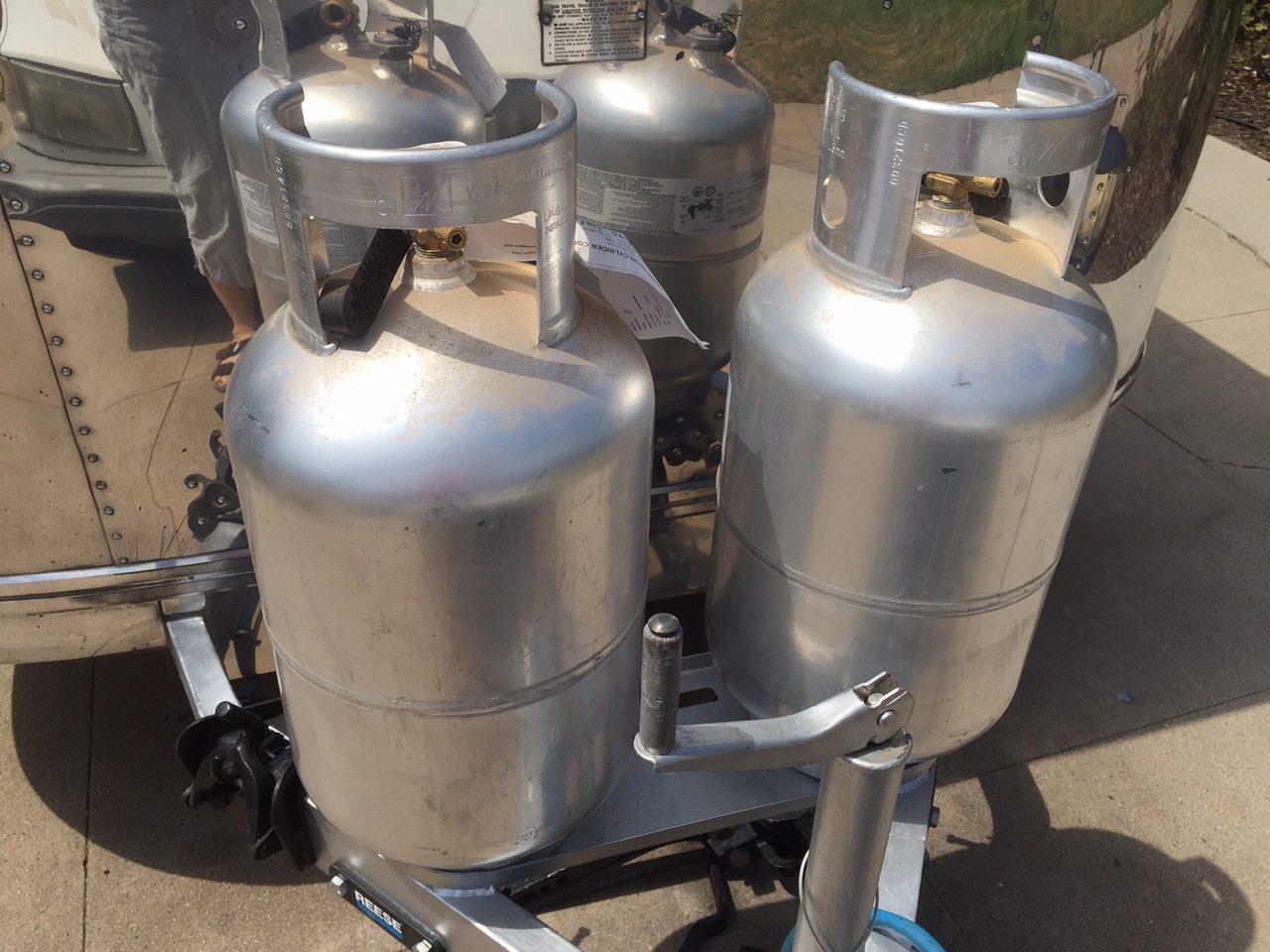
So for now, while we await next week’s appointments for propane (Monday), solar (Wed) and floors (Friday), Ben has a ginormous punch list to go through – installing electrical boxes and light fixtures, finishing woodwork, and who knows what else. I get to go shopping – snagged tons of cool stuff for storage/shelving at Ikea yesterday – showcase to come. Later today I’ll be putting on ratty clothes so I can polish up the bad boys below before they begin their lives supplying life blood to our fridge, stove, water heater, and bbq.  Sigh. Only Ben (and polisher Collin, of course) would demand such aesthetic perfection.

Propane tanks about to get clean.

Propane tanks about to get really shiny.

An Ode to Cousins

cousinsIn a town called Albuquerque, in New Mexico,
Two little cousins reside, with their dog, Cleo.

There’s Bronwyn, spunky and full of glee,
A one-kid welcoming committee.

Then there’s Maeve, a leader in fashion and style,
she’ll make the trends list with her Nutella smile.

Their parents are doctors, saving patients all day.
Their au pair is a wiz at pancakes, pigtails, and play.

The adobe house is the perfect place to kick back,
After foot races and booby traps and seaweed snacks.

This travelling pair wished they could stay longer,
But fortified by family, hit the road even stronger!

Cleo

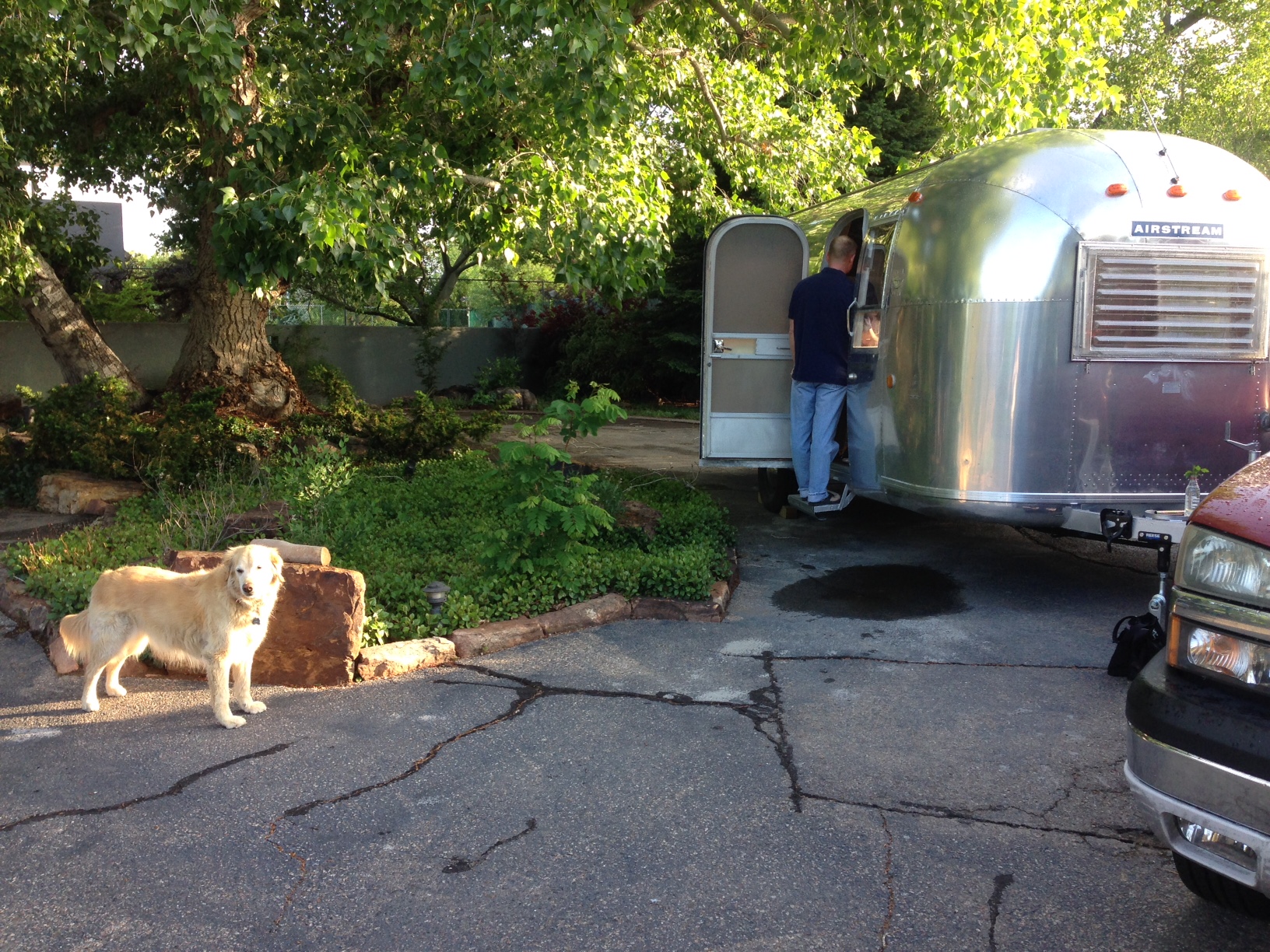
Ben supervises Meg’s cousin Elizabeth’s daughters while they check out the Airstream. Cleo the dog considers her next move.

Killing Time in Canyon, TX

May 2-4, Canyon, TX

There’s no way around it – we had to kill some time on our progress west. So we could see my cousin and her family in New Mexico, and get to California the same day a truck suspension part arrived.

We looked at a map and zeroed in on Canyon, TX, about 20 minutes south of Amarillo. It worked out great to take a few days “vacation” and SEE some sites, get to know an area with at least some level of detail. We chose Canyon after learning (Yelp and Trip Advisor are our best guides so far, along with key word searches like “cool places to see between x city and y city”) it is close to a couple of recommended state parks for hiking and is home to a great history museum. We booked an Airbnb which went above and beyond to accommodate our schedule. We pulled up Friday evening, unhitched and settled in.

Canyon home

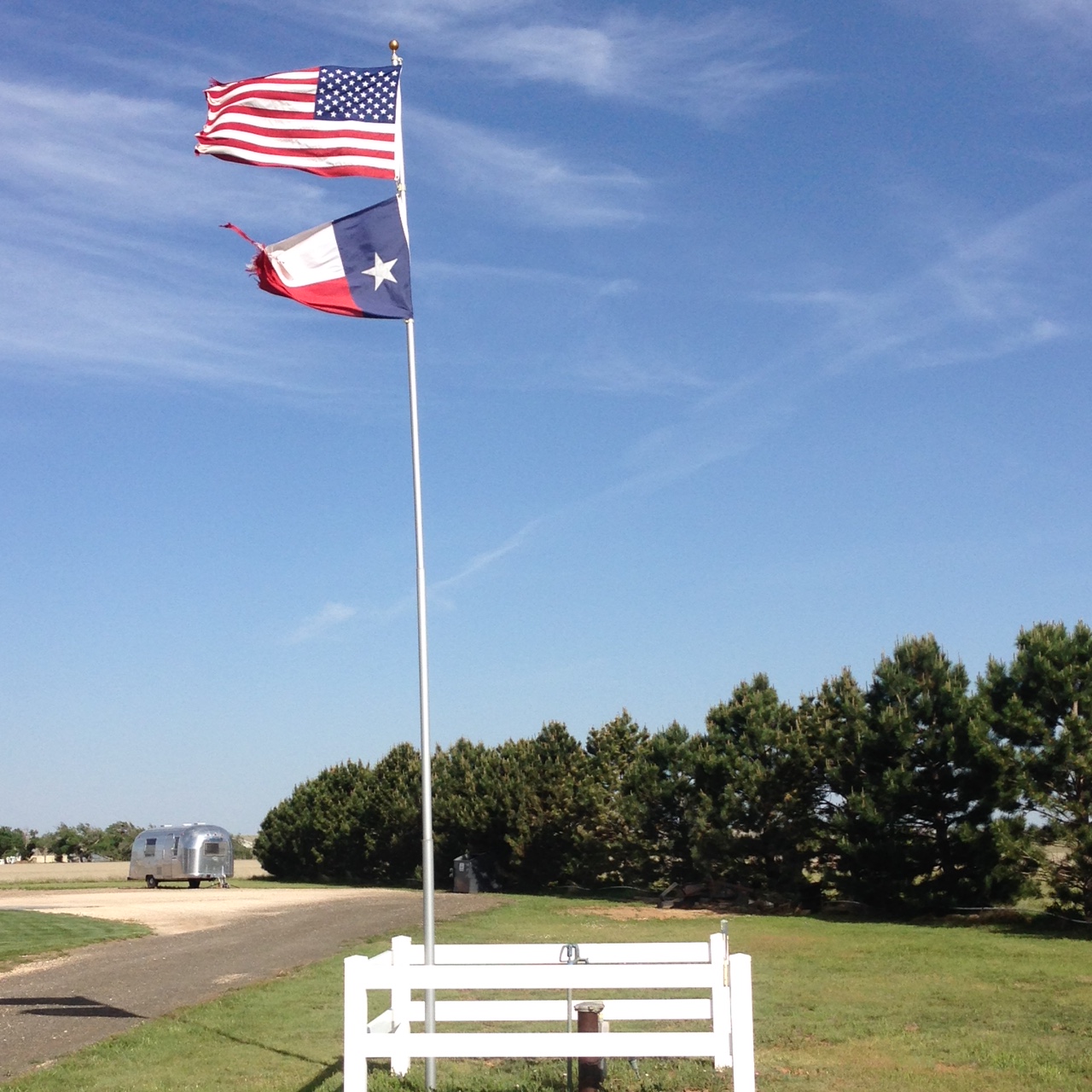
Home sweet Airbnb home in Canyon.

Canyon is pretty happening compared to some of the other west Texas towns we rolled through on the way there. That is, if the presence of three Thai restaurants is one of the measures of happening-ness. We dined at Sayokomarn Friday night, right off town square. It was packed with families and groups of teenagers. Everyone appeared to be eating the same thing – a big pile of fried rice. The waitress explained that the teens in particular always ask for it sans vegetables. If a kid requested the vegetables, he was considered a rebel. So! The food was terrific – super fresh and spicy. We walked a bit around the square, popping into Palace Coffee Company, a cool space, conveniently across from the Vape shop. The staff there gave us some tips for our hiking and recommended we talk to a bearded fellow sitting alone sipping his coffee – he worked at the museum and ended up giving good advice about what not to miss (firearms belonging to Kit Carson and Quanah Parker that were exclusive to the museum, but for some reason were located in a place many visitors miss.  We didn’t miss).

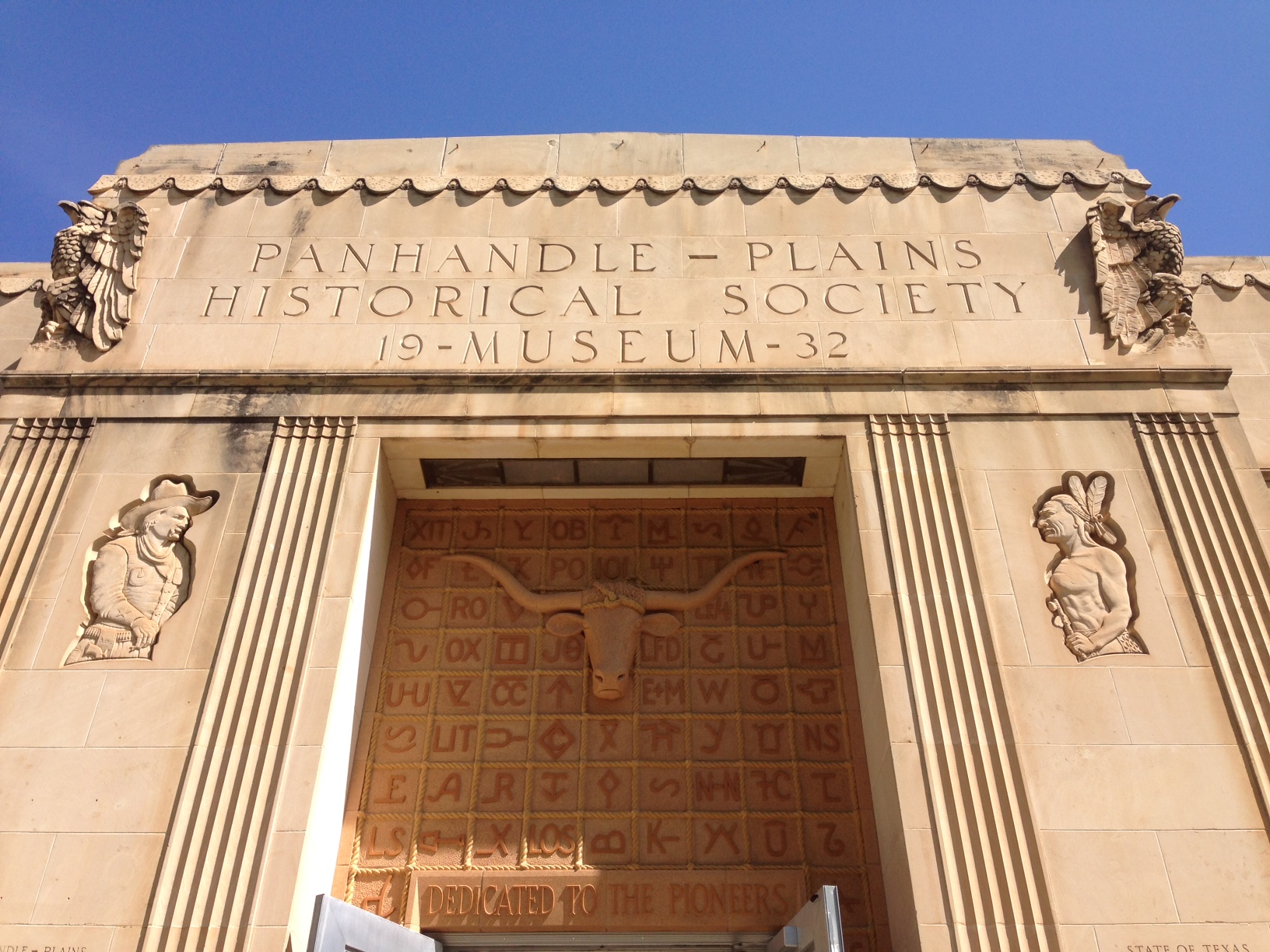
The next day we hit the museum hard, first thing. The Panhandle-Plains Historical Museum sign out front reports that “they” PPHMsay it’s like the Smithsonian with a Texas accent. It didn’t talk, so we can’t vouch for the accent, but it was a very good museum – lots of thoughtful displays, attentive to millions of years of history, geologic, cultural etc. It helped to situate the area’s significance in American history – 1870s & 1880s – rise and fall, railroads, cattle drives, buffalo decimation. Takeaways from a graphic video showing Native American reenactors gutting a bison using tools of the day: removing the bison stomach requires brute force on the part of the Kiowa hunters; work quickly; the bladder is super useful as a water container; once you dry the skull, the horns come off easily. Later, inevitably, there was talk of petroleum, but by then we were tuckered out and still had the windmill and gun rooms to go. The old windmills are very cool, by the way.
  
Off to Palo Duro Canyon – said to be the second biggest canyon in these here parts (but no measuring tape large enough to prove it, I guess). The Canyon’s infrastructure was built in the 1930s by the CCC – buildings, roads, trails. As you read the history, the state was clearly lucky and grateful to get to benefit from this federal New Deal program – as the land had just come into state hands and was not quite yet eligible. They also noted that it may have been the only or one of the few CCC programs at which veterans, African Americans and young people all worked.
  
The main hike there is the Lighthouse Trail – about 5 or 6 miles round trip, with some challenging rock scrambles at the end to make it up to the rock figures that resemble…yes, a lighthouse. Ben was a hero and carried our backpack with our mandated gallon of (tepid and eventually warm) water per person, which we drank nearly all of and it was only May (heaven help the hikers in July and August). I had to do part of the return trip on my hands and butt. Your reward at the end is a stop at the trading post for cold Gatorade and soft serve ice cream.
Meg at Lighthouse

After a light 3 mile hike to get to this point, the hard part’s to come on Lighthouse Trail in Palo Duro Canyon.

The next day we trekked south to Caprock Canyon State Park. Smaller in scale, though not in sites, Caprock was much less crowded, likely because it’s much further from the two nearest population centers, Amarillo to the north and Lubbock to the south. We did a good portion of the Upper Canyon Trail (too tired for the rock scramble to the Fern Cave at the end -next time!) We had the added bonus of ice cold water from bottles we had frozen the previous evening-lesson learned the hard way the day before.

 
Caprock is home to the bison descendants of the Goodnight herd, saved from extinction in the 1880s. But darned if those critters didn’t hide from us uBuffalo warningntil just as we were leaving. We turned into the park’s lake area to dip our toes and Ben spotted about two dozen about 200 yards off. We sat and ate oranges (we’d run out of chips), watching them from a picnic bench, following the park’s rules, avoiding certain death by staying back 50 yards – see warning that doubles as your park permit (to the right.)

Weather

Canyon weather, coming in from the west.

 
On the drive home, we finally got a chance to track some weather – groups of thunderstorms seemed to be headed straight toward Canyon – just enough to scare me, but captivate Ben. They mostly broke up or went around us, but we got a good pic and eventually as we were falling asleep got some thunder.

Alas, no twister.  Ben’s enthusiasm for tornadoes has waned some since we got the Airstream, i.e. tornadoes are typically accompanied by large hail, hail dents aluminum, Airstreams are made of alumininum, etc., etc.
Tex

By the side of the road exiting Canyon – Route 66 era and full of charm.


So, an extended stay in the Texas panhandle was a risk, but well worth it. On our way out of town Monday, Big Tex Randall wished us well, and we him. So long Texas!
UPDATE: A reader reminded me that Georgia O’Keeffe lived and taught art in Canyon for a bit. Great info, including her own words on the plains, the people, teaching etc, on this from West Texas A & M University

Continue reading