Wandering Around Washington State

So it’s been a bit rainy here in the PNW. That’s my headline. Our laundry isn’t so much dirty as it is damp. But we’ve seen some cool stuff in the last week or so as we’ve hovered near Seattle knowing we’d have to return for some follow up errands.

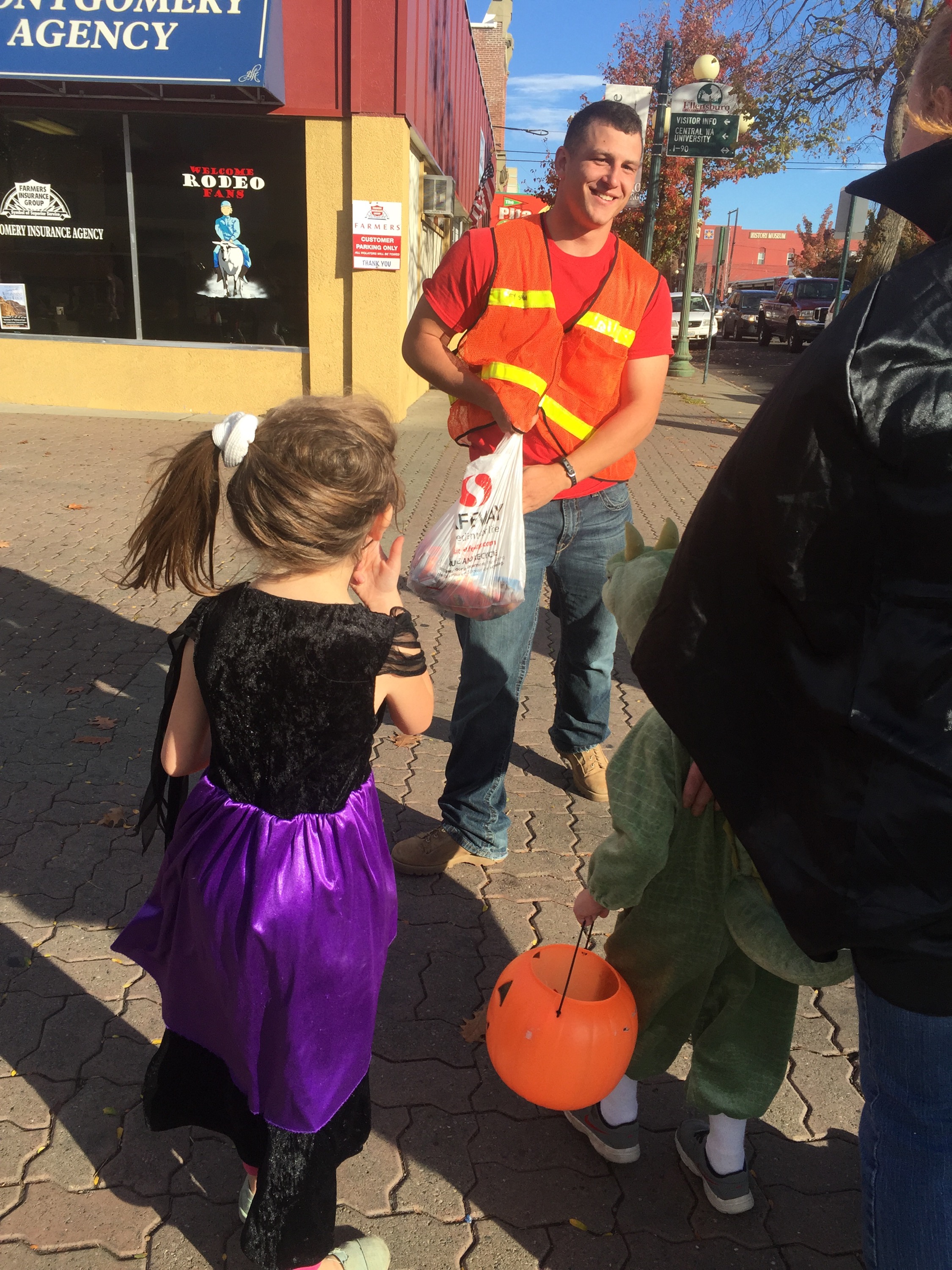
Heading east toward Yakima and Walla Walla, we checked out the large small town of Ellensburg. It was the Friday before Halloween and businesses were handing out candy. You could get a real feel for the community spirit in this town as nearly every IMG_2903business in their large district was participating. The ROTC class from the local high school served as safety patrol (and handed out candy themselves.) They have a large county historical museum where I tried to learn how to pronounce the county name-Kittitas. I also learned there the town’s name used to be spelled Ellensburgh, but in 1890 The US Board of Geographic Names made every town with a “burgh” drop the “h” (apparently Pittsburgh rebelled.)
We thought it wise to park ourselves for the evening at a winery via Harvest Host, given Washington’s excellent wine scene. We picked White Heron Cellars partially because it is a bit north of where we were headed and would allow us to see a different part of the region, and partially because it was in Quincy, WA and I have a friend named Quincy! See hoIMG_2936w frivolous one can be on a year long trip? Indeed White Heron was beautifully situated on the Columbia River, though we had to take a circuitous route there. The winds were high and Cameron the proprietor said that there had been a fire previously this year adjacent to I-90 and trucks (and trailers???) just couldn’t travel safely–too many tumbleweeds. We loved all their wine and bought not one but two bottles, a red (a blend, Mariposa) and a white (Roussane). The next morning #visitorkitty got as far inside (which is to say just to the front step) of the Airstream as any kitty has thus far.

From there we headed to Walla Walla. When Ben and I got married, we had to look around for an officiant. A fortuitous serious of events led us to Rev. Jack Mathison – a World War II vet and otherwise amazing person who has remained a family friend. Jack trained as a navigator on the B-24 Liberator in Walla Walla, and we were headed there to see what we could see and share with him.

The excellent Ft. Walla Walla Museum had the goods. When we sent Jack some of these pictures, he replied saying he had spent some memorable evenings at the Marcus Whitman Hotel Café, and it’s where he started and perfected his Mark Twain yell:  “Mark .. TWAIN!”  Love him.
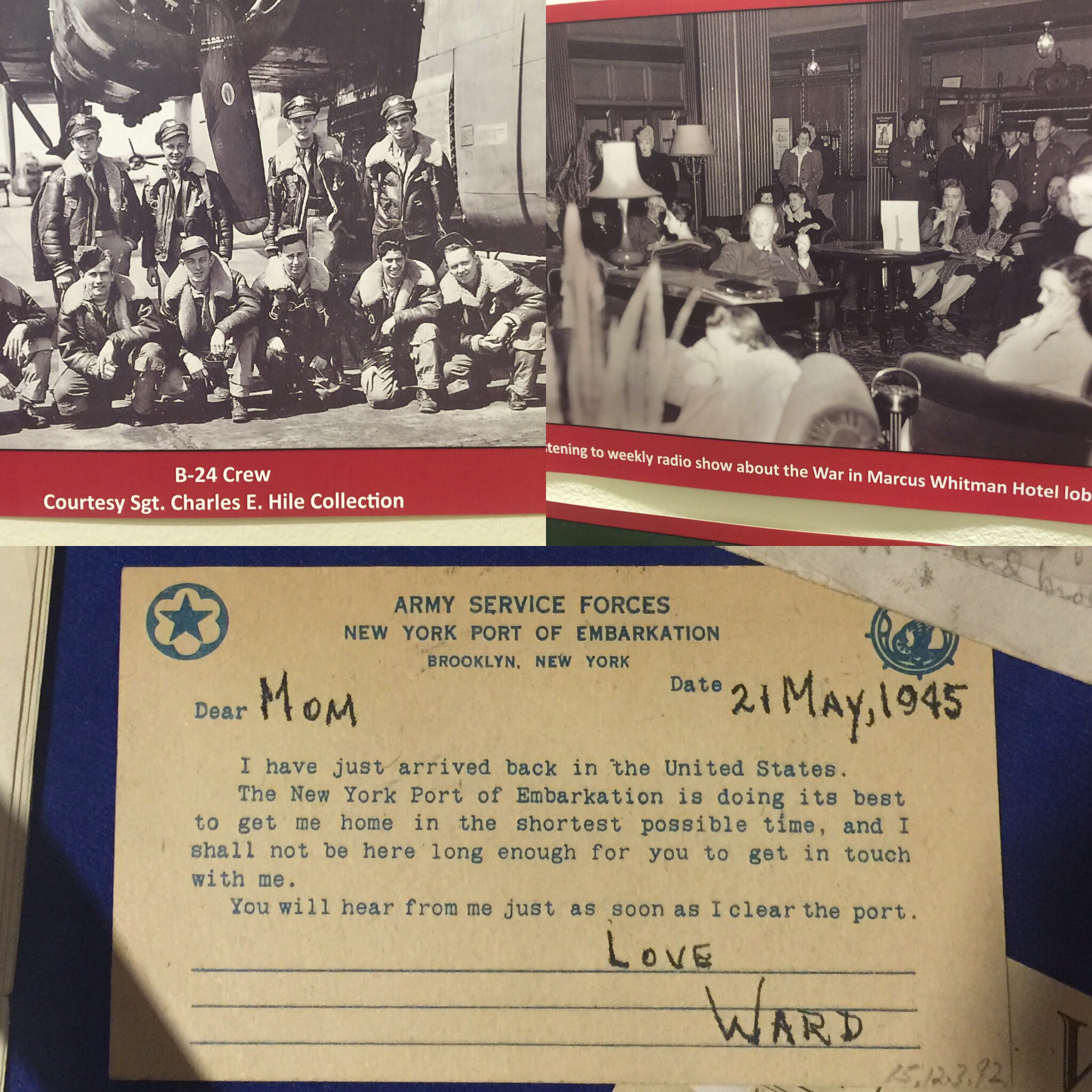
Jack told us about preprinted messages home like the one in the bottom of this pic. Easier to get past the censors! And it did take a while to get them home after the war had ended.

Jack told us about preprinted messages home like the one in the bottom of this pic. Easier to get past the censors! And for various reasons it took a while to get the troops home after the war ended. (For his part, Jack’s return home was delayed at least a month, as he had to spend time “fattening up” at Camp Lucky Strike in Europe following his liberation from a German POW camp, where he spent a hungry year after his B-24 was shot down.)

Walla Walla is deep into Lewis & Clark country as well. A local guidebook indicates that most of the places they camped or referenced were now hidden away under lakes and reservoirs created by the dams in the Columbia River. Oh what L & C would have done for a leisurely stroll across a lake! Of course the ensuing settlers and railroad and mining led the US government to negotiate, push, provoke, swindle and otherwise take land from the many Cascades Indian tribes, including the Walla Walla. Chief Peopeomoxmox, seen below left, actually stood up to the territorial governor and won some concessions in 1855; he secured additional lands, allowing more tribes to stay on at least some of their home lands (see the three reservations below, i.e. rather than one or two). In the scheme of things it was a small victory, but it stuck with me.

IMG_3084

Walla Walla is at the center of the lands of several Cascades tribes

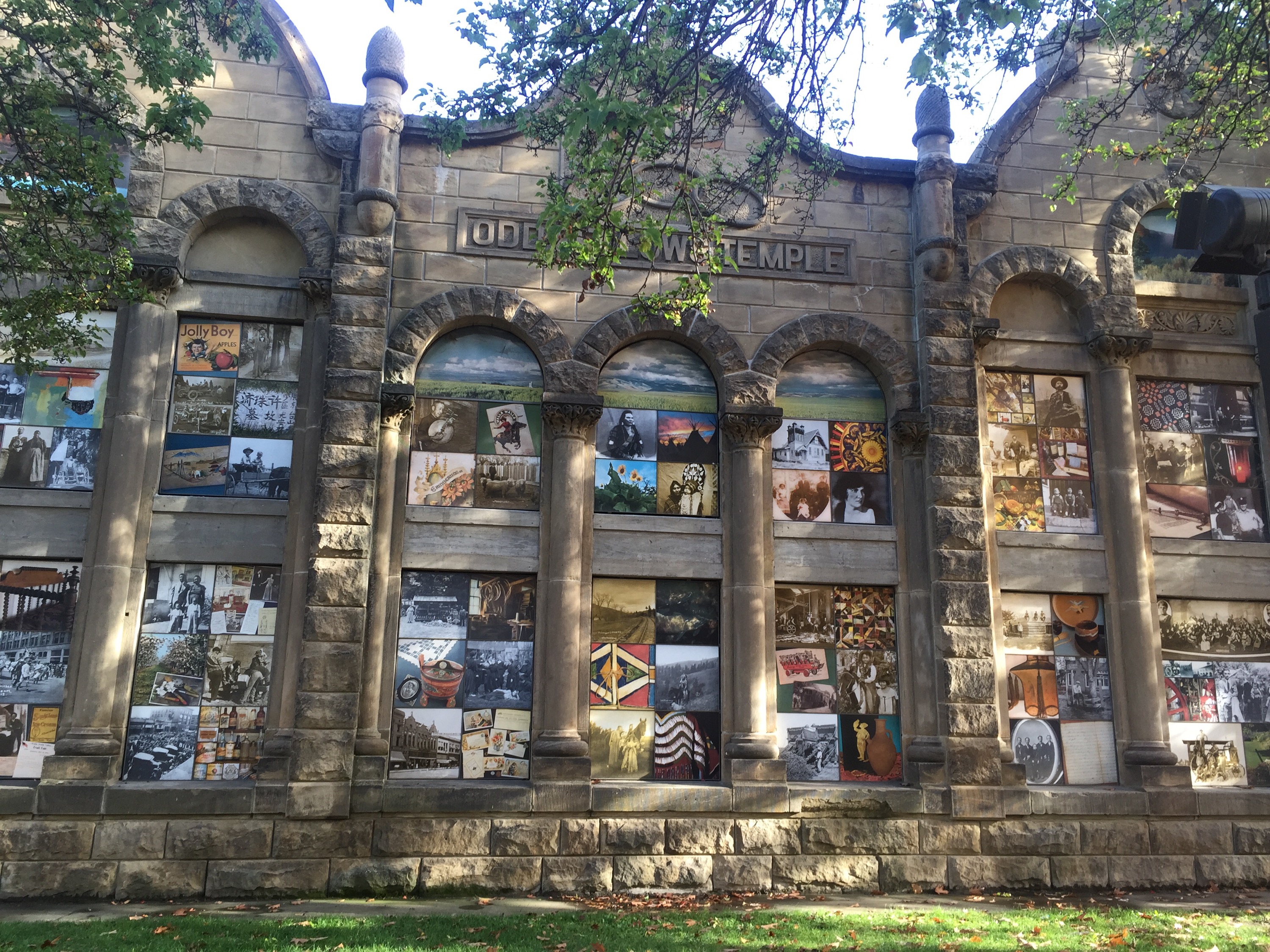
Walla Walla has become quite the wine-focused destination in the last 10-15 years. We spent Halloween evening there – in the Elks parking lot bless their hearts – and it rained. Such a bummer for the kids! We loved the scenes of Walla Walla people and culture over time depicted in “Windows on the Past” – the carefully preserved Odd Fellows Temple sandstone façade. Did you know Adam West (Batman!) grew up here?! Pop culture is important to trace as well.
IMG_2980

After Walla Walla, we headed toward the Columbia Gorge town of The Dalles (still can’t pronounce it.) We visited the excellent Columbia Gorge Discovery Center and the folks there were kind enough to let us park and stay overnight in their lot. The area along the river there is also a trailhead for area walking/biking trails and there were lots of locals coming and going to make use of them. The staff person who oriented us to the exhibits, knowing we only had a short time, suggested we take a close look at the basket exhibit. She said of course you will see baskets at other museums, but in this exhibit she felt like she really learned and was surprised by some of their uses. (For example, upper right, those baskets were used as hats!)

IMG_3086

Scenes inside and out of the Columbia Gorge Discovery Center

The next morning we did a quick hit on Hood River – daylight savings time had ended and we for oIMG_3037nce were up and out early – almost too early for any stores to be open. But we did see Hood River is home to one of our IMG_3039favorite beers (Full Sail, left).

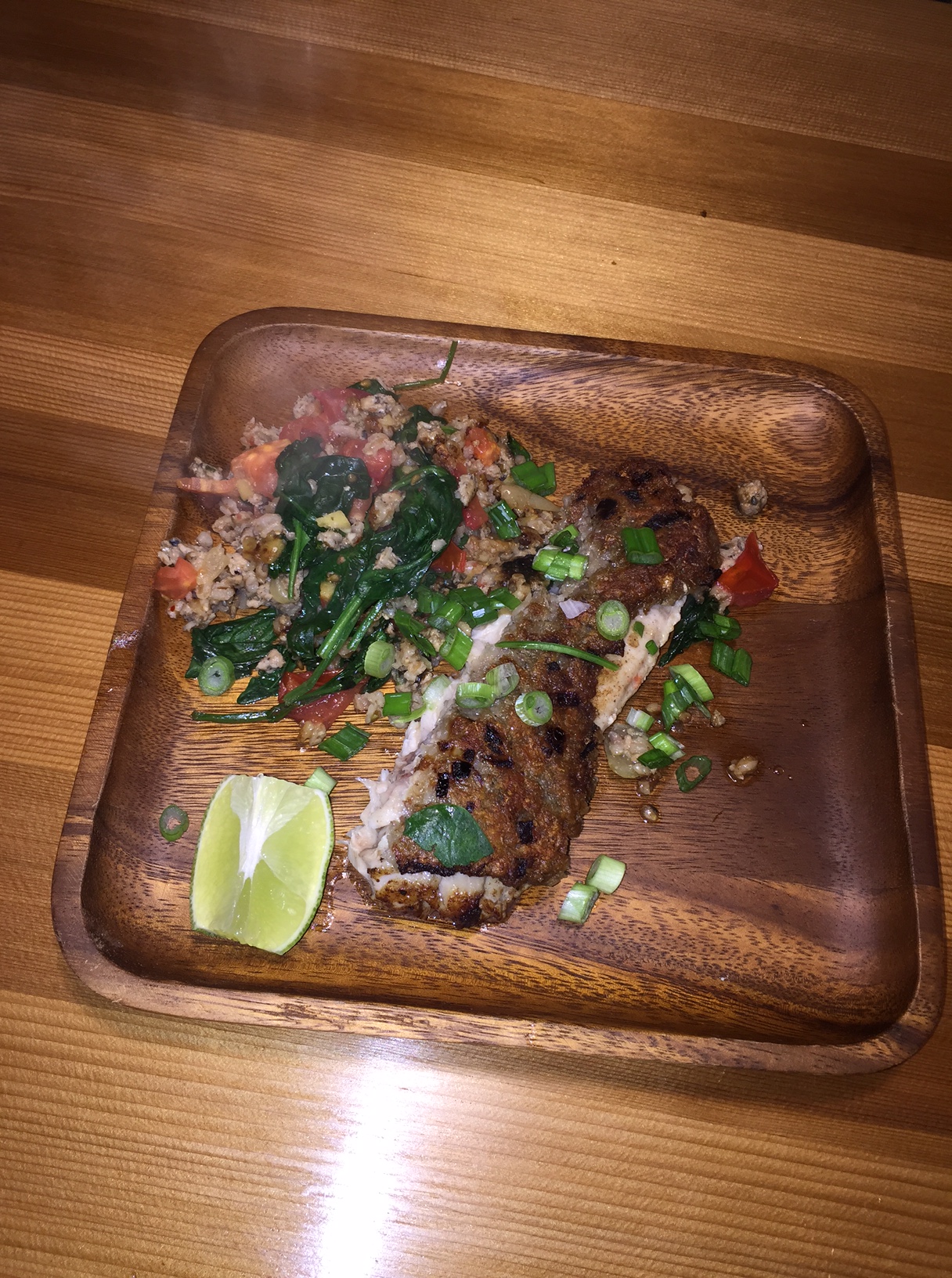
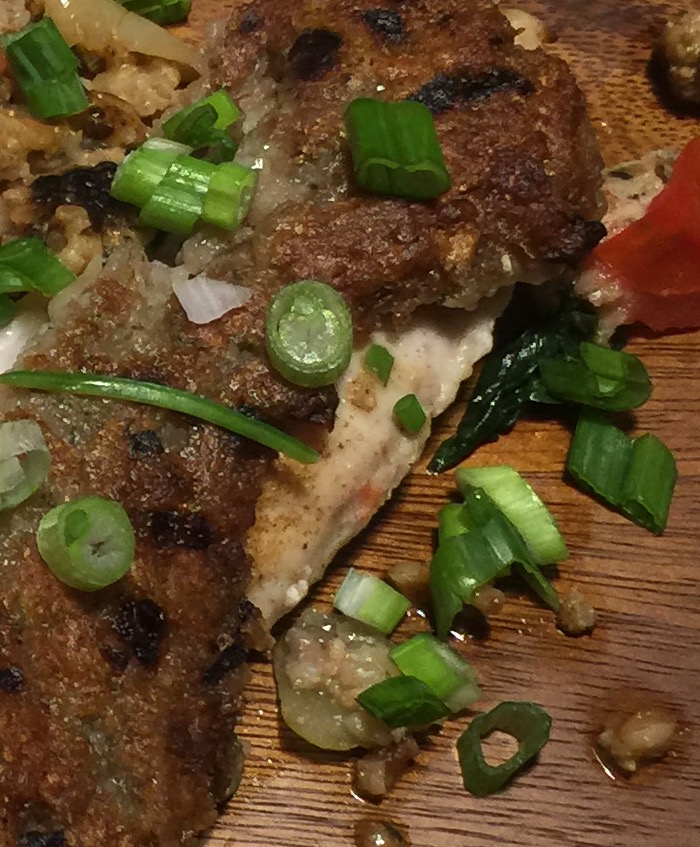
And I browsed their local book store and saw this on sale – photographs taken by the excellent Molly Peterson, a good friend and former colleague of my good friend Pam. Kind of cool to see it out here in the wild! Any food picture taking tips I have learned from Pam, Pam has learned from Molly, so thank you Molly! And with that, I will leave you with a potato encrusted red snapper, which I believe I made in the enchanted forest adjacent to Mt. Rainier last week. Pam’s tip to me (and I assume Molly’s to her) is to zoom in, give your picture a focus, which I did below for the picture on the right.

To test my theory, I asked Grier, who is sitting next to me, which of the pics was more interesting/engaging and she said the right one BUT she noted she is not sure she can tell what the food itself is (eg fish, potato, etc). GooFullSizeRenderd feedback for next time!!!IMG_2875


The Great Divide

Though we had both read Undaunted Courage by Stephen Ambrose some years back, now that we were in the thick of Lewis and Clark historical country here in Idaho, it was time for a major review.

Spoiler Alert - that's Meg at the top of Lemhi Pass

Spoiler Alert – that’s Meg at the top of Lemhi Pass

Meg bought a used copy, spent an evening or two in secluded study, then thoroughly briefed me – including long passages read verbatim – as we spent 2 1/2 hours on the road east to Lemhi Pass from our campsite on the Salmon River near Stanely, ID.

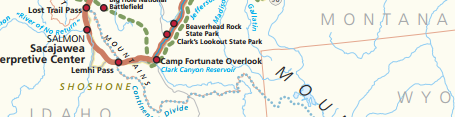
Lewis and Clark’s inaugural epic journey (see our area of travel on the left in the NPS map close up below) of course would have been from the east to the west.

NPS map of the area we visited

NPS map of the area we visited

This is beautiful country here in the Bitterroots of Idaho and it’s easy to visualize the events Meg is reading about and the country Lewis and Clark saw: rolling, grass-covered mountains periodically giving way to rocky cliffs and spires, and the Salmon River winding through all of it with waters alternating between rapids and smooth, but still fast, water and banks lined with the yellow/orange of Cottonwood trees reaching their peak now that it is (was) late September.

IMG_1472

Stephen Ambrose tells of how Thomas Jefferson, the real force behind the Lewis and Clark expedition, sent Lewis to be schooled by recognized experts in astronomy, botany, and other sciences so he would be as prepared as he could possibly be for his mission of discovery. Fascinating – it sounds like preparation for a space mission.

Suddenly Meg’s reading was interrupted as a magnificent Bighorn Sheep bounded across the road in front of us and I had to swerve to miss it. Fortunately, there were no other vehicles on the road; the scenery was utterly rural with few signs of human activity and we and the wildlife had the place to ourselves.

Interpretive trail at Sacajwea Center in Salmon, ID

Interpretive trail at Sacajwea Center in Salmon, ID

In Salmon, ID, we stopped at the Sacajawea Interpretive Center, which was closed, but we walked a mile or so through their very good outdoor exhibits: hay fields, replica tepees and sweat lodges and a streamside nature trail. The Interpretive Center is in the Lemhi valley, where Lewis and Clark went after crossing through Lemhi Pass. It is where Sacajawea’s people, the Shoshones lived part of each year, which made her valuable to the Corps of Discovery as a guide, and Ambrose surmises happy to return even under these circumstances, enslaved. We enjoyed this lovely setting, seeing the world through her eyes (she was captured at about age 12), with mountains in the distance, and the excellent exhibits about the natural world, the messiness of nature, the salmon lifecycle and the Shoshone life.

IMG_1424-0

Note, we did the reverse of Lewis and Clarks first trip, so another spoiler alert – they made it over the pass.

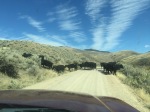
We got back on the empty highway leading west. The signs are small, and we almost missed the turnoff from the main road that led to the paved road leading to the rough dirt road that led to Lemhi Pass. One gets the feeling that only diehard Lewis and Clark nerds visit this place. But maybe it’s just that we’re here in the fall, after others have gone back to work and school. In any case, we began our ascent into the mountains past a few isolated ranches and some lovely cottonwood groves, pausing only briefly to let a herd of cattle pass in front ofIMG_1419-0
us, watching them get coaxed along by a pack of dogs and a couple of guys on ATVs.

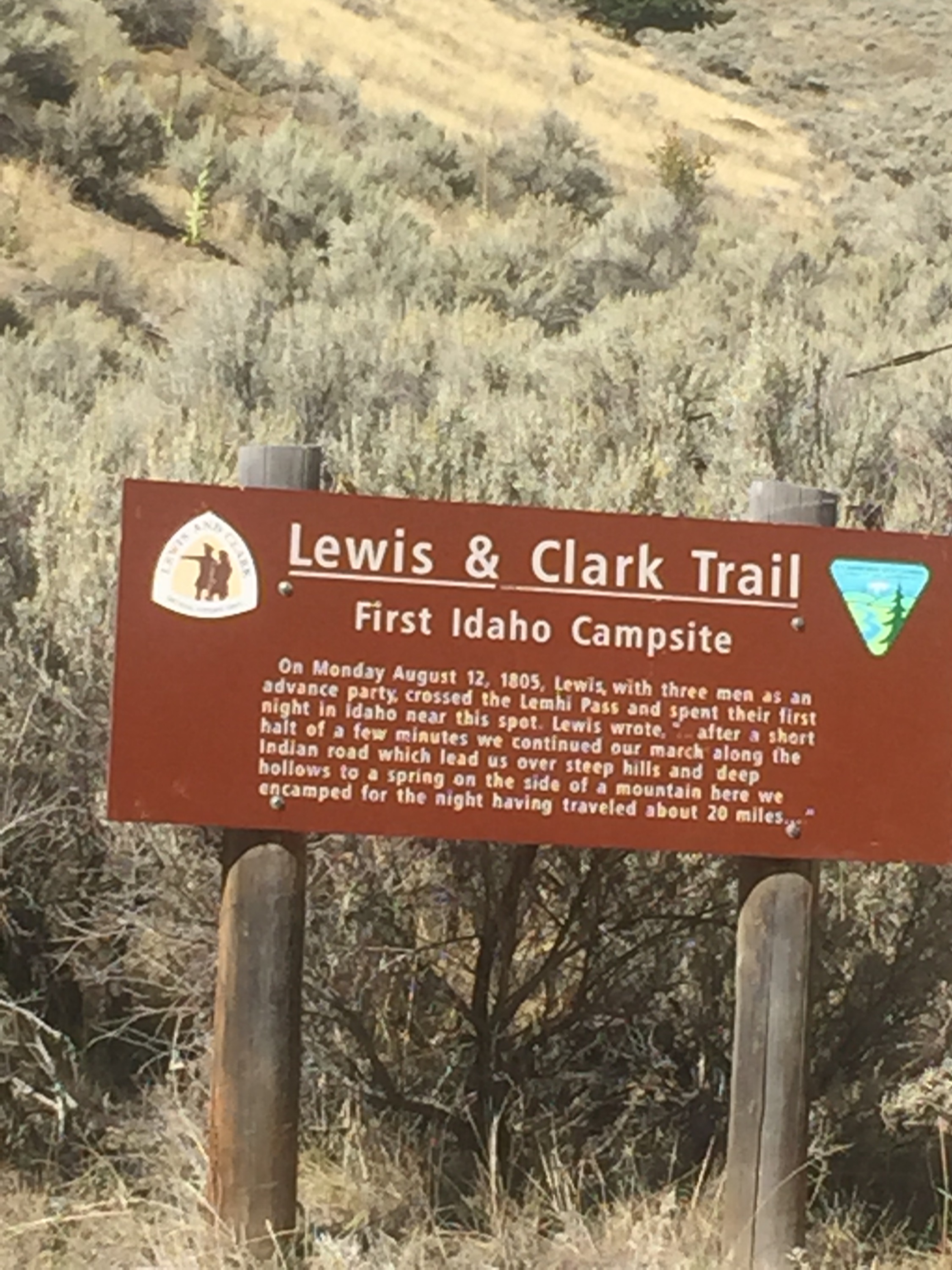
After perhaps 12 miles, we reached the top – Lemhi Pass and the Continental Divide, the geographical line to the east of which waters flow to the Gulf of Mexico, to the IMG_1439west of which waters flow to the Pacific Ocean. It was at this pass in August, 1805, that Meriwether Lewis and a couple of others from the exploration party reached the top and got their first view of the long-anticipated Columbia River flowing west to the Pacific Ocean. Or at least that’s what they thought they would see as they crested the hill.

What they (and we) actually found on that hilltop was a lovely westward view of another mountain range, not the Columbia River Lewis and Clark hoped would complete their quest to find a navigable water route across the continent. For us, the view from the hilltop was sublime on this glorious autumn afternoon – rolling, grass covered hills in the foreground, magnificent mountains on the western horizon. For Meriwether Lewis, who had endured months of wilderness travel and was out of food, it must have been something altogether different. The Columbia River and an easy route to the Pacific wasn’t waiting for him; additional weeks of arduous travel wereIMG_1441

Remarkably, though, the view west from Lemhi Pass, the Great Divide itself, was essentially the same for us as it was for Meriwether Lewis! With the exception of the dirt road that led us to this spot, a distant power line or two, and the remarkably clean Forest Service pit toilet building off to the side, the scene was right out of the early 19th century. No visible development, no fences, no signs of humanity. Spectacular.

Lewis and Clark’s party had largely followed the Missouri River in their travels west from St. Louis, and Lewis was thrilled to locate the headwaters, or source, of the river here at Lemhi Pass. In his journal, Lewis talks of the “most distant fountain” of the Missouri, which he identified as a spring bubbling out of the ground about half a mile east of the top of the hill. We strolled down the dirt road and, sure enough, there

Missouri headwaters, likely the exact same puddle Lewis and Co exclaimed over

Missouri headwaters, likely the exact same puddle Lewis and Co exclaimed over

it was, surrounded by a rickety split rail fence (that we made easy work of). We both dipped our hands in the foot-wide spring (it was cold) and “straddled the mighty Missouri, one foot upon each bank”, as one of Lewis’ men took great pleasure in doing, and chronicling, 210 years ago.

Meg straddling the Missouri headwaters

Meg straddling the Missouri headwaters

Note: This was a guest post by Ben Barker who does not like to use exclamation points, or begin sentences with contractions. 

Idaho Towns Round Up

What do Boise, Stanley, Ketchum, (and wild card) Driggs have in common? Are they index of town listed under Idaho in Lonely Planet’s USA? No! They are our itinerary of Idaho towns we stuck around in long enough to have some notes to share. And with the exception of Driggs, they are featured in Lonely Planet as well, so we’ll see what we can add to the well worn path…

Boise was the first big city we have set a spell in on this trip- and it was one we deliberately wanted to check out. We chose the Riverside RV Park because it’s adjacent to the Greenway, 25 miles of paths that go along the Boise River.

A piece of art depicting the Boise River, in progress of installation on a building downtown!

A piece of art depicting the Boise River, in progress of installation on a building downtown!

We planned to ride it into Boise the next day for an all day excursion, and so we drove into town our first afternoon to get a couple

Crowdsourced ideas for our visit!

Crowdsourced ideas for our visit!

bike parts and the lay of the land. I did a little crowd sourcing on Twitter – reaching out to Boise’s Visitor’s Bureau for suggestions – they replied! tagging others, which yielded even more ideas! Very cool.

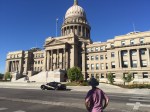
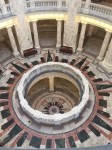
Our main stop that afternoon was the Idaho state capitol building. It has been renovated in the last 5 years and literally glistened, it was so shiny and new. It was fairly empty, but there were some friendly tour guides, and a gift shop filled with potato-themed souvenirs. Reading the displays, you might come away thinking this about Idaho: they are proud of their early adoption of women’s suffrage; land and water rights are what gets the citizens and legislature riled up; Lewis & Clark went there. We were blown away that we could walk right onto the floors of both the House and Senate chambers – they weren’t in session, but still.

We are a little short on reading material – didn’t really plan ahead on all the time to read we’d have on this trip! So we went to The Redisovered Bookshop where we picked up a used copy of Undaunted Courage (very handy for our travels-Lewis & Clark have been everywhere) and a tip on where to go for a snack and what to get there. Indeed we very much enjoyed the Classic Poutine at Bittercreek Alehouse. The fried potatoes came with chunks of roasted turkey – my friends know well that I’m not scared of any carbs that come with a side of protein.

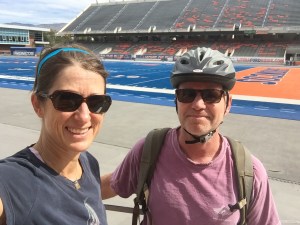
The next day we zoomed along the Greenway for the 10-mile ride intIMG_1340o town. The Greenway goes through neighborhoods,former industrial areas, under highways, a 9-11 memorial; even alongside a mini dam (see pic at right) that encourages kayakers and surfers to jump in and and catch some waves. We had to guess a bit as to where to “get off” but found ourselves exactly where we wanted to be: Boise State University, home of the blue turf. Ben has some PFGSD (post football game stress disorder) from some Fiesta Bowl when the Broncos beat his Sooners with a bunch of trick plays; nonetheless, we paid our tribute.

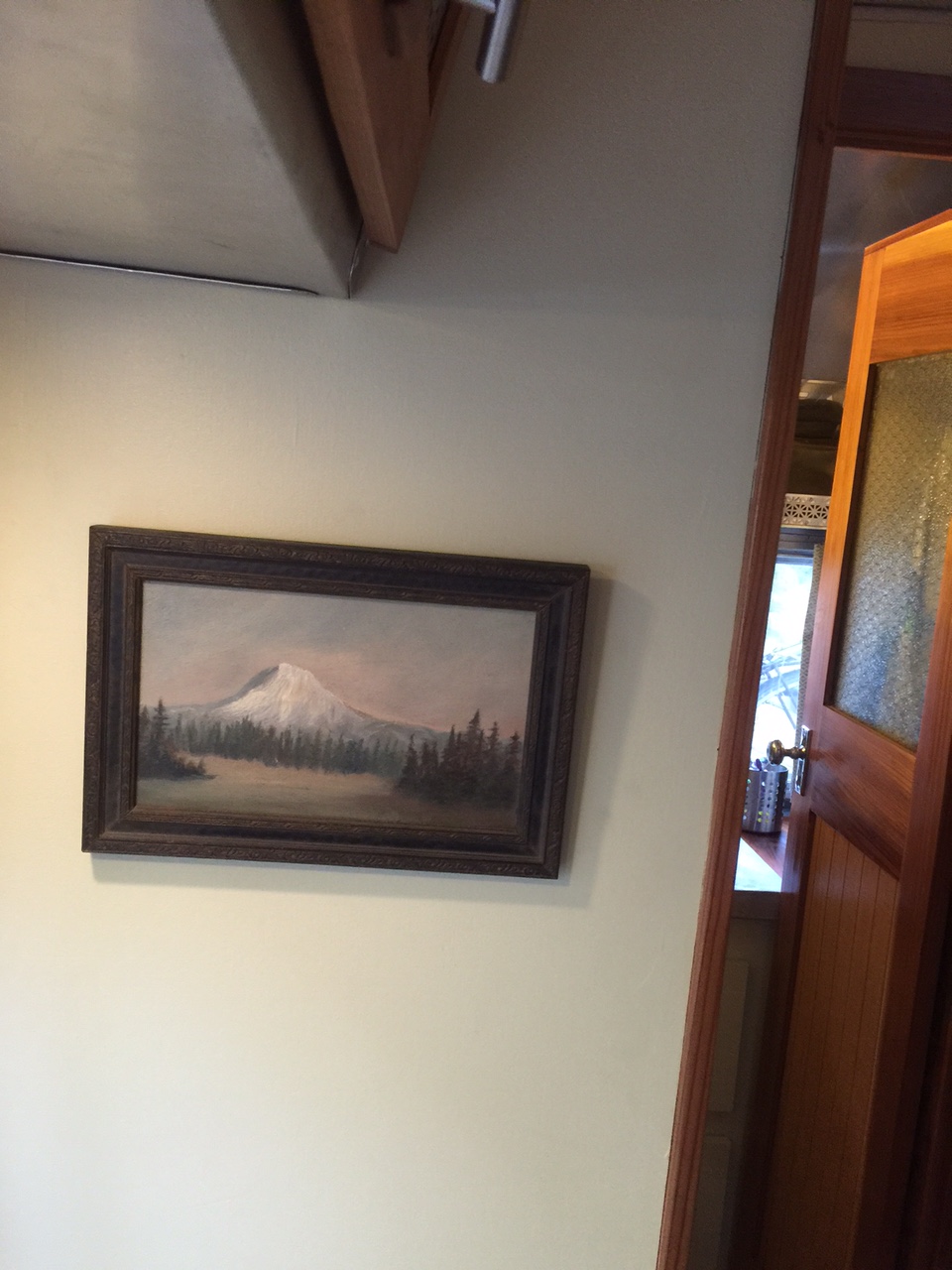
We roamed around the rest of the day – the history museum was closed, but the adjacent Rose Garden was lovely, we checked out the Basque block; the old (and hip yuppy) neighborhood Hyde Park where we very much enjoyed the dollar tacos at Parilla Grill. We checked out a few antique stores, picked up a few hooks, and this painting – our very first “art” for the Airstream. We just love it.

From a cool little store called "LA Junk"

From a cool little store called “LA Junk”

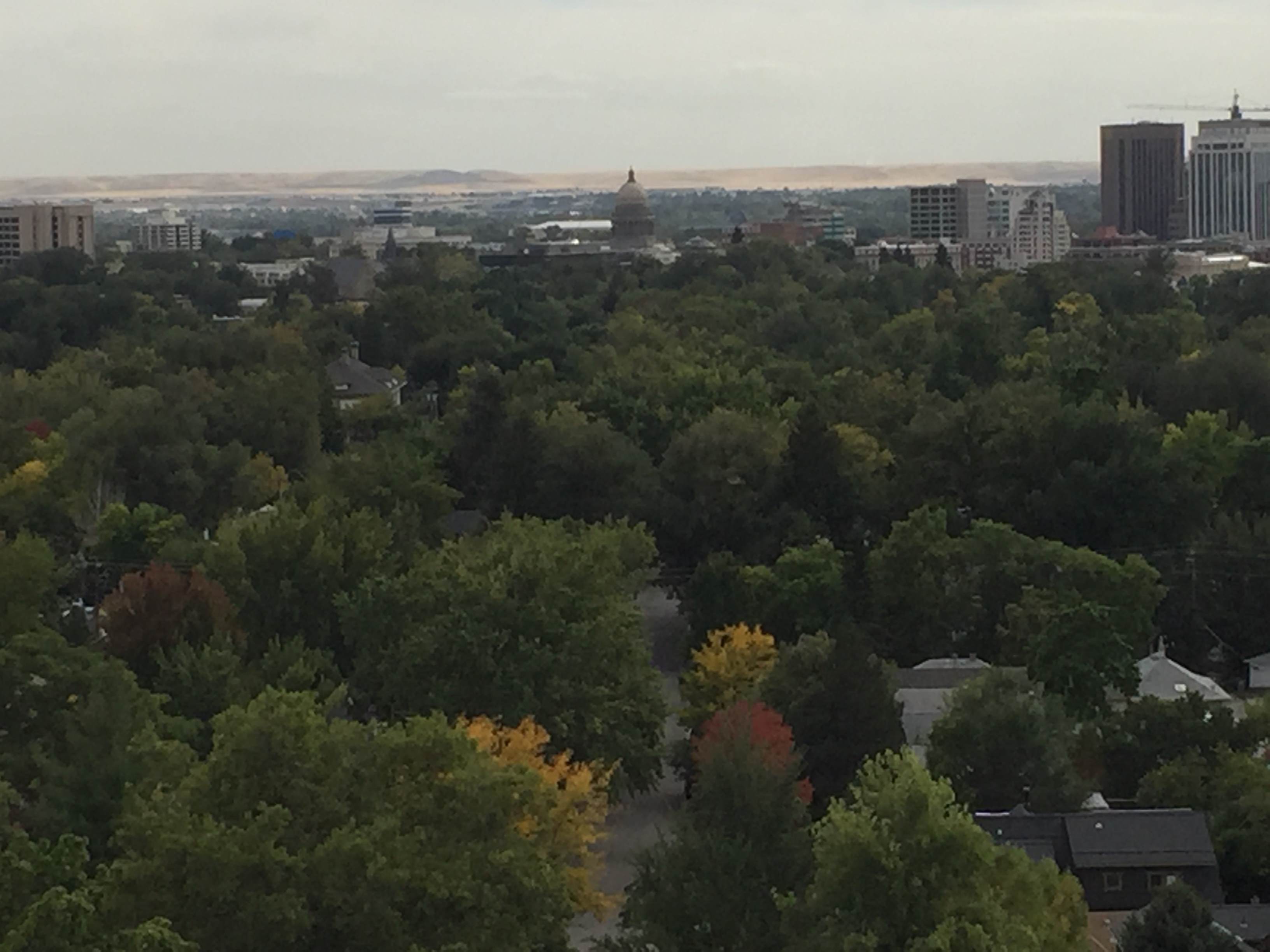
All in all, Boise was a very pleasant city – this view from the hill at Camel’s Back Park shows the inspiration for it’s name (French for “wooded”) and the beginnings of fall.

IMG_1333

On to Stanley – a cool little mountain town in the middle of the Sawtooth Mountains. Ellen at the Visitor’s Center steered us very well: we camped on the Salmon River just as the Forest Service was starting to shut down sites for the winter. Stanley apparently gets some of the coldest low temperatures in the continental US. (More about our campsite and an awesome day trip to Lemhi Pass in the next post…) IMG_1389Stanley had some well stocked outdoor stores, with sales that led to the purchase of this new hammock (left). We also had a culinary highlight – the Cowboy cookie (chocolate chips, walnuts, oatmeal) at the Stanley Bakery & Cafe, though their turkey sandwiches could have used a bit more meat. We checked out the Redfish Lake Lodge – which is a whole ‘nother world – kind of rustic fancy with a beach bar and scheduled activities. Not for us, but maybe you?

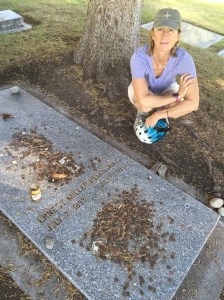
Ketchum and Sun Valley are just down the road from Stanley, an hour or so. We got a spot at the 10 dollar Forest Service campsite just a few days before camp host (crazy in a good way) Cathy heads south for the winter. We biked into town and explored a bit – disappointed mostly by the fancy stores selling the same overpriced coasters. Clearly the outdoors stores are gearing up for winter season – skiing and all. It took Lonely Planet to tell me Hemingway was buried here – his writing inspired

me to become an English major. Definitely a highlight of our visit to this city. Something that left us feeling UGH was the renovation of the Sun Valley Lodge – a historic building that now looks like any other Grand Hyatt. The concierge will emphasize how many treatment rooms the spa now has, however. Utterly stripped of personality. No picture will show the injustice. Will be interesting to see the reviews once the season starts.

And finally Driggs! On the eastern edge of the state (we were headed to Wyoming) the town is the home of the Grand Teton Distillery on the Harvest Host list. The Distillery was so kind to let us park overnight in their driveway. Though we missed tasting their vodka (you know it’s made from potatoes!) and whiskey, we will look for it out on the trail. Though it was cloudy and drizzly and we had just been to the store, we saw a farmer’s market on the way out of town. “Do we have to stop?” asked Ben. AS IF! Luckily he gave two Airstream tours while I bought the last of summer’s

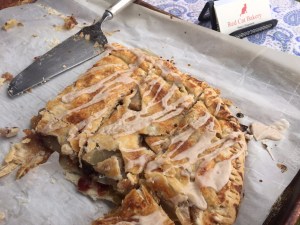
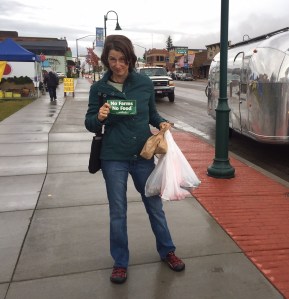
tomatoes, cucumbers, as well as jerusalem artichokes and this cherry slab pie (pictured above, though we liked her peach scone the most!) Driggs, we really liked you! The woman who grew the artichokes told me she’d give me this sticker (above right) if we put it on our Airstream. Heck, yes! They are continuing with a Teton Valley winter farmers market indoors, I heard. Hooray! Don’t forget to list and use Local Harvest in your travels to find local and lovingly grown food. For lovingly restored historic hotels, I can’t help you, but we have high hopes for our visit to Grand Tetons coming up next!