All in for Hells Canyon

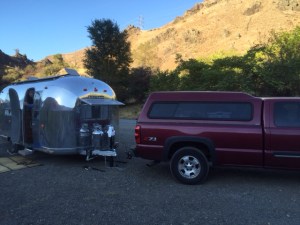
“The town of Oxbow. That’s how you should get to Idaho,” Cropdusting Pilot Chris told us back in Madras, Oregon. “When you are there, you can go to Hells Canyon.” Honestly, if it wasn’t for Chris, we would have missed THE DEEPEST canyon in North America. There is only so much maps, guide books and even Google can tell you. We’ve gotten our best tips from real live people. We headed east with great anticipation.  IMG_1226

Now, you should know right off what we didn’t: most of Hells Canyon, which surrounds the Snake River, is inaccessible to the casual traveler, and so we really only got a peek at it, but loved it for what it taught us about: Dams and rivers and power, reasons to ever go on a jet boat, boondocking (officially for the first time), and just a taste about the value of fish and fishing in this part of the country.

Following the success of getting the best tips from real live people, we asked our young BLM friends at the Oregon Trail site where we should camp in Hells Canyon. They had a bunch of ideas (I took notes), but directed us to a boondocking site just before you cross the bridge at Oxbow.

Oxbow is a very small spot on the map, just on the Oregon side of the Snake River, which divides Oregon (west) from Idaho (east). Boondocking is “wild camping” on unofficial, ungroomed, unmaintained, etc noncampsites. It is FREE and legal – and in
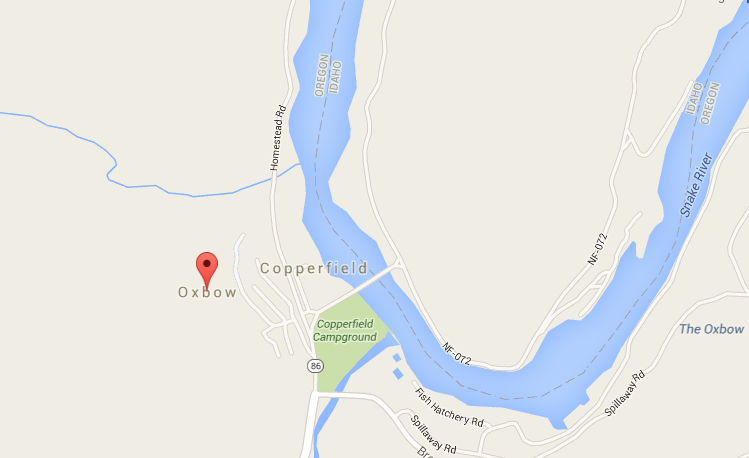
Courtesy of Google Maps

Courtesy of Google Maps

fact encouraged by many public lands, though they usually call it “dispersed camping”. In brochures, on the phone, or best yet face to face at their regional stations, staffers will share with you places for dispersed camping. It’s a bit tough to get the hang of – relying in some cases on only GPS coordinates to find sites, going down a bumpy dirt non-road, not knowing if you can turn around if needed (we have about 40 feet total of vehicles to maneuver.) And, conditions change – there have been so many fires out here – tragic in some cases, just nature running its course in others – that our public servants are doing their best to keep up, and finding us a free place to camp may not be the number one priority, right? But, to circle back, we had the best possible advice and source – from BLM staffers who we’d been chatting with anyway, and were generous enough with their time and insights to help us dip our toes in boondocking.

So – how did we get to our recommended free wild campsite? “Turn left before u cross Oxbow bridge. On reservoir. Tunnel” was all I had in my notes. It actually wasn’t that hard to figure out once we got to Oxbow. If we crossed the bridge, we’d gone too far. Look for a left turn. And a tunnel.The tunnel through a hill of rock was indeed intimidating (to me) but not to Ben. Keep on driving.

Tunnel on way to boondocking site: no problem!

Tunnel on way to boondocking site: no problem!

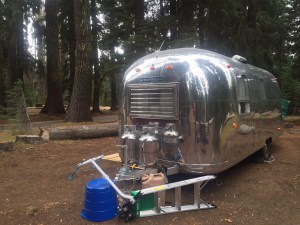
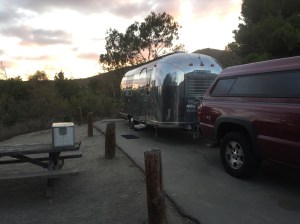
We picked a spot, more of a pullover on a dirt road, indeed overlooking the reservoir, and settled in. When you are a newbie to boondocking you might get a little nervous – Is someone going to tell you to move along? Will your trailer be vandalized? Sure enough, the first other person we saw was a man with a GUN, “just taking his horse out for a ride.” The horse got spooked when he saw his reflection in our trailer. Yep. The second people we saw were two moms with strollers and baby bjorns. OK, we could relax a little.

The reservoir we were on was formed from the Snake River and the Hells Canyon Dam – 20 or so miles north and downriver – from our spot. (There are also the Oxbow and Brownlee Dams.) The dams create power of course, and recreation, all governed by Idaho Power. (We barely scratched the surface, but it seems a fascinating intersection of politics, resource management, conservation, and good old boys drinking and fishing. Would love to know more.) It also created a lovely lake-like setting for us to settle in and enjoy the sun as it rose and set across the mountains on both sides (canyon-esque), the birds, the bugs, the jumping fish, and the just-turning fall leaves.

The next day we unhooked – a bit shaky about leaving the trailer in this “unprotected” state but knowing we had a windy road ahead made it easier, and smIMG_1251arter to leave it behind. We crossed the reservoir – we were now in Idaho! A first time in the state for both of us, though this just barely over the border-crossing seemed a bit cheap to count. Passing the dam was incredible – they make it a bit intimidating, like you might have to go through security, though there was none. You realize how valuable dams are, what a target they might be. You don’t have to know much about engineering to be in awe of this.
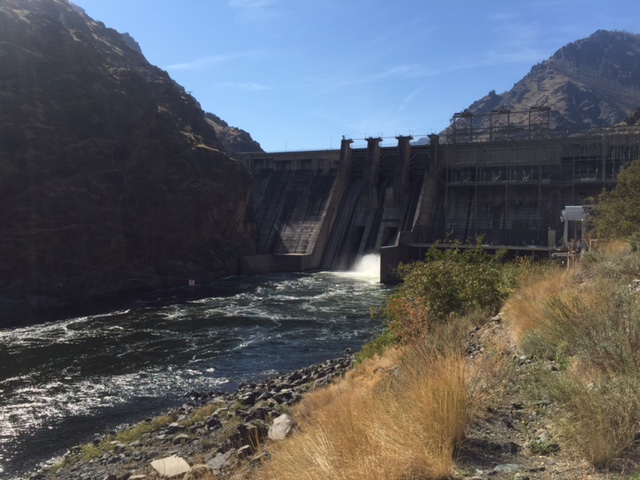
Hells Canyon Dam

Hells Canyon Dam

Once we got to the Hells Canyon visitors center, it was a bit of a dead end for us, though just the beginning for those going on jet boat rides and multi-day rafting trips. The road for Chevy Silverados (like ours) literally ends there. There are some nice overlooks, the jet boats, and a nice staffer who told me that most people who explore the Snake do so on multi-day raft trips. The first accessible put out was about 25 miles down river. Amazing.

There is however-and this is a big however- a one mile or so out and back hike along the shoreline which we did and made the trip well worth it. It was so beautiful and like so much on this well timed post-summer season trip-we were the only ones there. We celebrated our two week anniversary as full-timers! A gallery of pics below…I can only imagine what the river and canyon look like beyond this-plan your multi-day rafting trip now!

This slideshow requires JavaScript.

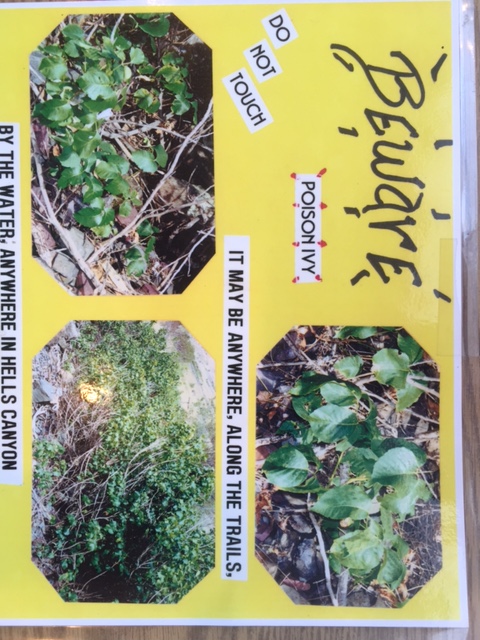
We did have to watch out for poison ivy which I did with my full attention, being super allergic to poison oak. This information saved me, it might save you.IMG_1201
We looked for pictographs and petroglyphs and I thank Hells Canyon for teaching me about what dams do, what reservoirs are, and that there are parts of this country that are “the greatest” but are still very, very wild and not overrun by tourists (like me). I still don’t get what happens to the river – does it just disappear upstream of the dam? Can we make rivers disappear, so it’s easier to go fishing out on our motorboat? Naive city girl, I know.

Back at camp, I went for a swim in the reservoir (a short one). Spent 30 minutes or so watching the show nature was putting on as the sun was setting – a cliche I know, but so accurate. A great show.

Me being still and quiet. Not a joke.
Me being still and quiet. Not a joke.

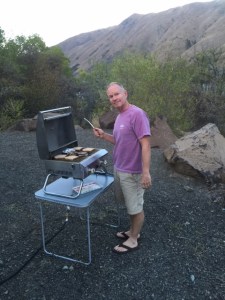
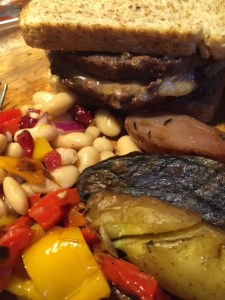
We grilled hamburgers for dinner and made a grilled veggie white bean salad to go with. We thank the Kaufmann’s in Island City, Oregon for the local bread, beef and veggies. Still working on my food photography.

The next day we headed to Boise, the big city, a couple hours southeast. We had one last surprise as we transitioned from the wild to civilization: the little baby bear (below) on the side of the road – perfectly content until he saw us. Luckily we saw him and slowed down and we got to watch him bound away. Blacker than we expected, wide eyed, and very bouncy. Godspeed.
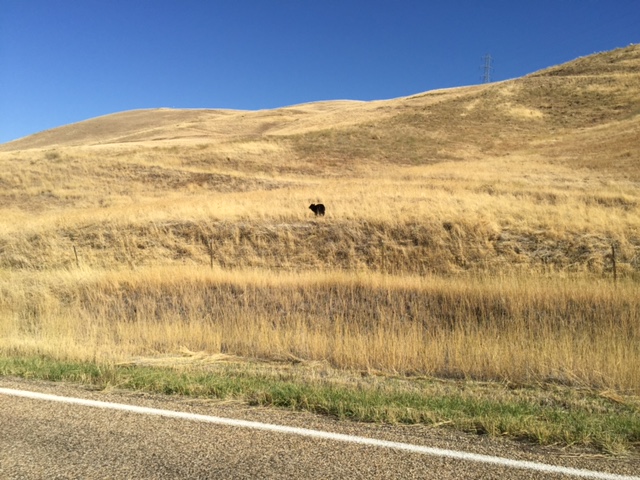
He was only about 20 yards from us when we spotted him. Then bounded away.

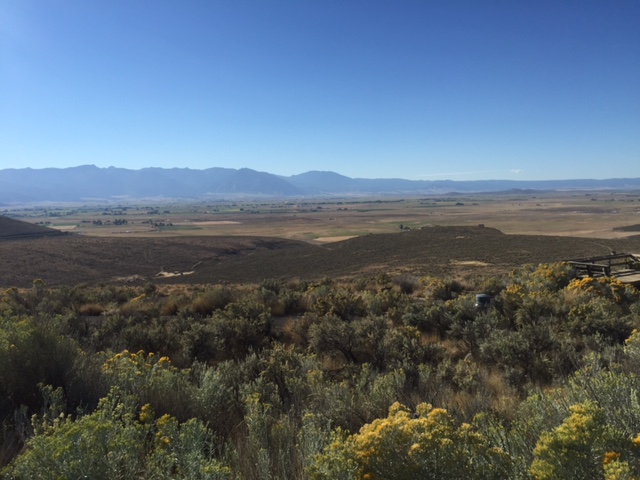
He was only about 20 yards from us when we spotted him. Then bounded away.

Oregon Trail National Historic Site – the word RUTS is ridiculous in any other context

From the Fossil Beds, we moseyed east, over to the National Historic Oregon Trail Interpretive Center with the promise of RUTS. Wagon RUTS. From real pioneers. Thousands of them. There are many recommended NPS sites related to the Oregon Trail (thank goodness, right?), but one biggie in our path: the Interpretive Center located near Baker City, Oregon.
IMG_1157

Baker City citizens lobbied to have the fancy Center built in their community.

The 10 million dollar center (most locals were quick to either brag or lament the expense) is indeed impressive – high on Flagstaff Hill overlooking the Baker Valley – and the pioneers’ first view of the ominous Blue Mountain range they had to cross, though toward the end (it being Oregon) thankfully, of their journey. Of course the pioneers would not have gone up the hill, they would have gone around it – the easier path. So the high perch of the center itself is designed to give you a view of the trail, not necessarily the view the pioneers themselves would have had. Interesting and smart I thought.
View of Baker Valley and Oregon Trail, including "ruts" from Interpretive Center.

View of Baker Valley and Oregon Trail, including “ruts”, with Blue Mountains in the background. Taken from inside the Interpretive Center. Gorgeous.

Related, when I asked a staffer generally what route the trail took west from the Center, he said “Follow I-84-that was the easiest route than and now.” Logical. So if you want the pioneers’ view, hop on the interstate. : ) If you’d like to learn more from first-hand accounts about this particular spot on the Trail, my brief skim of this guy’s overview and sources seems to square with what we learned at the Center. Fair warning: A lone pine tree meets a grisly end.
The museum displays were the familiar mix of phony/modern/creepy looking mannequins with pained expressions – loss of a child, fear of Indians, uncooperative oxen. Picture Heidi Klum and David Beckham overacting in period costume. (Why didn’t I take pictures???) The building offers a stunning floor to cathedral ceiling windowed-look at the valley – including the RUTS and the rough outlines of what is a mile or so of the Trail (see above picture).
The next section of the museum offered the familiar chronological and contextual panels with many primary sources as well as more than the usual amount of paintings depicting the Trail, which I thought worked well. Lots of audio, and kid-oriented information and activities.
Feminist museum curator sneaks one past the boss!

Feminist museum curator sneaks one past the boss!

My takeaways?…I think it did a good job of showing WHO went – eg farmers, not necessarily merchants. Immigrants. People from the midwest, not the east. Young(er). Also, I appreciated they way they broke down the different geographic parts of the trail. I took pride in the fact that most of the detailed first-hand accounts were written by women (see feminist curator’s take on the left). I really appreciated the last section about what happened when they got to Oregon City. What happened next? Right! Thousands of pioneers came over decades. Weren’t the best claims taken in the first month or so? What then? I am still wondering why estimated numbers of emigrants varied so much from year to year – for example in 1850 very few, while in the previous and subsequent years, lots. We stumped the Sunday staffers with our question on that. Anyone?

Though you can hop out of your car and see the RUTS right off the highway on your way out, the staff said we should take the hike down to them – .8 miles there and back through the same sagebrush the pioneers traversed. It was late in the day, and hot, but we booked it, to avoid getting back before closing time.

It may have colored my “experience” of the RUTS a bit, but I wasn’t overwhelmed with a sense of “x happened right here” that I expected. Maybe it’s just too big an event to get that feeling about. Maybe it was the unseasonably hot weather and the prospect of a mile hike back up the hill. Our water and peanut M&M supply was low. I don’t take this lightly as I am a big believer in the power of “being there” to help you understand history. Nothing alarming, just a little twist on the power, which I will continue to drill down on. Still overall, a really cool place and way to learn about it.

Some young BLM staffers were out front giving a flint knapping demonstration. It’s sort of like knitting we were told (in that it’s repetitive and meditative), but very dangerous as you are using a flint to carve a seemingly impenetrable rock into an arrowhead.

The guy doing the demo said there was an old Indian who came out of the mountains in 19-oh something, and became a sort of artist in residence at a museum in San Francisco, and it’s because of that old Indian that anyone alive today knows anything about flint knapping. Hmm. We asked his wife, who was sitting nearby, if she had any dangerous hobbies, and she said camping, so we quizzed them on places to camp as we headed toward Idaho. Score. See upcoming post on Hells Canyon.

So, just to add some authenticity to this experience, we had our own little pioneer mishap with our trailer’s tongue jack (see similar: tall thin cylindrical thing in the middle with a handle in the pic at right) when we were leaving our campsite that morning. Let’s just say the tongue jack (and trailer) is 50 years old. While Ben was turning it (thank god for the laws of physics) to lift the 4,200 pound trailer so we could place it on the truck’s hitch, it slipped, again, and again. Damn, physics. I of course screamed and

Photo credit: vintageairstream.com

Photo credit: vintageairstream.com

called (not literally as there was no cell service) for AAA, then took a walk, at Ben’s request. He in the meantime pulled out two other jacks (for the car) and placed some legos (not really, but sort of) between one and the trailer tongue, so he could lift it high enough to get it on the truck. There were some rope harnesses involved as well. Sorry, Ben would have killed me if I took an actual picture of it. So we have a new tongue jack, an electric one. Take that pioneers! Off we go to Hells Canyon, then Idaho, a reverse migration?

See you on the trail!

See you on the trail!

Life is fragile – Lesson from a Fossil

NOTE: any errors/typos due to bad wifi! NOT human error. 😉 

Places like the John Day Fossil Beds National Monument are the epitome of what we love about this trip. First, we discovered it by accident. We would have taken a more direct route to Idaho if not for crop duster Chris, who stopped by for a long chat both days we stayed via Harvest Host at the Erickson Aircraft Museum in Madras, OR. (Fabulous collection, wonderful hosts.) 


Ben LOVED staying at the Erickson Aircraft. Collection.

 On hearing we were headed to Idaho, Chris recommended we take the more scenic 26 east, even though it was a bit longer, it is, more…scenic! Plus we could see the fossil beds, and end up in Baker City, for the Oregon Trail National Interpretive Center (upcoming post). A little science, a little American history – a no brainer.

The roads to the Fossil Beds were windy, lonley, and without cell service, though we were now a bit wiser about gassing up in advance of any crisis. Many of the mountains are the results of volcanic action. Colors and bands and texture, crags, and loops and juts and – because lava swiftly, suddenly, and amply pored is such a good preservative: Fossils!

  
The fossil beds were “discovered” in the 1860s because of a confluence of historical, scientific, religious, economic, militaristic, etc events all coming together so it makes so much sense in retrospect and helps me put together the pieces of history. In the 1860s, Civil War troops, miners, teamsters, roaming about in the hills brought fossils back to Thomas Condon, a frontier minister who was also a geologist. This was in the midst of Darwin’s theories being debated in the public. Condon’s writings on the discoveries caught the attention of geologists at Yale (!), Princeton (!) and Berkeley (!). These gentlemen fought a bit about what was what, what it meant. They collected and brought back more treasure to their labs and private collections. (From what we gather fossil and artifact collecting wasn’t outlawed until the 1970s). Though the sites are remote, they are special and worth a visit: Lots of superlatives like the biggest collection of types of fossils found together – plants and animals to tell a complete story of a place over massive time periods.

Ben and I did our layperson’s tours of the three sites over two days (they are about 100 miles apart). Visiting the beds is like taking several short hikes, where interpretive signs thoughtfully point out fossils still embedded in the rock in Clarno, and the science behind the brilliant colors of Painted Hills. 


Painted Hills


At Clarno, the aftermath of a volcano


At Clarno, me helpfully pointing out a fossil (tree wood)

 
As I said, we did the three sites in two days – first some lovely hikes in the Painted Hills unit, then 2+ hours up the road to Clarno. We dropped the trailer off on the way at a primitive but awesome BLM campsite, Muleshoe, on the John Day River: five dollars a night, no hook ups, but solar going great and a little water conservation gets us far. We used the grill for the first time – steak of course. (Use the excellent map to plan your route and find campgrounds and other services.)


Our campsite, Muleshoe on the john Day River

 
The second day, we checked out the museum — Thomas Condon Paleontology Center- at the third site, Sheep Rock. Amidst the excellent displays explaining what all the fossils tell us, we just shook our heads in amazmenet at the work geologists, paleontologists and their colleagues do: figure all this stuff out from a rock.

Then we headed across the street and millions of years to the 20th century and the Cant Ranch Historic Home  (Scottish immigrants – made buckets of money like others in the area on sheep in time for WWI when all the soldiers needed those comfy wool uniforms!), which has been preserved and maintained by the NPS to show what ranch life was like. 

Cant ranch house-built in 1917; world war wool boom

Ben explains mechanics of machine powered drive shaft with sheep shearing stations

Like a giant basketball hoop/net to hold the wool. A kid would jump in it to smash it down.

 The Cants were successful ranchers and convivial hosts. The kilt wearing youth after partied at the ranch after “skip to my lou” dance parties in the community. This is of course where we get into women’s contributions and I know I would have liked Elizabeth Cant who, reflecting on her life as a rancher’s wife and hostess, rued that when she died, she’d be greeted at St. Peter’s gate holding a dish towel.

We peppered one friendly park staff member with our lingering questions, drilling down on the basic “What is a fossil?” to make sure we really understood.  I guess I had always assumed it was or at least partly original organic material – the mammal, the leaf, the seed. Otherwise, honestly why get so excited about it? But, it turns out it’s traditionally very, very rare that fossils would contain / include any original organic material. They are indeed, like shadows, ghosts. 

Life is very fragile,” the staffer said, referring to science with more than a hint of philosophy.  

little did I know there was actually a display answering my question. oh well, i like the human touch.

 And that made fossils even cooler. It’s impossible to have LIFE from 30 million years ago, so we more than make do with fossils. Can’t complain about that. 

Crater Lake – All that and more

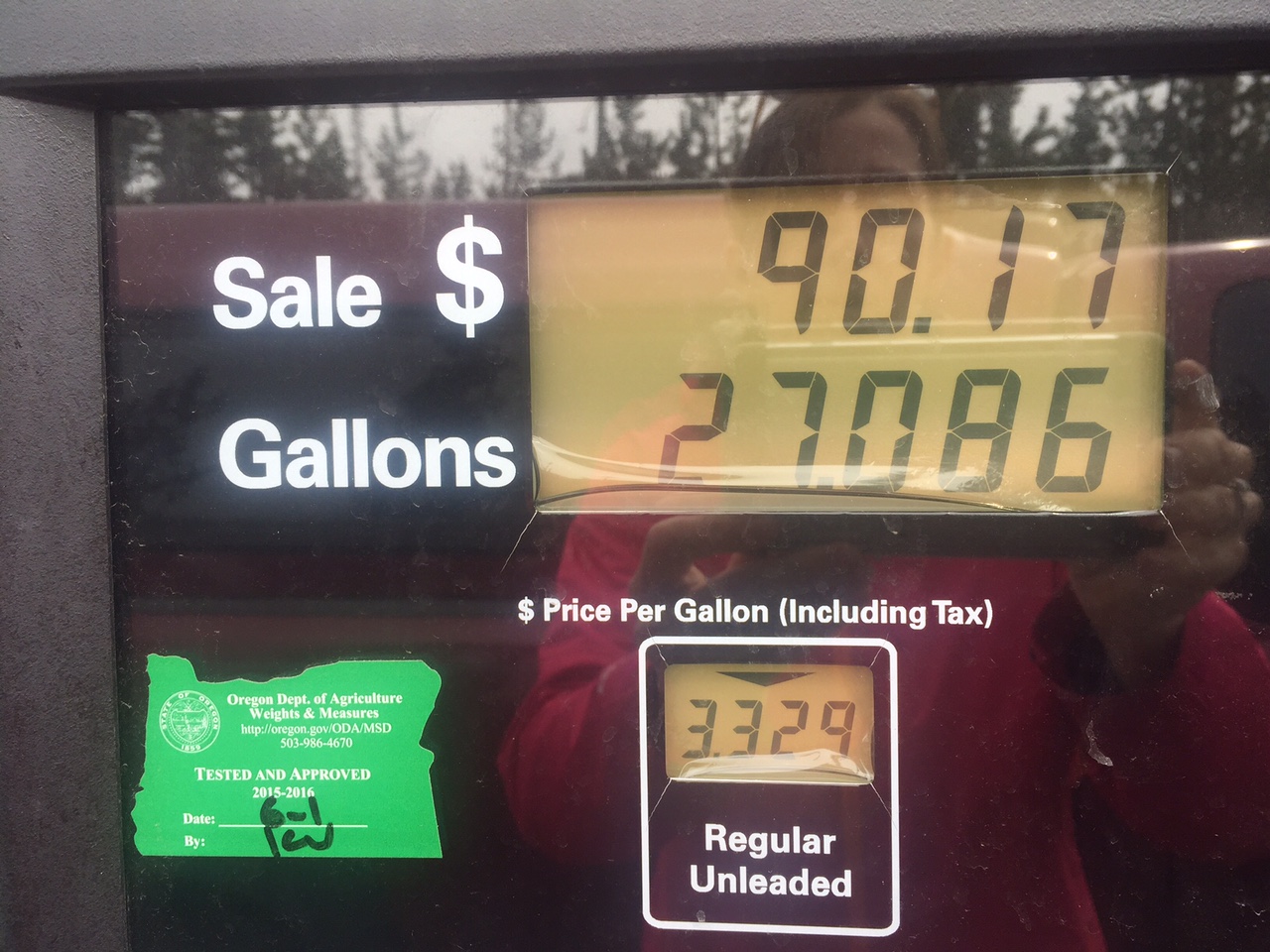
We turned off the road to head to Crater Lake – the only National Park in Oregon and a site we might have skipped if not for friends’ recommendations – with less than a 1/4 tank of gas and no reservation. We hoped to stay IN the park-its campground is the closest to the lake, making access easy. But I was nervous-what if the campground was full? Our M.O. of making plans one day ahead of time does not square with the park’s online reservation system that you plan at least (a shocking) two days ahead of time. Plus-gas! We’ve been averaging 11.5 miles a gallon. Ugh.

We've been logging our mileage/fuel costs - biggest expense so far especially as we've been making tracks.

We’ve been logging our mileage/fuel costs – biggest expense so far especially as we’ve been making tracks.

We zoomed past the entrance with our national park Golden Eagle pass (a bon voyage gift from Ben and Joan – merci!) straight to the kiosk for walk ins. Score! Campsites available plus… gas pumps, located on site!  We did our circle the campground loops thing, picking out the best site and chose D loop, site 13, overlooking a lovely gorge. Temps were cold – snow / rain was in the forecast.

This is our fourth campground, and though our carefully posed photos of the others might suggest otherwise, this is the first one that really made us go WOW.

Maybe it’s the time of year – not too crowded, summer fading – but the forest is lovely, the chipmunks camera ready, and the sites were (all?) pull through rather than back in which we hadn’t seen yet. And I guess really  – and this is maybe connected to it being a national park – no road noise, far from “civilization”.

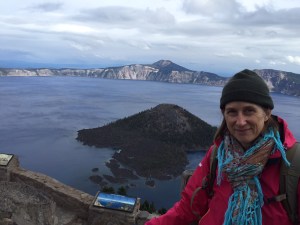
Your first view of the lake is breathtaking – clear, blue, vast.

IMG_0934

We did a ranger talk, a hike, and the rim drive – about 22 miles.

I heard that the best things to note in a travel journal, or in photos, are the things you want to remember.

Things we want to remember about Crater Lake:
Ben: The park ranger, in his talk had us picture the people living in this area when the volcano blew – imagine your whole life a 12,000 foot mountain is a part of your landscape. Then one day – in less than 12 hours – it was gone, replaced with a 2000 foot crater (or more accurately a caldera.)

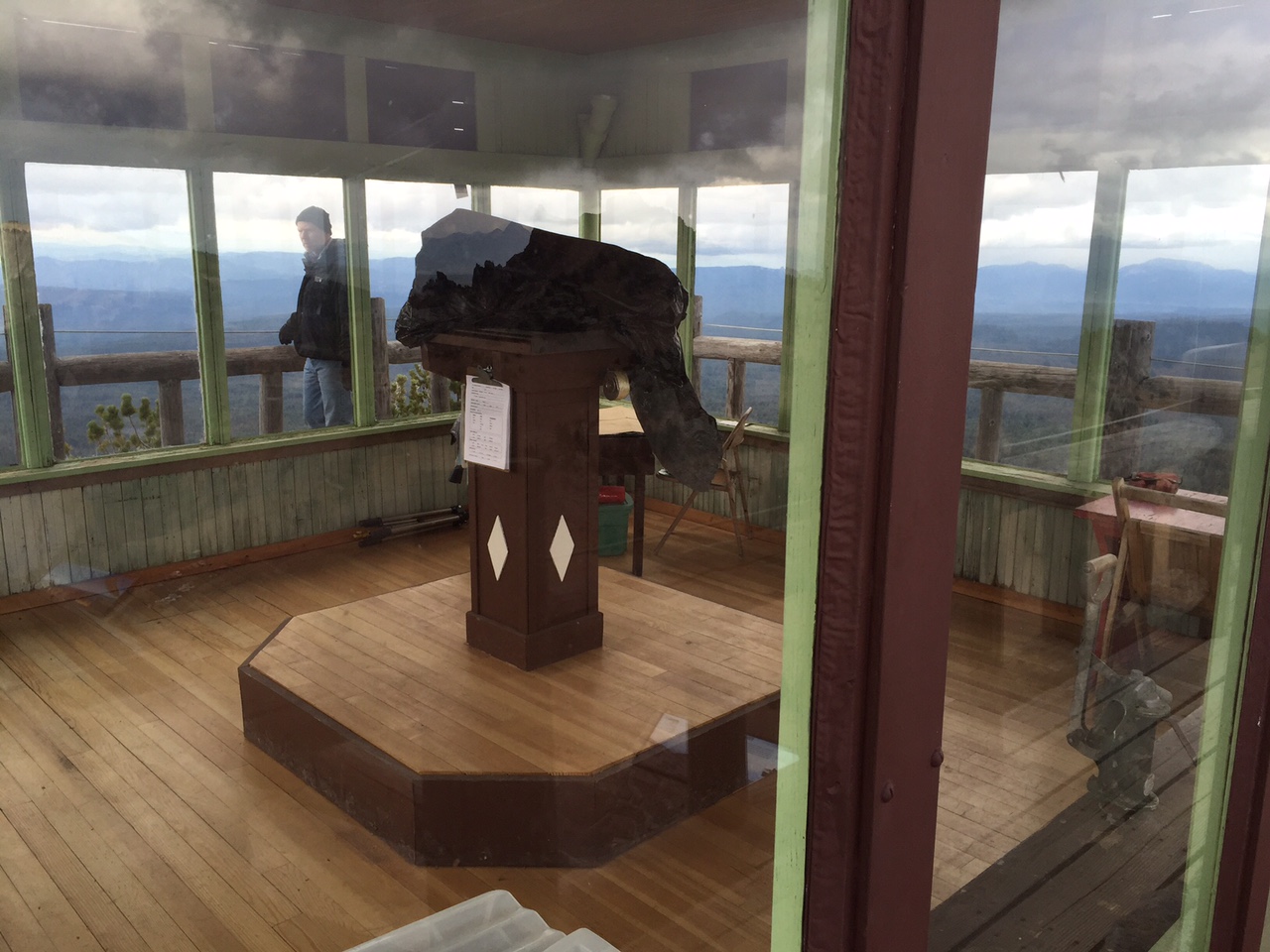
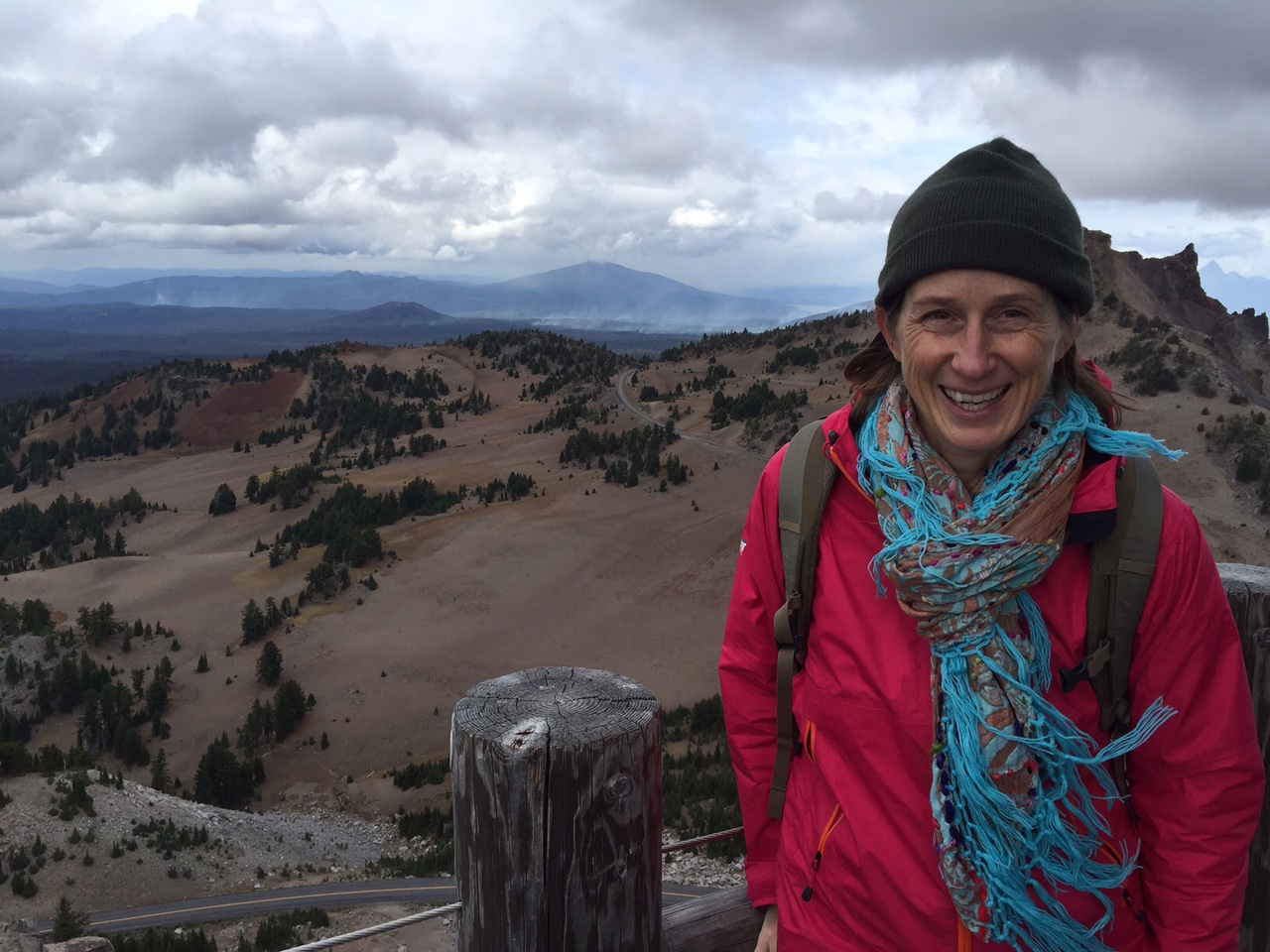
Meg: The hike up Watchman – where there is a national landmark fire watching station – still used today. With key supplies like a pencil, pencil sharpener and glass cleaner.

Firewatching station up watchman hill.

Firewatching station up watchman hill.

There were actually fires in the distance too – set by lightening, watched and controlled by firefighters. Naturally occurring fire (lightning), that doesn’t threaten human property or people, is an important part of the natural process and is allowed to burn.

At the top of the Watchman - where firefighters still look out and have been since the 30s.

At the top of the Watchman – where firefighters still look out and have been since the 30s.

We had such a great day – and a night of freezing temps as we were still missing a few parts to get the propane heater warmed up. Our gas stove warmed things up a bit and wool blankets too. Ben’s fingers nearly froze hooking up the trailer to leave in the morning.

Snow on our way out of Crater Lake the next day. ZERO visibility.

Snow on our way out of Crater Lake the next day. ZERO visibility.

Doesn’t hurt to celebrate an anniversary – and I’m currently typing/posting this while doing another FIRST: Laundry! Woot!

IMG_0982

One last pic of the lake – they call it the phantom ship. Lovely. Like a little Airstream!IMG_0958

Redwoods – Don’t ask which one is the biggest – They all are!

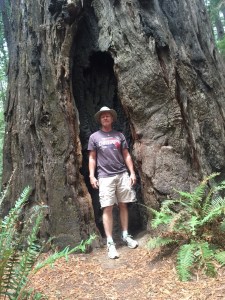
From Lodi, we headed west, to the coast, and through more wine country. Who knew I’d be headed to Napa and Sonoma (for the first time) only to actually just go through them because I don’t have time… for wine tasting? Crazy. We are headed north, fairly swiftly, because we want to enjoy what we can of Idaho/MT before summer officially ends. Several folks had mentioned the “Avenue of the Giants” as a sight to see – my sister who went to Cal State Humboldt for a year or so, and the infamous Mr. Peplow, whose gift of redwood (hmmm???) became our awesome secret electronics hiding cabinet next to the dinette.

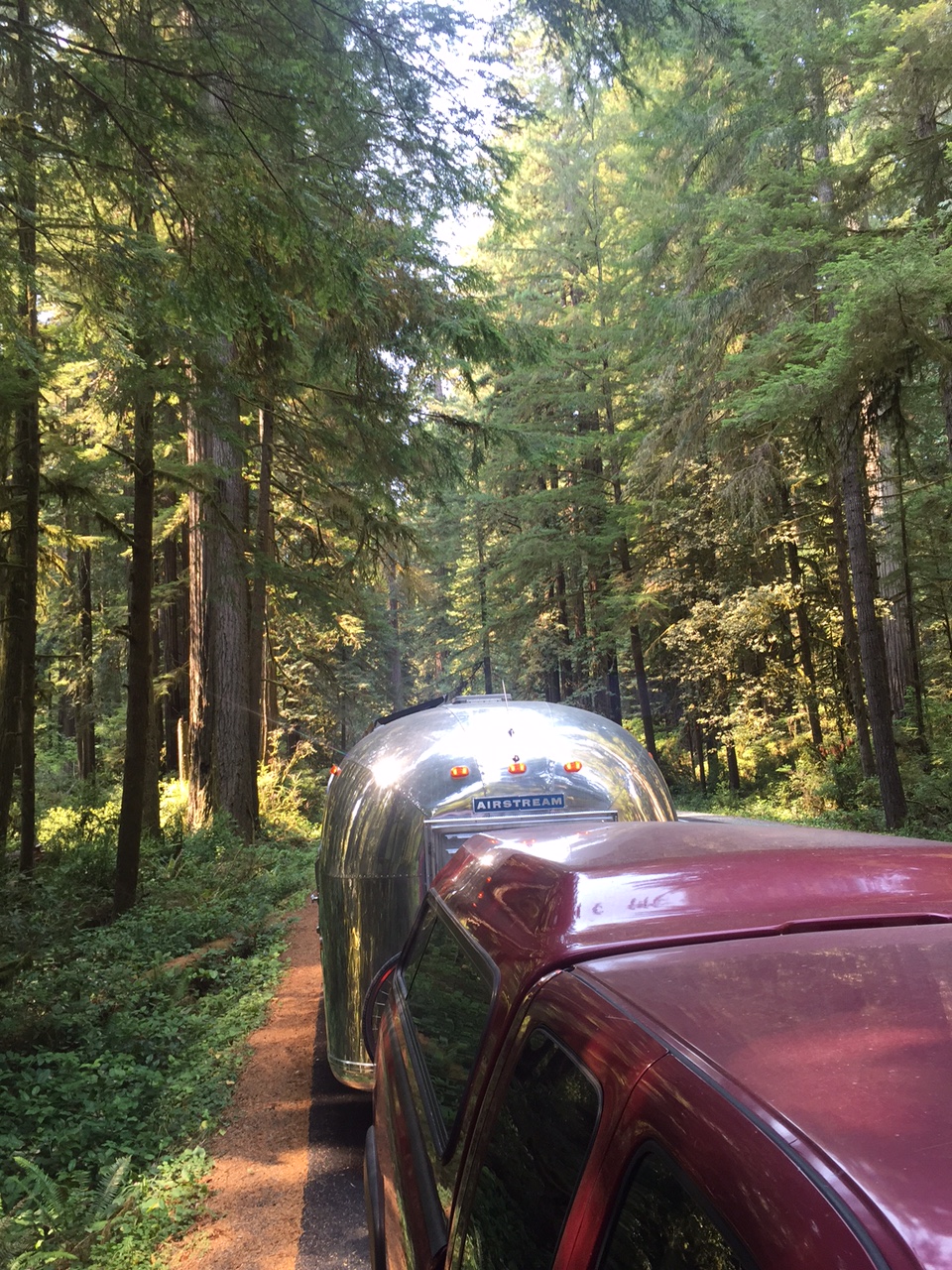
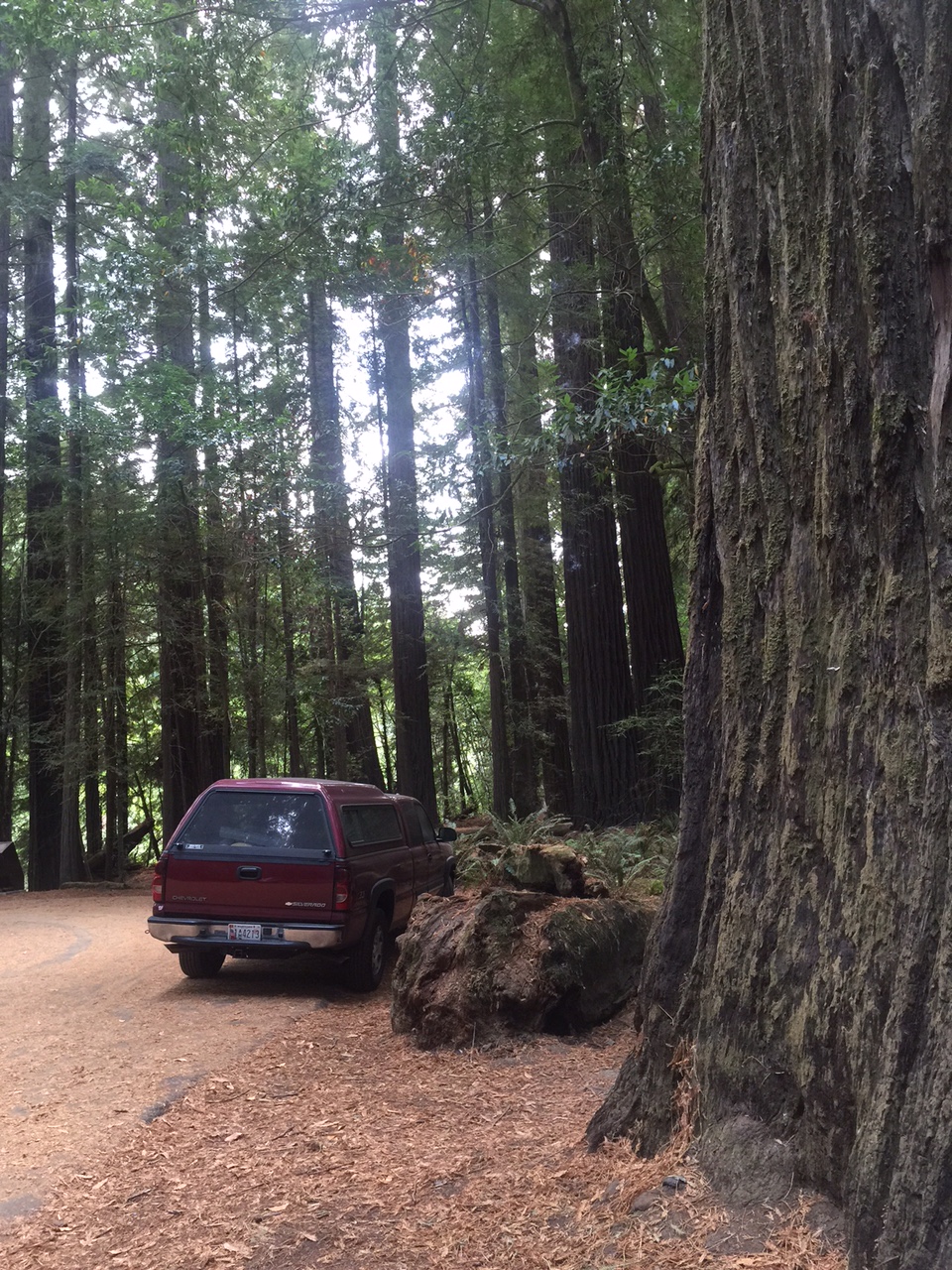
Big truck, bigger trees

Big truck, bigger trees

So, where to stay? After making our first calls to National Forests and BLM land looking for places to boondock, we started to do the math – at least in this area, if there is a site/landmark you want to visit, and the only free camping (seems to be) miles away up switch back roads, you might want to shell out the $ so you can stay IN the Redwoods, close to the hikes you want to do and trees you want to hug. So we Yelped up and found the Giant Redwoods RV & Camp-well located, well reviewed (clean!), and indeed it was a great landing place. And still cheaper than the state park we did near San Diego.

Ben in camp

Ben in camp

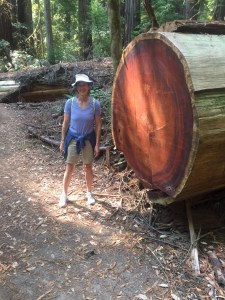
We had a lovely hike along the north loop of the Mattole Creek. Got our hiking legs under us. Took some obligatory photos.

Here are some of our favorite facts about Redwoods:
-Not to be confused with the giant Sequoias which grow alongside the Sierras. Redwoods are along the coast.
-It’s hard to figure out which one is the “greatest”. Height, width, age all factor in.
-A Redwood seedling with only a tiny speck of sunlight can grow six feet in a year.
-Redwoods draw on water through their roots, but also through their tips – they thrive on fog. Maybe that’s why they are on the coast? Or why their branches are higher up?

So much still to learn. Hopefully we didn’t get any of our favorite facts wrong. Please feel free to correct us in the comments.

We finished the day as we spent most fall Saturdays in our real life – watching Sooner football. We found a restaurant in Miranda, the Avenue Café that put the game on for us. It was a thrilling come from very behind victory for Oklahoma over the Tennessee Volunteers.

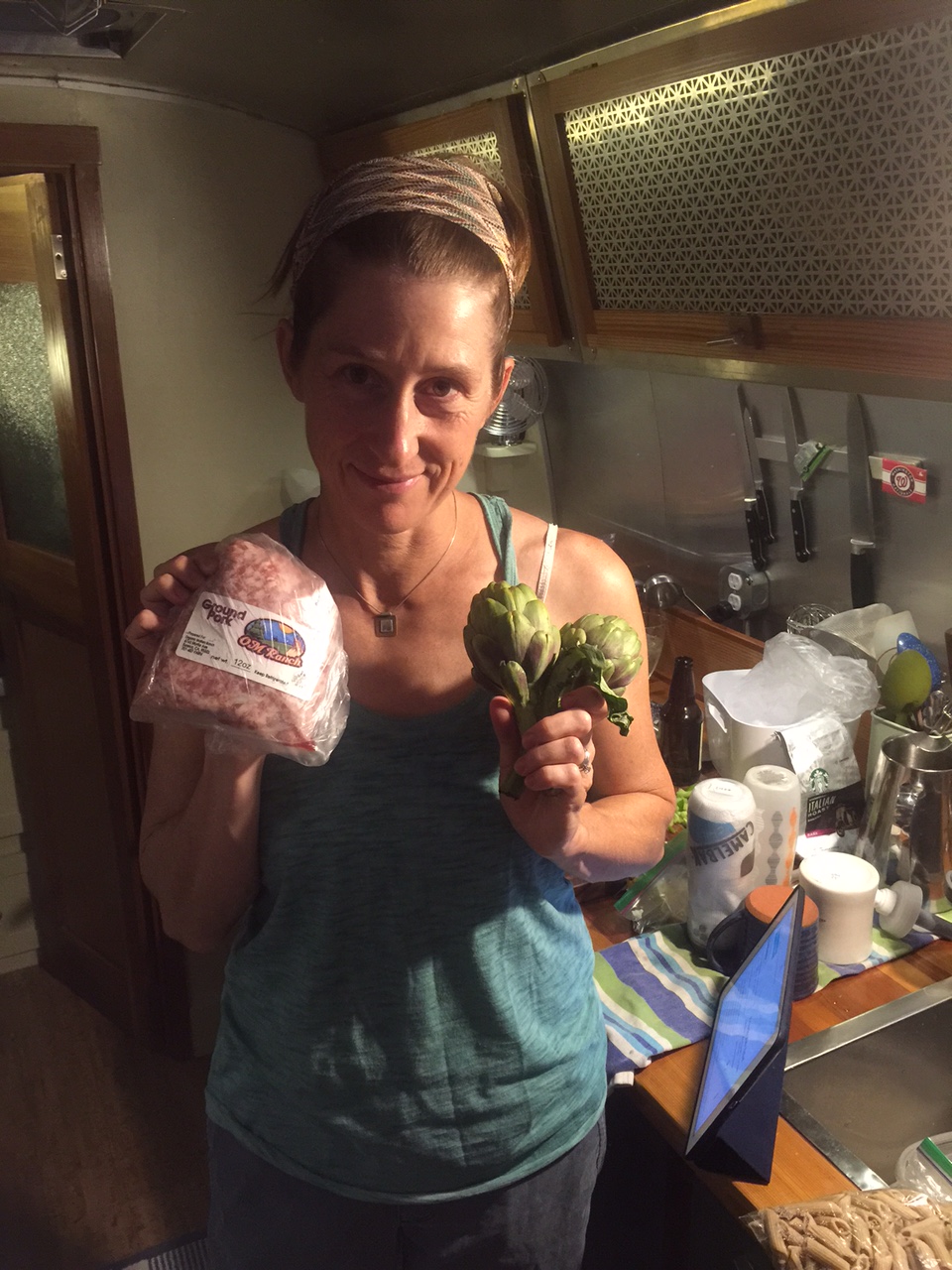
We’ve been eating well – organic/local pork, mushrooms, artichokes, etc. thanks to farmer’s market we found in Garberville, CA. And we found it thanks to Local Harvest – how to find good food to cook on the road.

Soon to be a delicious Asian stir fry.

Soon to be a delicious Asian stir fry.

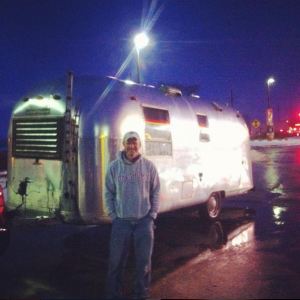
This morning we gave a few tours – to some Burning Man survivors who also have a Airstream, and a family staying for the week – the parents are both Airstream / renovation aficionados. At least one of their young daughters is interested in restoration as well and another wore a coonskin cap. Their dog Charlie was the most well-behaved in the campground. On to Oregon!

Before we left California, we risked our lives to take this roadside picture.

Before we left California, we risked our lives to take this roadside picture.

California, Here We Go

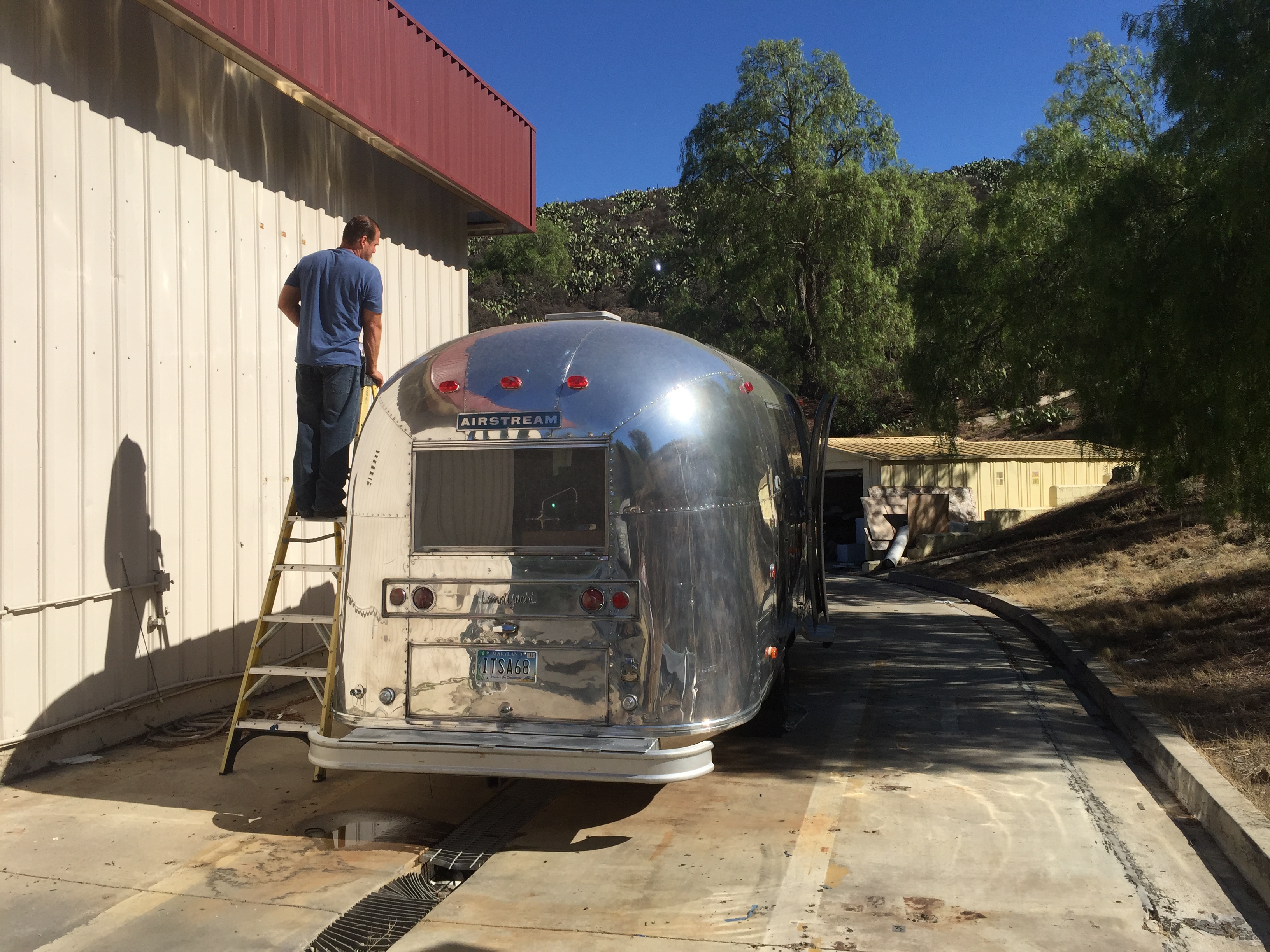
After four months and two days in my parents’ driveway, the final phase of our Airstream restoration was finished and we hit the road! But not before putting the driveway (+ a few hitch scrapes) and garage (+ a few saws and glue stains) back in order. Our adventure officially began on the day after my birthday – pretty cool way to start the year.
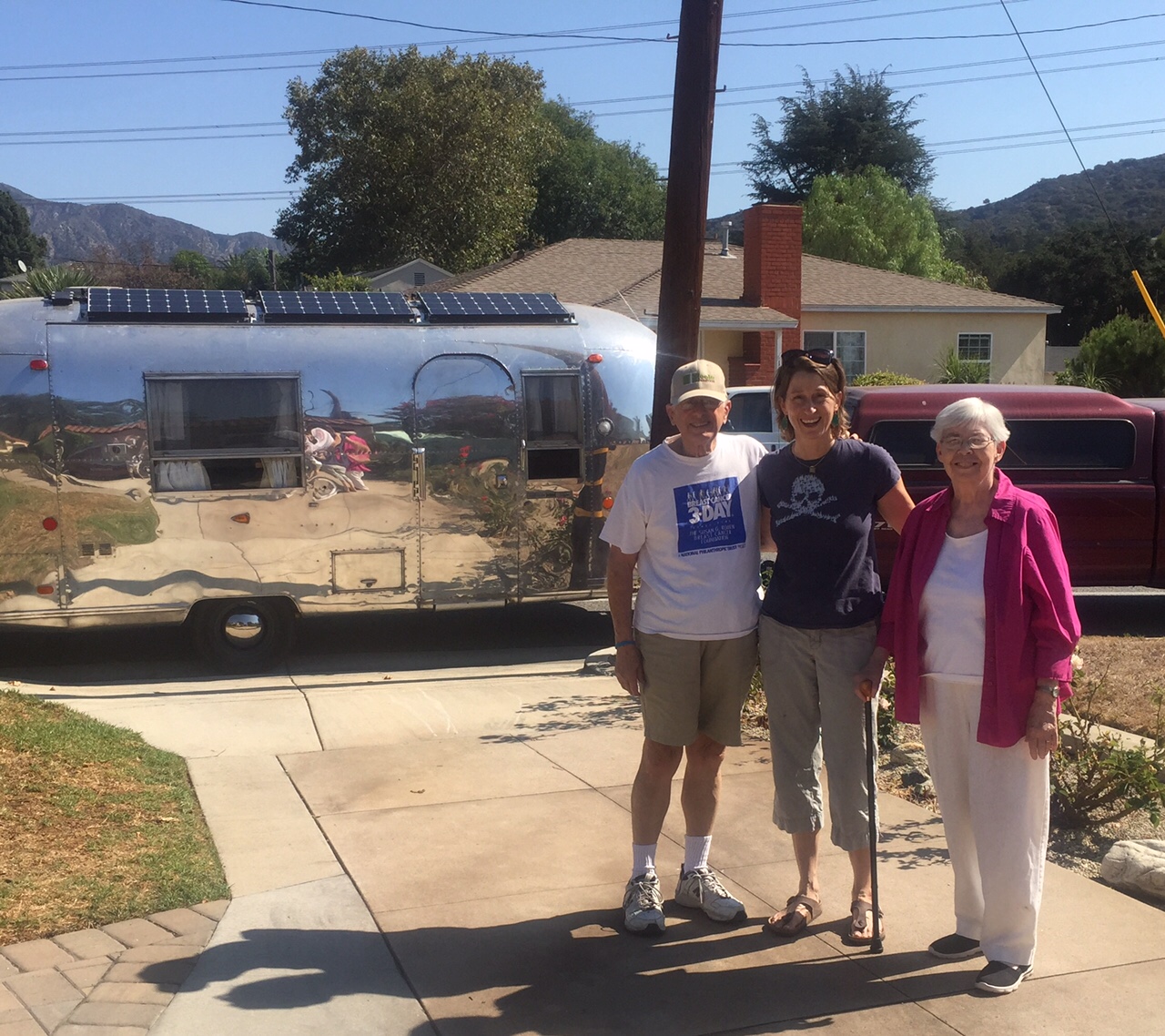
Who are these nice people who let us park in their driveway for four months? My parents!

Who are these nice people who let us park in their driveway for four months? My parents!

After a so close but failed attempt to see my cousin-in-law in Santa Barbara (wrong area code in my ‘we’ll be in your neck of the woods at this time’ text to him! grr!) we continued up the road to San Luis Obispo and El Chorro campground, a county park. We found a sweet little spot, #13, and would definitely recommend this campground to those wanting to visit SLO or Morro Bay.
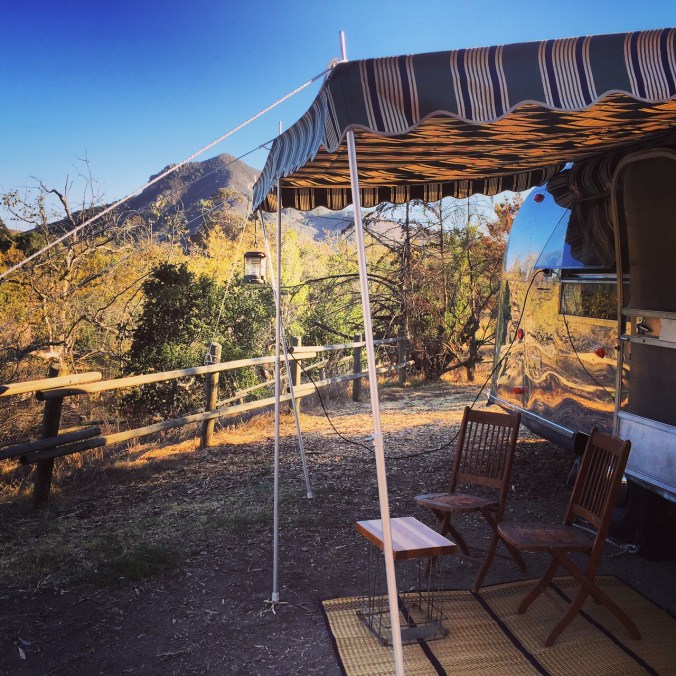
After setting up camp, including the unfolding, mounting, rope tightening, and “AHH”wning all over our our new awning from Marti’s Awnings, we enjoyed crispy time with our (not as comfy as what we see others using out there, but we are pretty sure) Civil War era camp chairs and milk crate table. The rug was a wedding gift 12 years ago from our friends David and Donna – originally supposed to be more of a beach blanket, but we love it for this purpose! We’ll use it every day this way!
After a good night’s sleep, we headed out for Morro Bay the next day, where we indeed saw the Morro Rock, kayaked in the Bay – who can resist seals and sea otters in the wild? We lunched at Taco Temple, highly recommend the sweet potato

Mandatory pic with rock

Mandatory pic with rock

enchiladas. Then we went right across the street to a deserted patch of beach on the Pacific where I jumped in because you never regret a swim, though it was a tad cold. On the way back to camp, we made a few phone calls in our ongoing search to find a bike rack and found Heacock’s in Arroyo Grande. Not only did they have a version of the product we were looking for, but we saw a school (?) of whales heading north as we headed south around PIsmo Beach. Really cool – and though we were on the highway looking down as we drove past could see them really well. Back at our campsite, we celebrated getting the fridge to work on propane and Ben spent a good portion of the evening hammering the bike rack onto the hitch. Meanwhile, I chatted up Bryan, kind

Ben hammering bike rack onto hitch. He really needed a sledge hammer.

Ben hammering bike rack onto hitch. He really needed a sledge hammer.

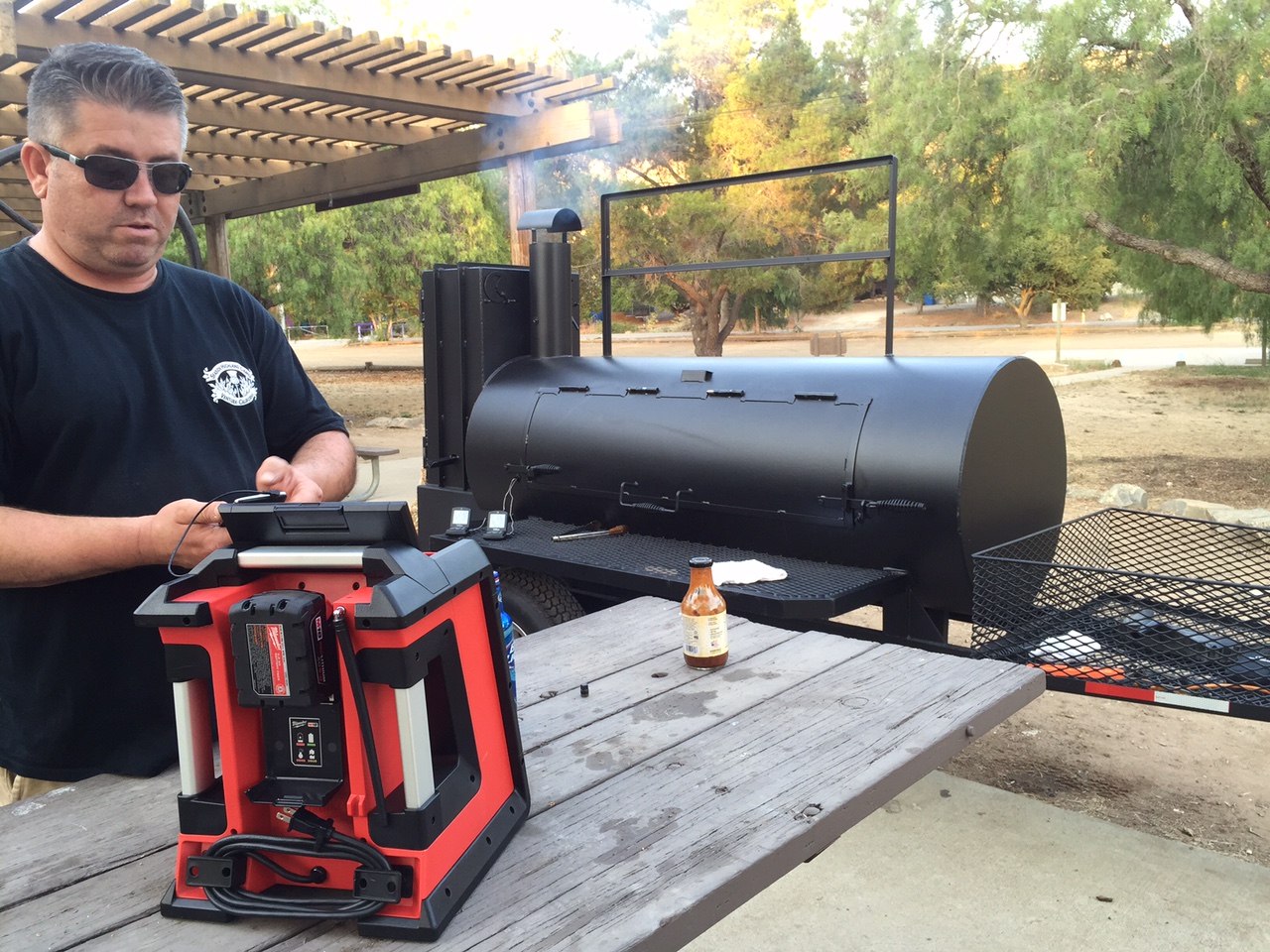
of a random guy I discovered in the park next door. He’s a scientist by vocation, BBQer by hobby, who was “practicing” cooking ribs with his massive grill in an empty park, by himself, while drinking Bud Light and playing bluegrass music on his stereo. I can’t really explain any more about what he meant by practicing – something to do with creating the exact atmosphere he anticipates when the BBQing is perfect (this includes monitoring barometric pressure, wind speed, cooker temperature, and of course, crowd happiness and appropriate music), but it was really interesting and cool, and it’s nice to know there are people developing their talents out there while I’m reading

We'd all enjoy ribs made with such precision

We’d all enjoy ribs made with such precision

Twitter and gnashing my teeth about the collapse of the Nats at the hands of the Mets. Bryan’s ribs smelled great but, alas, no offers of samples.

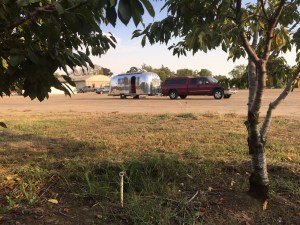
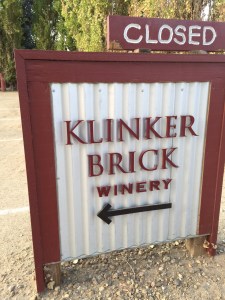
We are now landed about 200 + miles up the road, spending the night at a Harvest Host site, our first boondocking, in Lodi, CA: the Klinker Brick Winery where we received a warm welcome.
We arrived too late to taste, but not too late to enjoy sunset among the vines and a glass of Two Buck Chuck (which we would deny drinking if the Klinker people came wandering by). Think Red Zinfandel, those gnarly flat topped trees. (I’m half expecting one to start throwing grapes at me, a la Wizard of Oz.) It is hot here in the San Joaquin valley this evening, but lovely.

Airstream Shakedown Cruise…

There was no question taking at least a one or two-day pre-trip trip would pay off. It was just a matter of fitting it into our schedule, and prioritizing, as we are eager to hit the road, and head north before (and yes Montana had one today) a winter weather advisory hits.

Common sense won out and hours after we completed work on the key systems and finish out (still some hooks to hang) we went south to spend our very first night in a trailer. The San Mateo campground, a part of San Onofre State Park, just north of San Diego near San Clemente, is a state park only two or so miles from the Pacific Ocean.  It was just the ticket for a shakedown cruise. (And we immediately wrote our first review for Campendium!)

Though a single night was expensive, it was very accessible, there were no surprises, it wasn’t crowded, and, if you can blur your eyes a bit and get beyond the brown California landscape, is situated in a lovely spot. We tested all our systems – hooking up to electriciy and water. The hot water heater was the star of our tests (or the hero of the day, as we like to say), and the shower too. The propane had a few glitches – one of which Ben has worked out (getting the second cook-top burner going) and one we still have to fix (getting the fridge to run on propane-this is the current villain).

Crispy time snacks - no cooking required.

Crispy time snacks – no cooking required.

We had two great meals – the oven worked well, the kitchen is big enough for two people to work in comfortably. The bed (converted from the dinette, with a 3-inch memory foam topper) was super comfortable. Our neighbors were lots of bunny rabbits, some prairie dogs (we think) and a few other campers – including two sets of fellow Airstreamers, who gave us their tips on other California campgrounds to visit.

So what did we learn? Don’t leave home without your bread knife or aluminum foil. That’s all I forgot to pack. Not bad. Another hero: those lights you clip on your ball cap ROCK for hands-free night-time navigation to the campground bathroom (hat tip: Monica N.) Be always grateful one of us knows how to fix things – another couple in the campground had a water leak and were washing dishes etc out basins on their picnic table. We had a leak too, but Ben fixed it! Yes!

So we wrap up about four months in Glendale, the final stage of a restoration that began in December 2013 when Ben met the previous owner at dawn in a rest stop parking lot in Michigan to make the sale- thank you Craigs List, another key player in this restoration. Next post, from the road…

Restoration Wrap Up

When you are a little behind, a good list is often just the trick. Here are a few of the highlights from the last several weeks:

Solar: Nearly every minute of every day out here in California, the sun is shining. Maybe that’s what pushed us from the camp of, “Wow, getting solar panels for the Airstream some day would be cool!” to the camp of “Why let all this sunshine go to waste? Let’s do it now!” We quickly realized AM Solar had the product we wanted, and their list of local recommended IMG_0416installers lead us to Brian at Advanced RV just outside of Thousand Oaks. With Brian’s input, and after a close inspection of our roof, we settled on four 100 watt panels. We missed the Airstream while it was away for over a week, but are very, very happy with the work and the new system. Seems like no matter how many things we have running – fans, lights, etc. – the panels keep the battery bank at 100%.  Good stuff.

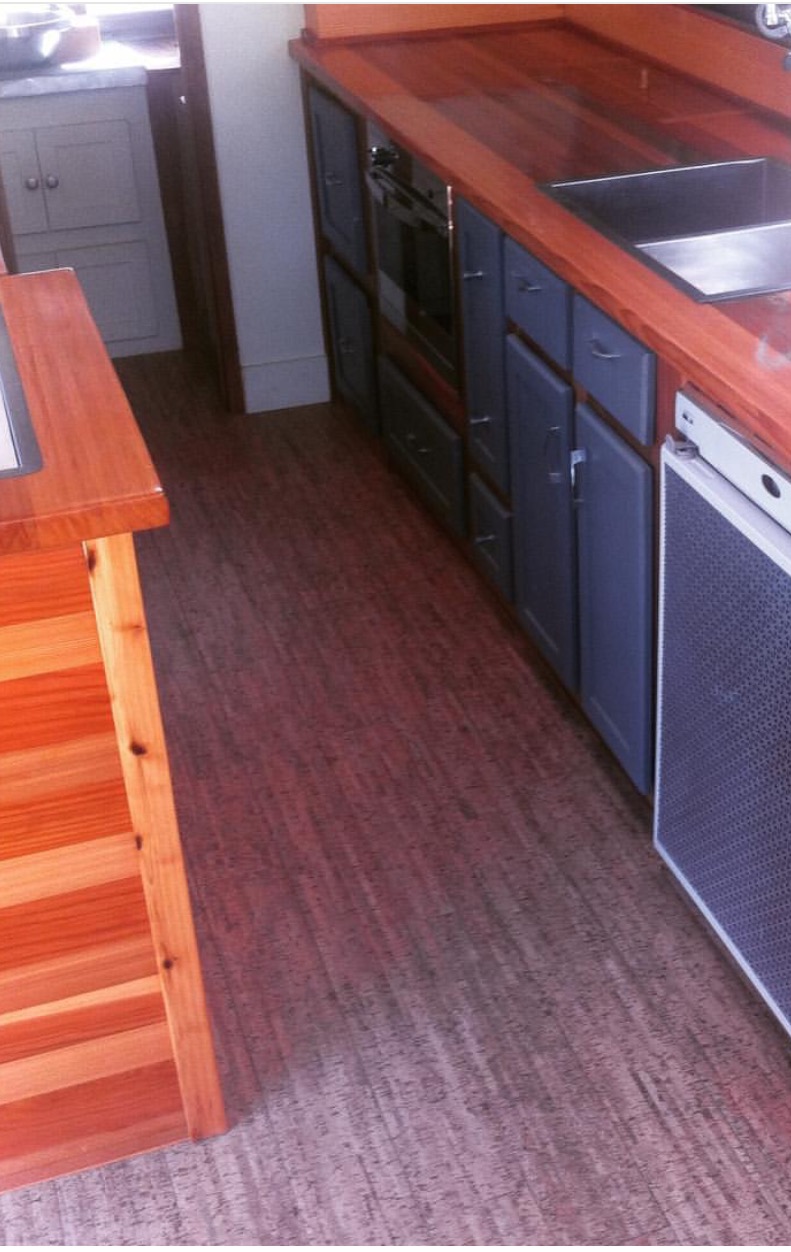
Floors: We went back and forth a bit on the type of flooring. We settled on cork and

Threshold newly cork floor'd

Threshold newly cork floor’d

Looks a little like sheet music, no?

Looks a little like sheet music, no?

are really happy with it so far. The product is called Green Claimed, made for Cali Bamboo. It’s made in Portugal out of recycled wine corks-cool, huh? It comes in planks (maybe tiles too) and is a click to install kind of thing – no glue. Planks are 3/8 thick and bottom is also cork, with some kind of material sandwiches in the middle, and a light coating of some sort on the outside. We just love it – it is so comfortable on the feet, and the look sort of complements the industrial/natural vibe we have going.

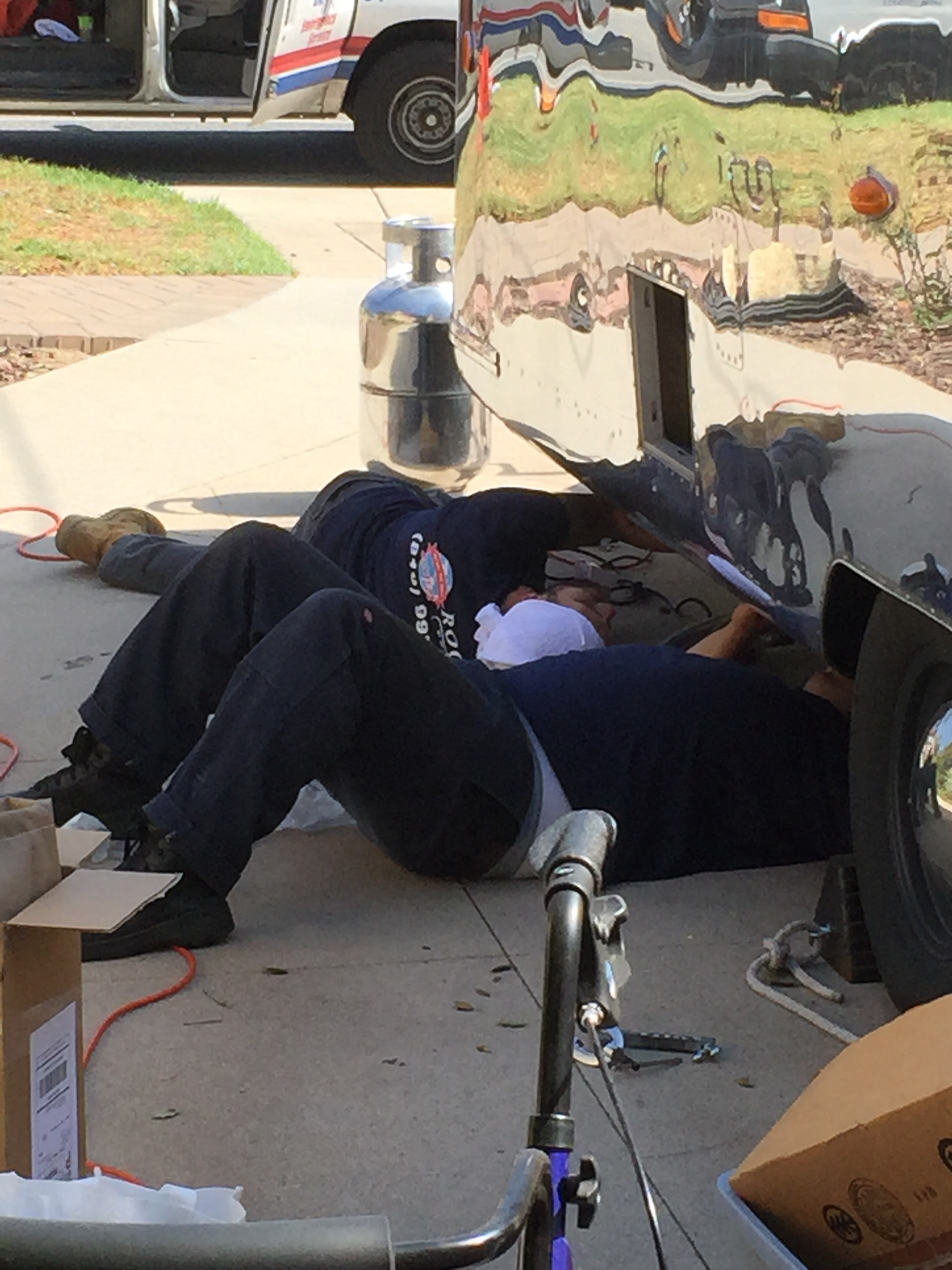
Propane: Propane was the last system we installed, maybe because itIMG_0582 was one of the hardest contractors to find. Ultimately we found Randy and team at Rooter Buster – a mostly plumbing oriented outfit that also does natural gas lines and propane. Randy has a travel trailer himself and tracked immediately with what we wanted. I did not ask permission to take this picture of Randy and his colleague, but I don’t think they’ll mind!

There are many schools of thought about how best to run propane lines, but we settled on what Airstream used originally on our trailer: soft copper lines exposed on the bottom of the trailer and flared fittings. Randy wasn’t thrilled with the arrangement, saying the soft copper is vulnerable to rocks, etc.,, but he understood that this had lasted almost 50 years on our trailer and that that was what most restorers still did.

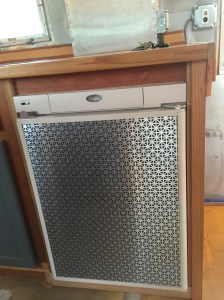
And now, a small gallery of things powered by propane:


A final thought as we wrap up the restoration and get ready to hit the road – THANK YOU to all the people who have helped us to make this happen. From the

Thank you Aunt Mary Jane for the fabric: some gifts for our cats' host families.

Thank you Aunt Mary Jane for the fabric! Used my mad sewing skills to make some gifts for our cats’ host families.

contractors, our cat “sitters”, my parents (x infinity) and brother who have hosted us, old friends who tirelessly reply to my email updates, new friends and experts on Instagram, our renters and neighbors back in Maryland, our woodworker friends here in California, etc, etc. we are are grateful to all! Next post – an update on the shakedown cruise we just completed, and the post after that – from the road!

A Plumber and an Electrician walk into an Airstream…

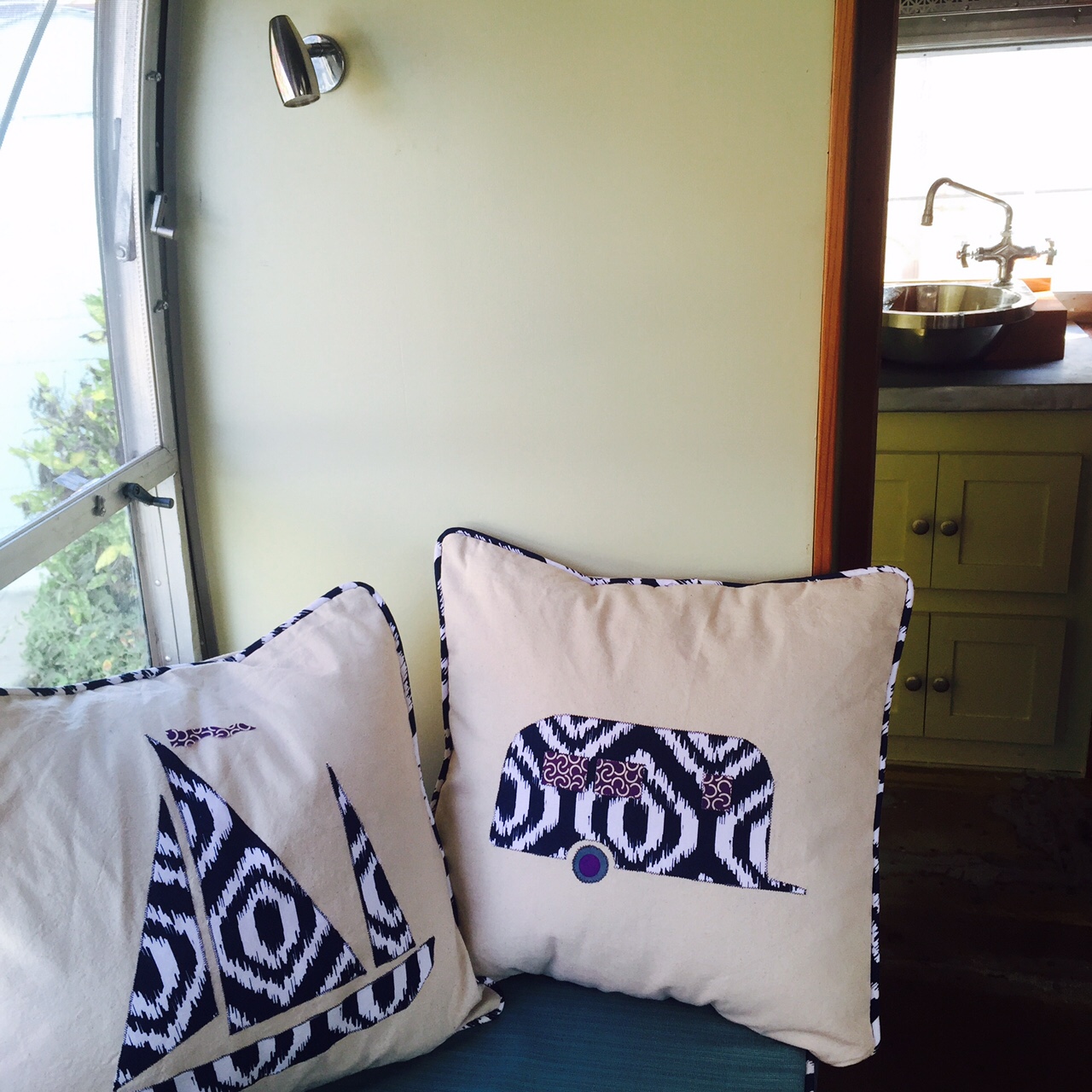
…is either the beginning of a very promising joke, or a (brief) summary of the last couple of weeks in Airstream restoration. But seriously folks, it’s sooooo wonderful to be far enough along for systems work, and pleased to be able to hand most of it over to real experts. (Ben’s edit: Huh? What are you saying??) WARNING: This blog post will rank high with Airstream renovation enthusiasts, low with others. But to tide others over (eg my closest friends), here is something pretty – I machine appliqued the sailboat (a yawl like one we used to own) and Airstream onto the napping couch pillows. The reading light is newly installed and you get a good look at the bathroom sink cabinetry in the background.

FullSizeRender (10)

OK, back to the boring stuff. First the plumbing. You may recall in our prevous post that Ben had laid the groundwork for final connections by running all the PEX lines. My parents had scheduled their plumber Jaime to come over and do some maintenance (leaky faucets, a no-no in drought stricken California). They sung his praises, so we arranged to talk to him about doing the Airstream connections. The main requirement is that he be comfortable with PEX tubing, which is becoming more popular in home applications (it’s less labor intensive and thus cheaper to install), but still raises a few eyebrows among old fashioned Jaime-The-Plumber types because it’s, well, not copper.  Turns out Jaime and crew did know how to handle PEX, had all the right high-tech tools, and even signed off on PEX philosophically as perfect for a trailer.  All went great. A real feeling of progress when we hooked up the “city water” supply (i.e. attached the garden hose to the newly-installed inlet in the back of the trailer) and the system was pressurized!  Faucets all worked and everything drained properly!

Jaime the plumber at work

Jaime the plumber at work

Meanwhile, we’d been hunting around for an electrician and found Soren, the electrician who works with Brody Travel Supply in Ojai, CA. Brody is one of our favorite follows on Instagram. Collin, of CFDetailing knew we were looking for an electrician and suggested we call Geoff (“who knows everyone!”) at Brody, who then kindly hooked us up with Soren who works out of their shop about 90 minutes north of Glendale.

So, we prepared to take the trailer out of the driveway for the first time (since we arrived here on May 6th) to head up the road. Woot!

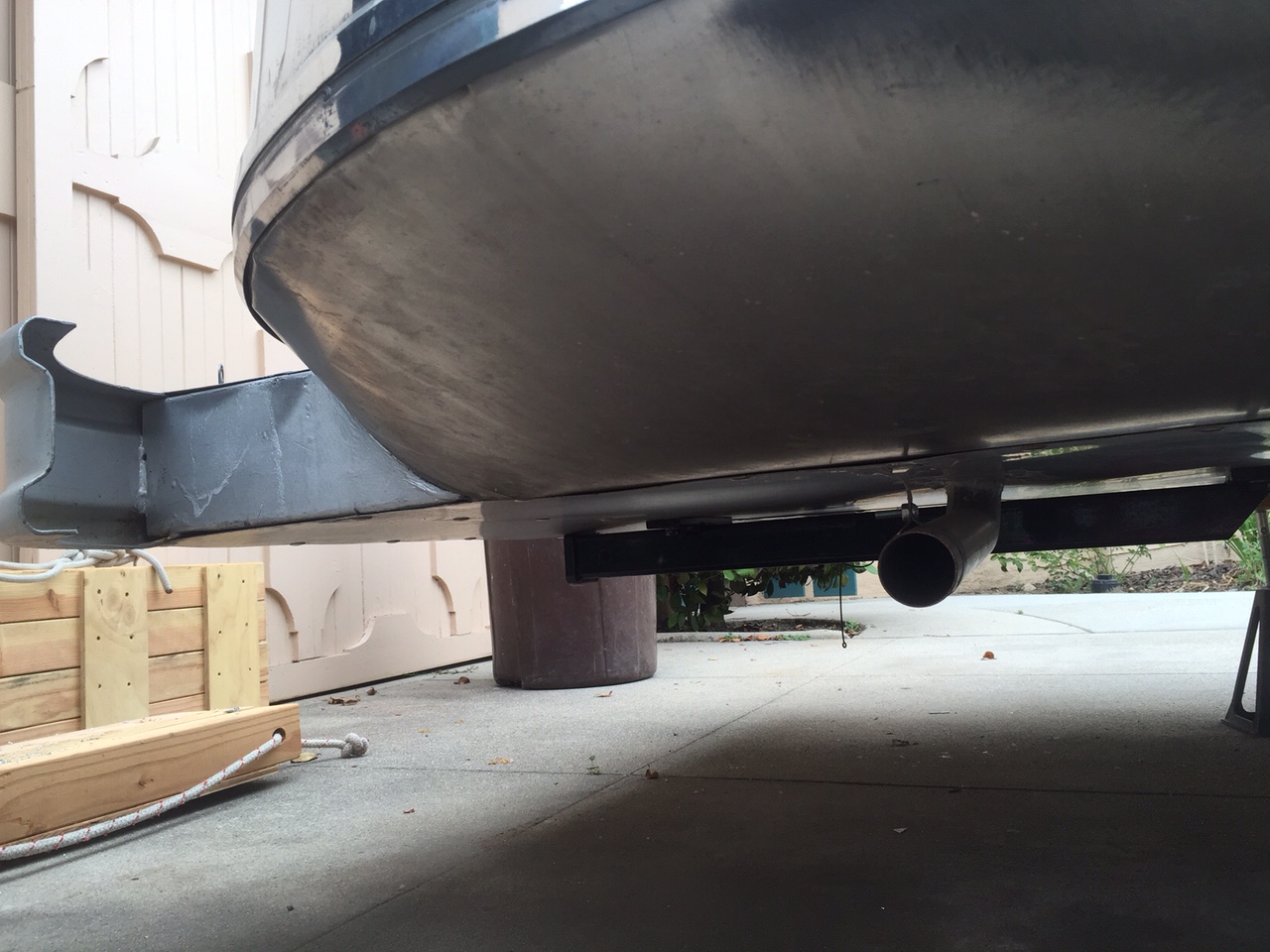
We battened down the hatches, confirmed we were paid up on our insurance, and put some notes on cars parked across the street – asking if they’d move their cars so we’d have all the room possible for leaving the driveway. The hitch scraped a bit when we had backed in and we have since installed our water heater; its exhaust pipe (see pic below) sits lower than the hitch, on the side. If that pipe scrapes, we are doomed. So, Ben built some hefty wood ramps to deploy under the tires if we needed some extra height to avoid scraping, and I positioned myself in the rose bushes to watch carefully as he moved out – alas no scraping, so the hefty wood ramps have been set aside to be used in the zombie apocalypse.
IMG_0351

Water heater pipe in foreground, hitch in background. Zombie apocalypse ramp at left.

Airstream, after successful launch fro our driveway, in our

Airstream, after successful launch from our driveway, in our “staging area” a block away on a quiet street adjacent to ours.

We took the easterly route (the 210 to the 5 to the 126, y’all!) to Brody’s in Ojai (avoiding the 101) and had an uneventful drive through mountains and valleys and lush (thanks to irrigation) fruit and vegetable farmlands. It WAS great to be on the road, even for a short time. After arriving, we killed a little time before meeting with Geoff, taking pics of our shiny trailer and tangling with a junkyard dog (not really).

Geoff kindly gave us a tour of the other trailers in his lot – some works in progress, all interesting and made more so by his enthusiast’s perspective and details. He and Ben exchanged some sourcing ideas. We quizzed him about solar, etc. We made plans to return two days later to meet Soren once he began the work,

Though we didn’t have much time to explore Ojai, we did have a delicious outdoors lunch at Boccali’s with an oak grove behind us and farms and mountains in the distance – fresh lemonade, Italian subs, and their signature strawberry shortcake.

Then we headed, sans Airstream, west to Santa Barbara for a couple of days of R&R. We’d been looking for an excuse to get up north to visit my cousin Nancy there (my aunt and uncle also have a vacation place there). We stayed two nights, had two fabulous dinners with Nancy and Peck (that’s him manning their backyard pizza oven below while dog ‘Stache keeps an eye out for scraps), breakfast burritos both mornings (Jeannine’s had the edge on taste, Daily Grind on value) and a very restful and rejuvenating time looking at this view (far right) from Uncle Ron and Aunt Mary Jane’s place.

When we returned to Brody’s to go over everything, we were introduced to Soren, electrician and, naturally, vintage Airstream enthusiast.  Where do all these people come from? Everybody out here loves old trailers! Anyway, Soren knew immediately what we had in mind and he proceeded to do an awesome, super-neat job connecting all the wires Ben ran beneath the walls to the fuse box and new batteries.

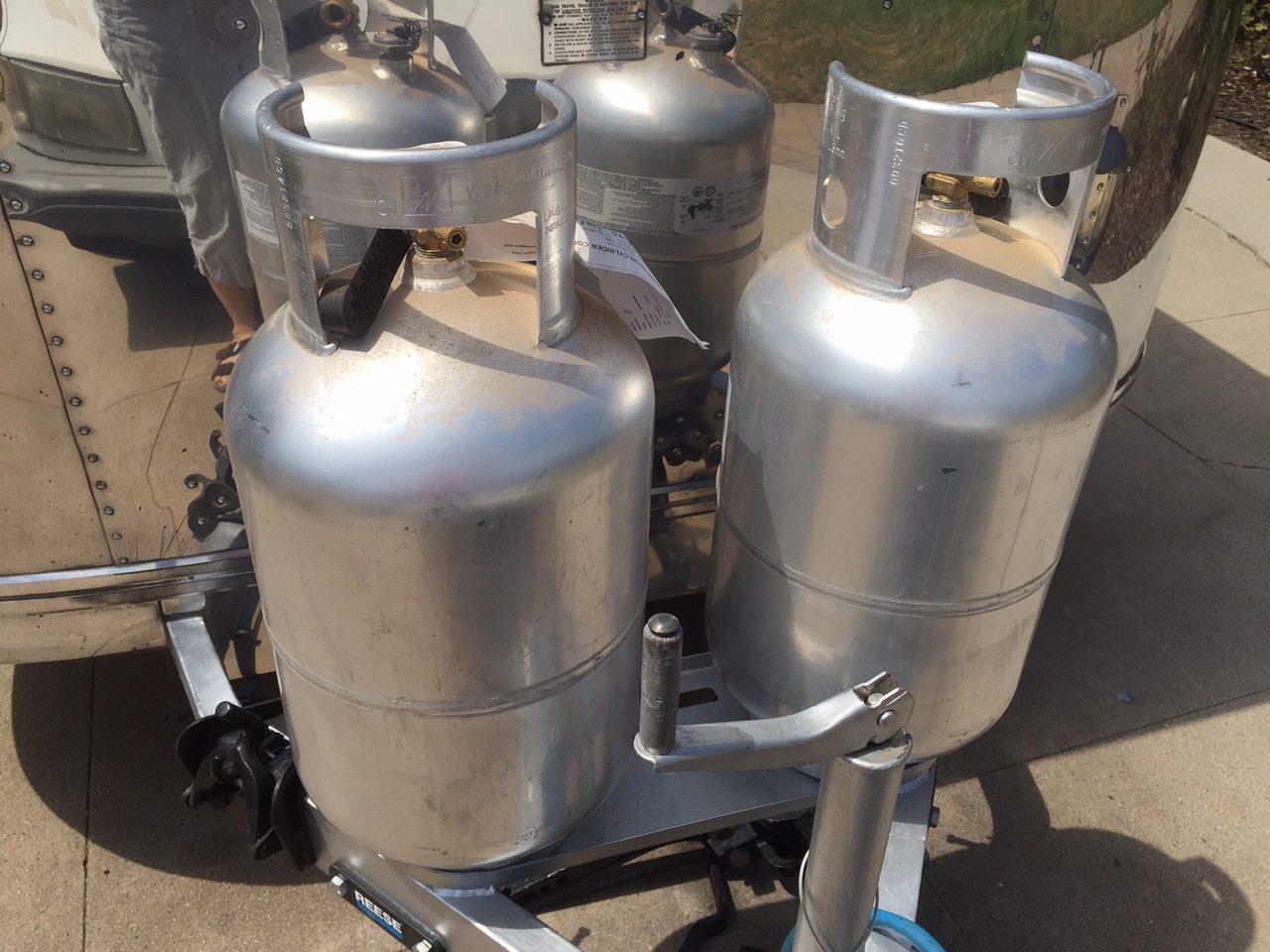
So for now, while we await next week’s appointments for propane (Monday), solar (Wed) and floors (Friday), Ben has a ginormous punch list to go through – installing electrical boxes and light fixtures, finishing woodwork, and who knows what else. I get to go shopping – snagged tons of cool stuff for storage/shelving at Ikea yesterday – showcase to come. Later today I’ll be putting on ratty clothes so I can polish up the bad boys below before they begin their lives supplying life blood to our fridge, stove, water heater, and bbq.  Sigh. Only Ben (and polisher Collin, of course) would demand such aesthetic perfection.

Propane tanks about to get clean.

Propane tanks about to get really shiny.

We could live in here some day (soon!)

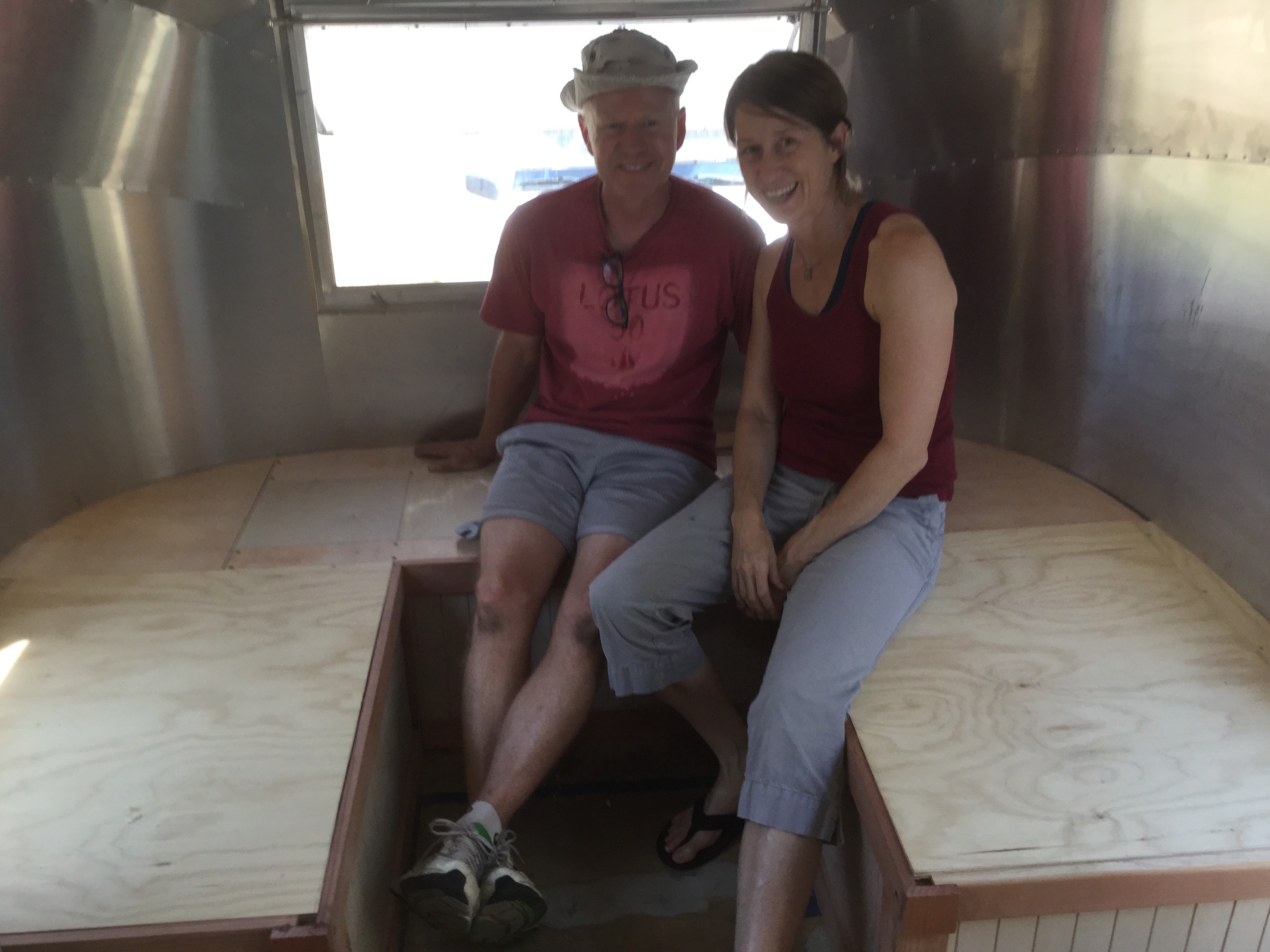
Even though it’s the heart of summer, best not to let academic writing skills lag! Thus, a topic sentence for you: In this blog post, you’ll learn about the completion of the bed/dinette AND cushions, light fixture installation, another successful flea market trip, and a problem-solving hole! Maybe we’ve said this before, but it feels like we’ve made real progress and are getting to the final push. See how proud we are, not exactly lounging, but definitely posing for the very first time in our living space on the completed dinette/bed.

IMG_0313

So, about that hole. A little animation would probably illustrate this much better than I can explain, but let me try. Once the dinette / bed was done, we sat down in it and our planned cushion thickness was too high – our feet just barely grazed the ground. After some concerted thinking and lots of “What if we tried…?”, the answer miraculously appeared (answers to these kinds of questions have been slow lately, given the heat and humidity). Here’s the process that seems to work when solving these dilemmas:  First, we ask ourselves, “What are the elements of this situation we can’t change.” (Forces you to recognize elements that are cast in stone and to focus only on what you can change. A structure materializes.) Second, we try to remember to keep it simple. In the case of the cushion crisis, we soon realized we could not change the height of the dinette seats, but we could adjust the table height (get out the drill) as well as the seat cushion thickness.  It all flowed from there, as the next picture illustrates.

IMG_0097

Ben cut a hole in the subfloor (as best we could tell we weren’t going to cut into anything important but it was a real nail biter!) so we could lower the table pedestal into it, thus reducing the table’s overall height, as seen in the picture below. This also allowed the tapered pedestal to fit into the base securely as designed, and eliminated the need for Ben to do another customization. (The apple was for effect.)

IMG_0103

Then we reduced the cushion thickness to allow our feet to touch the floor!  When all was complete (ta da!) the thickness of the fill-in cushion on the table had to be adjusted to make everything level. Lots of moving parts in decisions like this, and our measuring/arithmetic skills get tested! In the end, we’re usually still crossing our fingers as we reach for the power tools (or checkbook).

FullSizeRender (9)

As soon as I finished the last two cushions (the curved corners – not any harder than the others, but don’t tell anyone!) we realized, indeed, we need back cushions, too. Short ones that won’t cover the windows, but will provide a base for said lounging. So I am off to my fabric and foam haunts today.

Now, the lights. When Ben first acquired these marine light fixtures (out of India where they salvage retiring cargo ships, strip every nut and bolt from them, then sell it all on ebay) I wasn’t sure they would work in the Airstream (I’m always imagining bumping my head on them – on everything really) but was I wrong. Ben installed them this week, with lots of persistent wiring and rewiring, and we think they look AWESOME!
IMG_0319IMG_0114The pic on the right also shows off the now completed overhead cabinets, complete with magnetic closing latches and gas piston supports to keep the doors open.

This week’s day off took us to the Long Beach flea market. We picked up this vintage “KampKold” cooler – aluminum, in great shape, 50s era. Also, to the right, a just-right piece we’ll use for our “junk drawers”. It’s some old industrial metal drawers with a cool piece of beat-up walnut on top. Around here, any flea market trip is considered a roaring success if we buy something we need (not just something we want) and Ben is relieved of the need to build said item(s)!

I love you all so much and it was all I could do to get up from sitting on the cooler to take this picture. It was so hot and I was waiting in the shade for Ben to get the car.

I love you all so much and it was all I could do to get up from sitting on the cooler to take this picture. It was so hot and I was waiting in the shade for Ben to get the car.

Finally, we had a lovely farewell dinner with Mrs. Blackmun, our former neighbor (mother of my friend Michelle). She sold her house and is moving on (as many of my parents’ friends are doing now). We reminisced about the good times – jumping over a king snake that blocked our path while walking their dog Smokey, and the neighbor with PTSD who shot up some cars one night. Mrs. Blackmun and my parents have always been there for each other through the years. In one story, Mrs. Blackmun (who is my sister Sara’s godmother) recalled Sara’s colic as a baby, saying only, but so empathetically, “Your poor mom.” I know her empathy, prayers and more have helped my parents immeasurably.
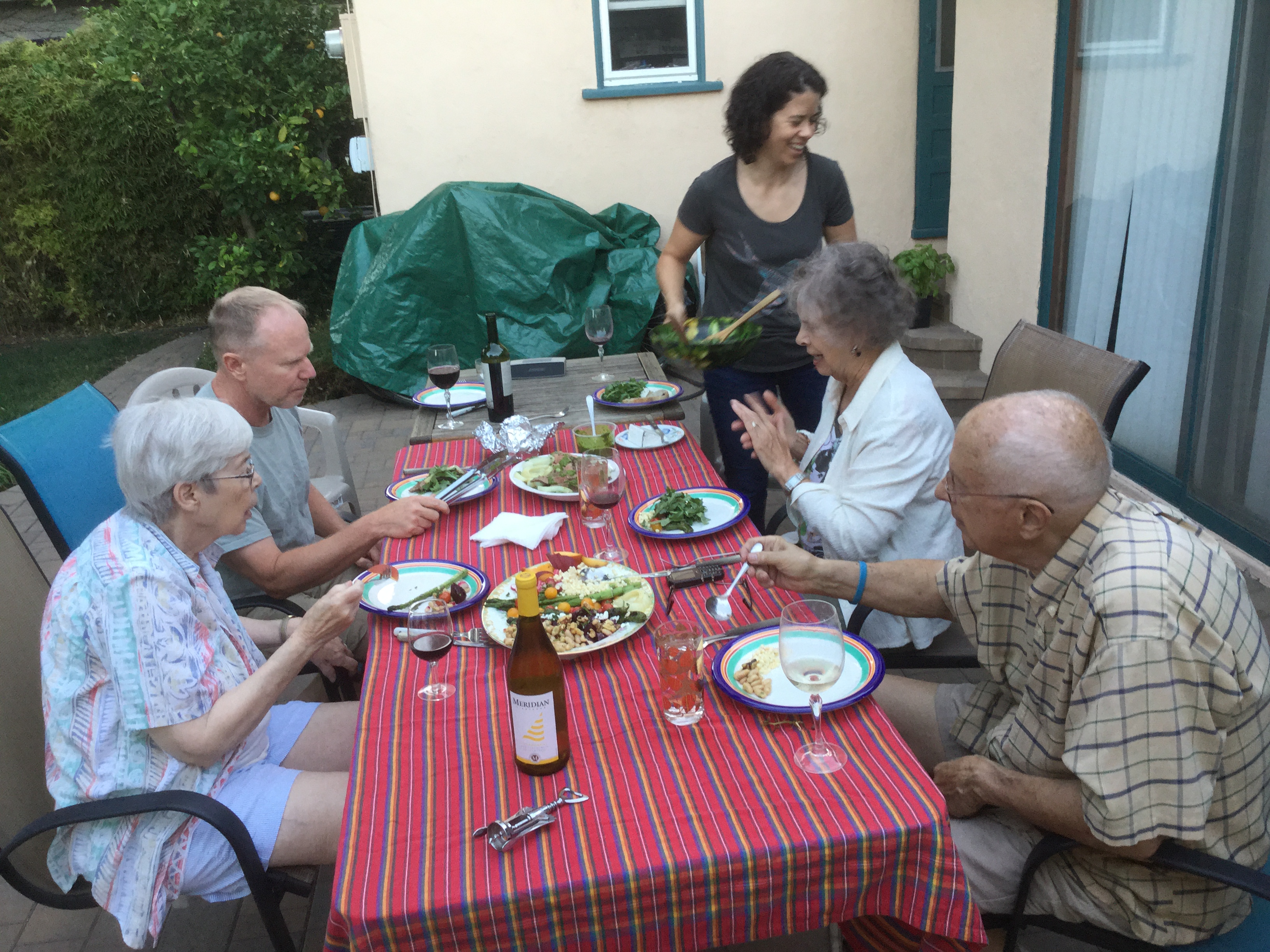
Dinner was a composed salad (on my grandmother’s china platter) inspired by NY Times – featuring white beans with lemon zest, walnuts, beets, goat cheese, cherry tomatoes, grilled onions, asparagus, radishes, raw corn, and peaches. We also had grilled flank steak with chimichurri.
IMG_0320 IMG_0328

Sara, right, is the hostess with the mostess while Ben and the older generation dig in. (Ben’s editorial note: Thanks for including me with the older generation). Older people don’t like arugula as much as my generation. They like quiche, soup, and meatloaf. (From Ben: I like gruel and mush of all kinds.) But I digress.

Sometimes relentless cushion sewing requires a little break for art therapy. This birthday card for a friend was created using 40-year-old construction paper, still in the same cabinet we used for art supplies as kids. What would you put in the speech bubble? Are you wondering why there isn’t a cat in the picture? Does the image foreshadow anything about our future? Where will we go shopping next? Stay tuned!

IMG_0186